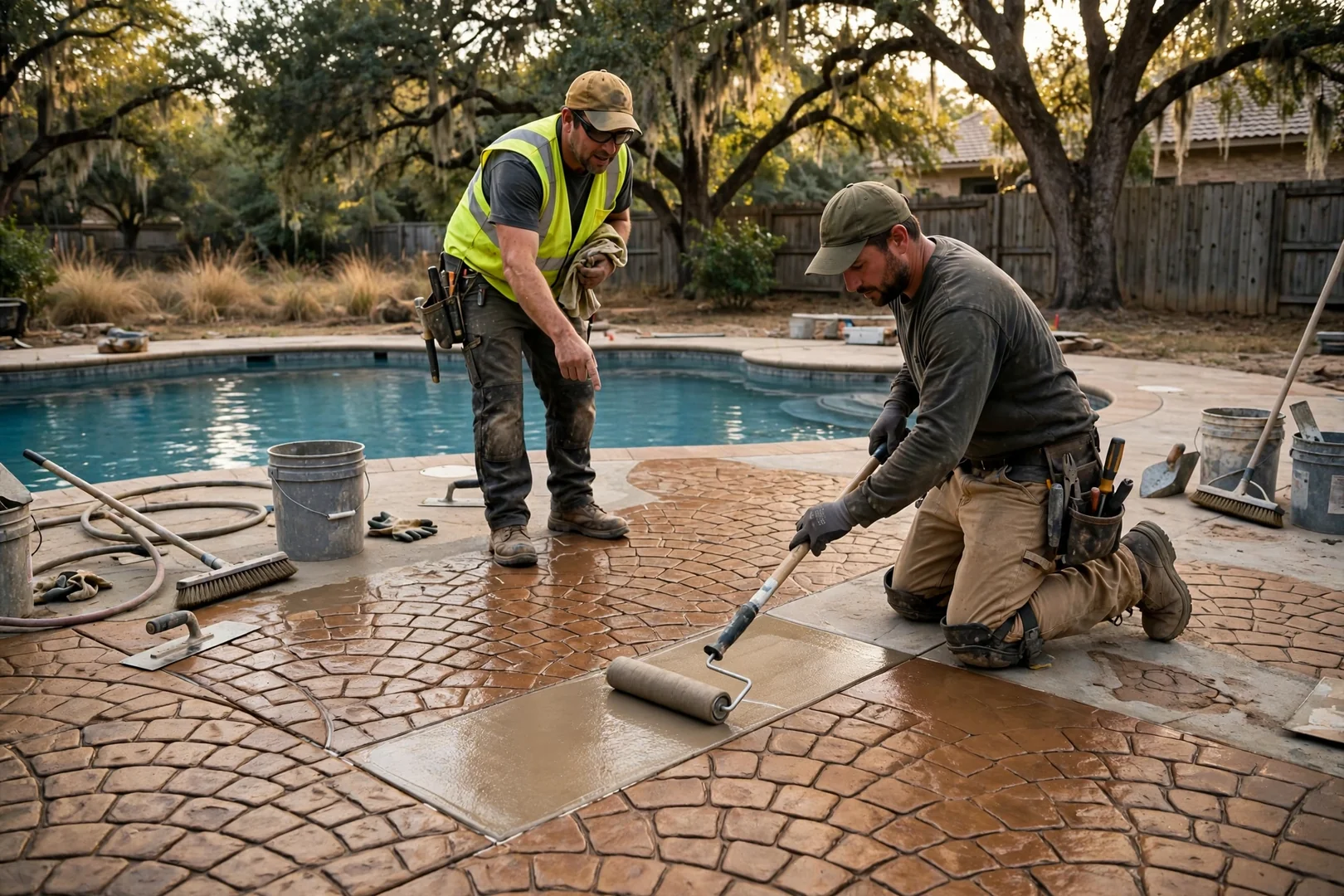
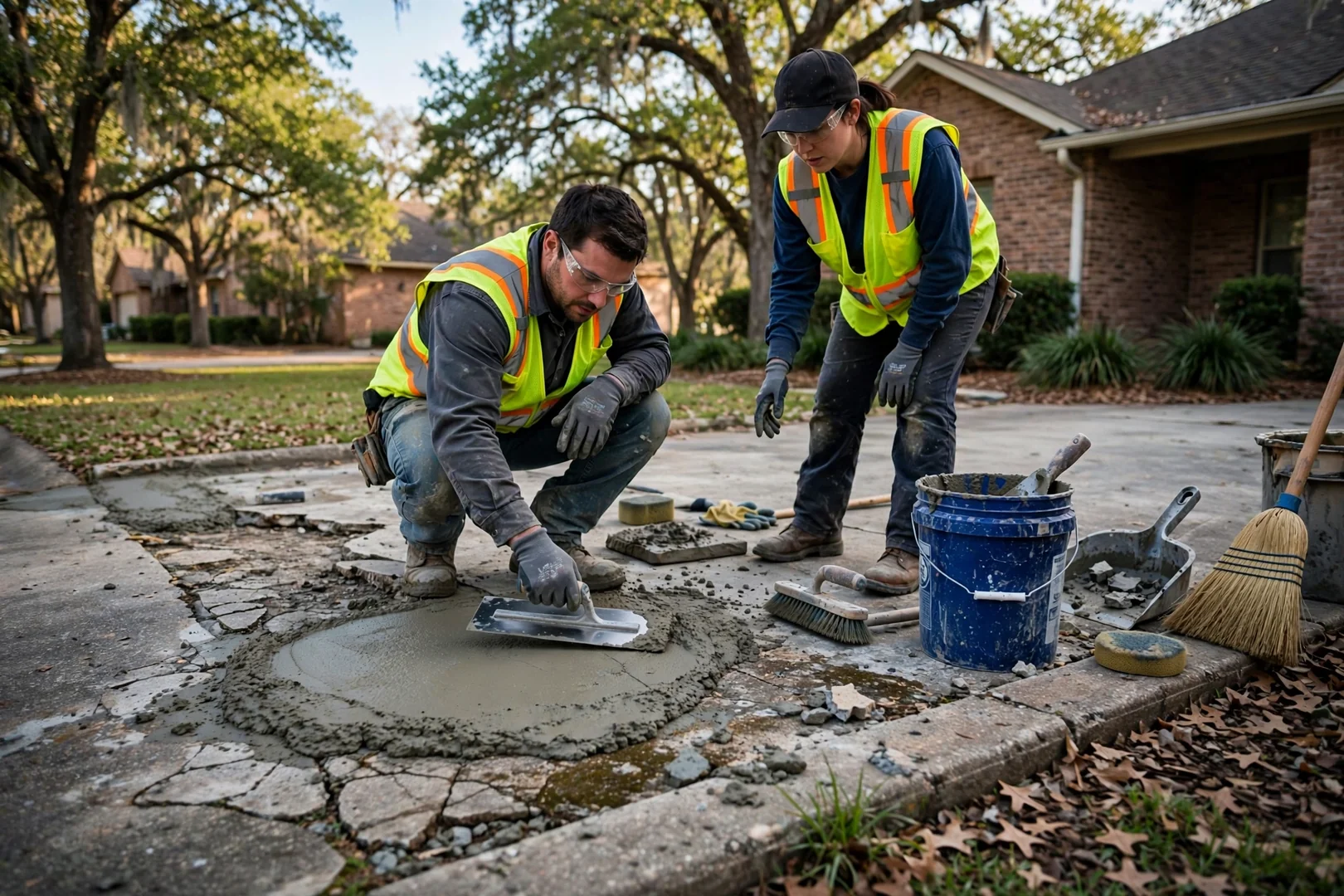
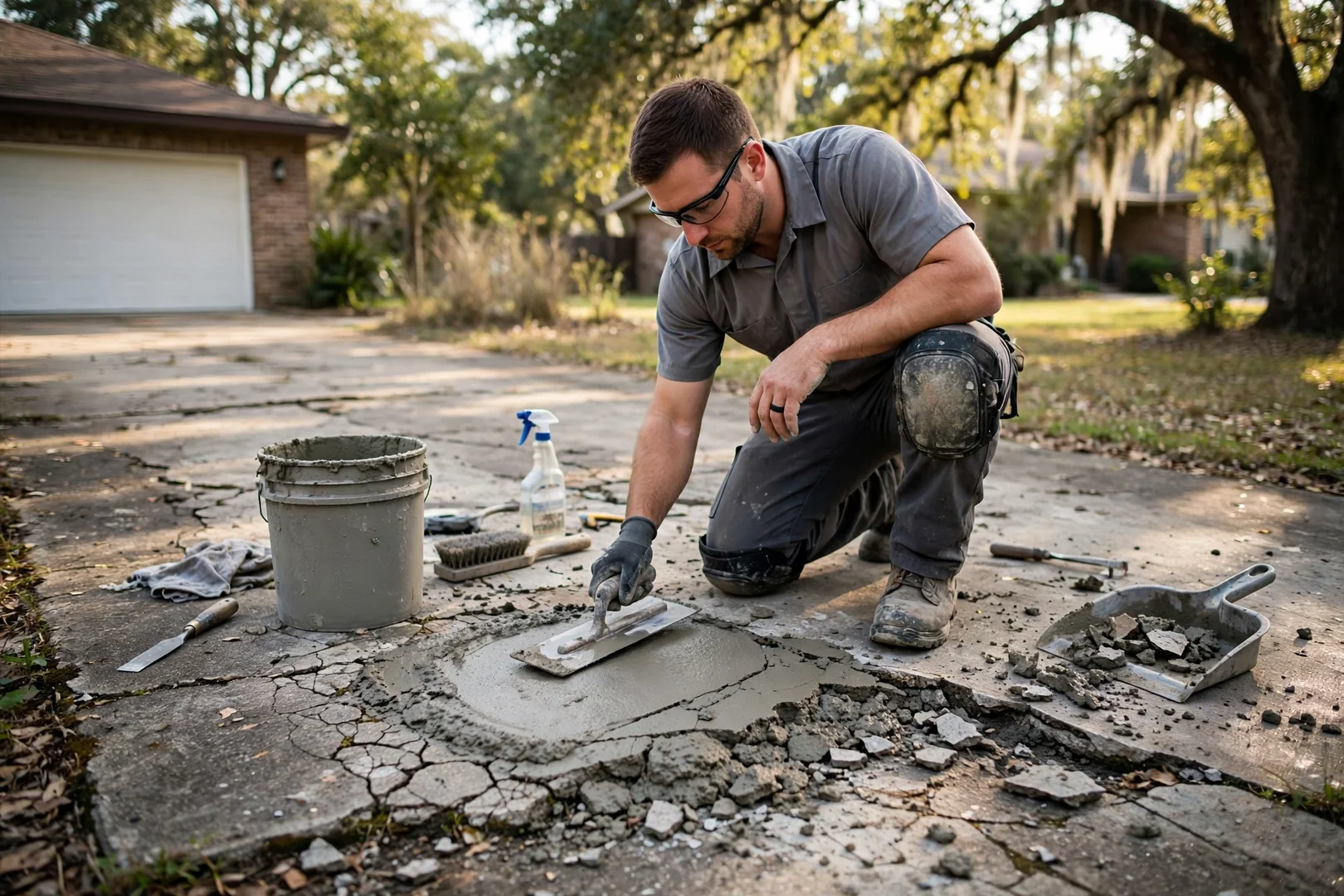
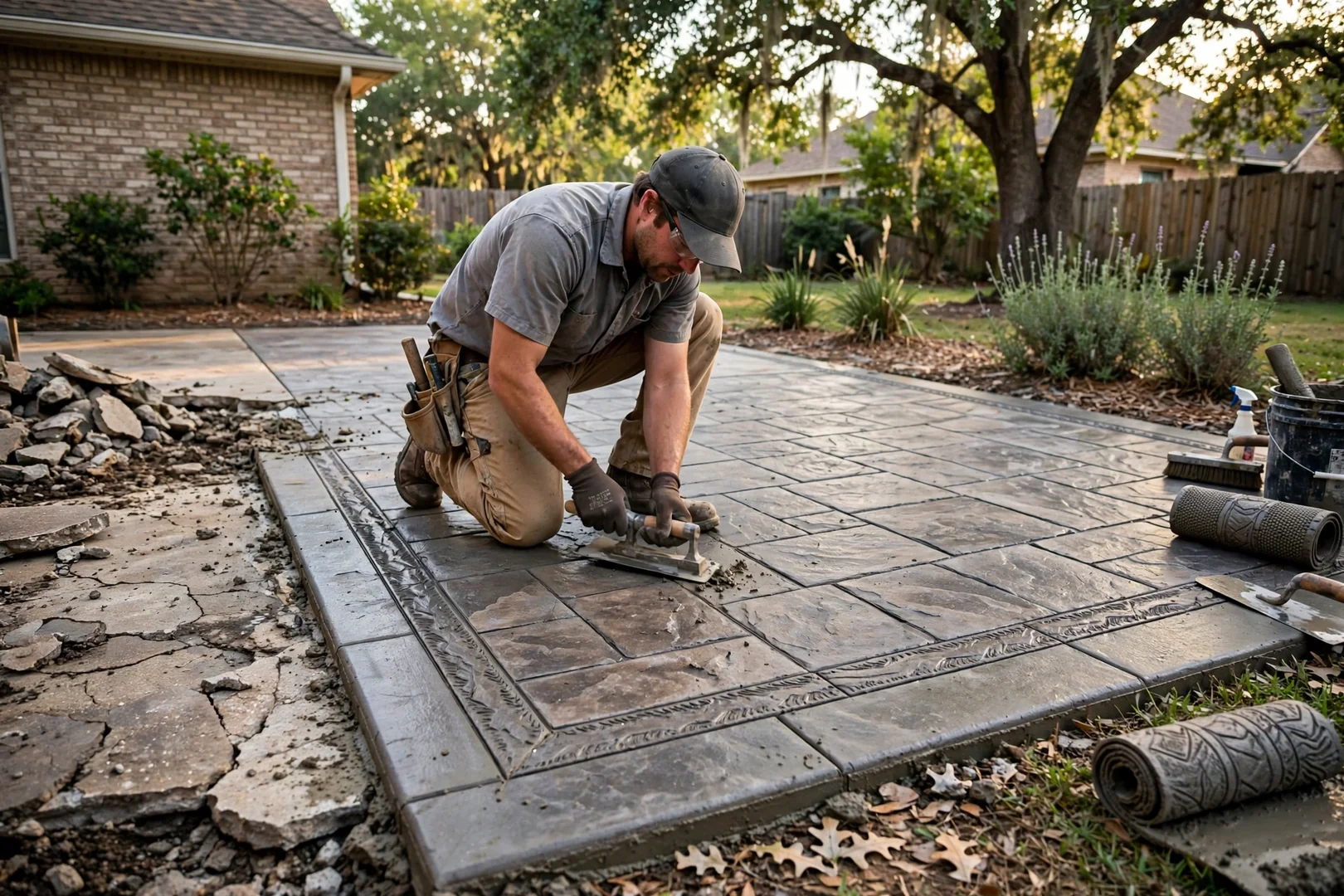
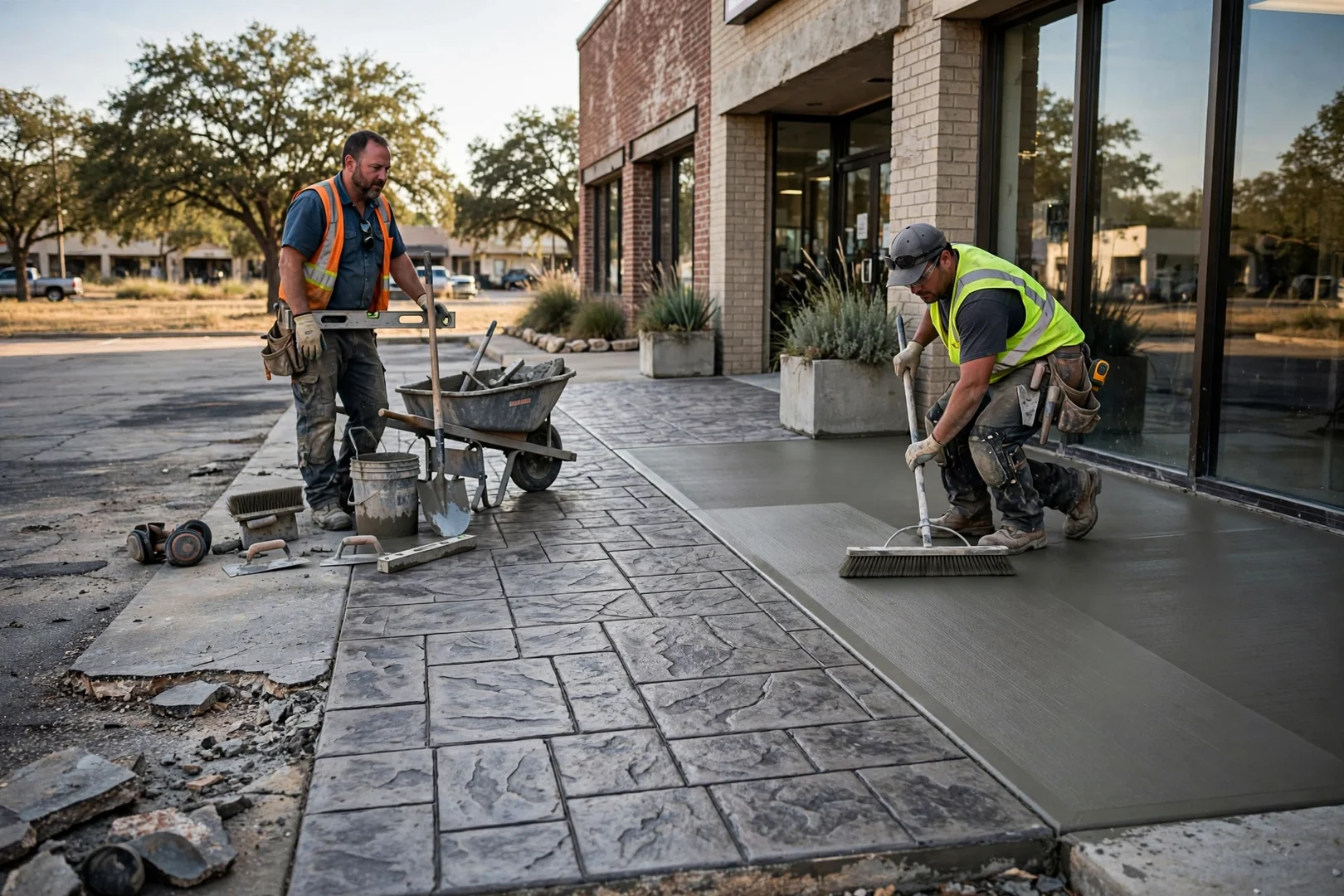
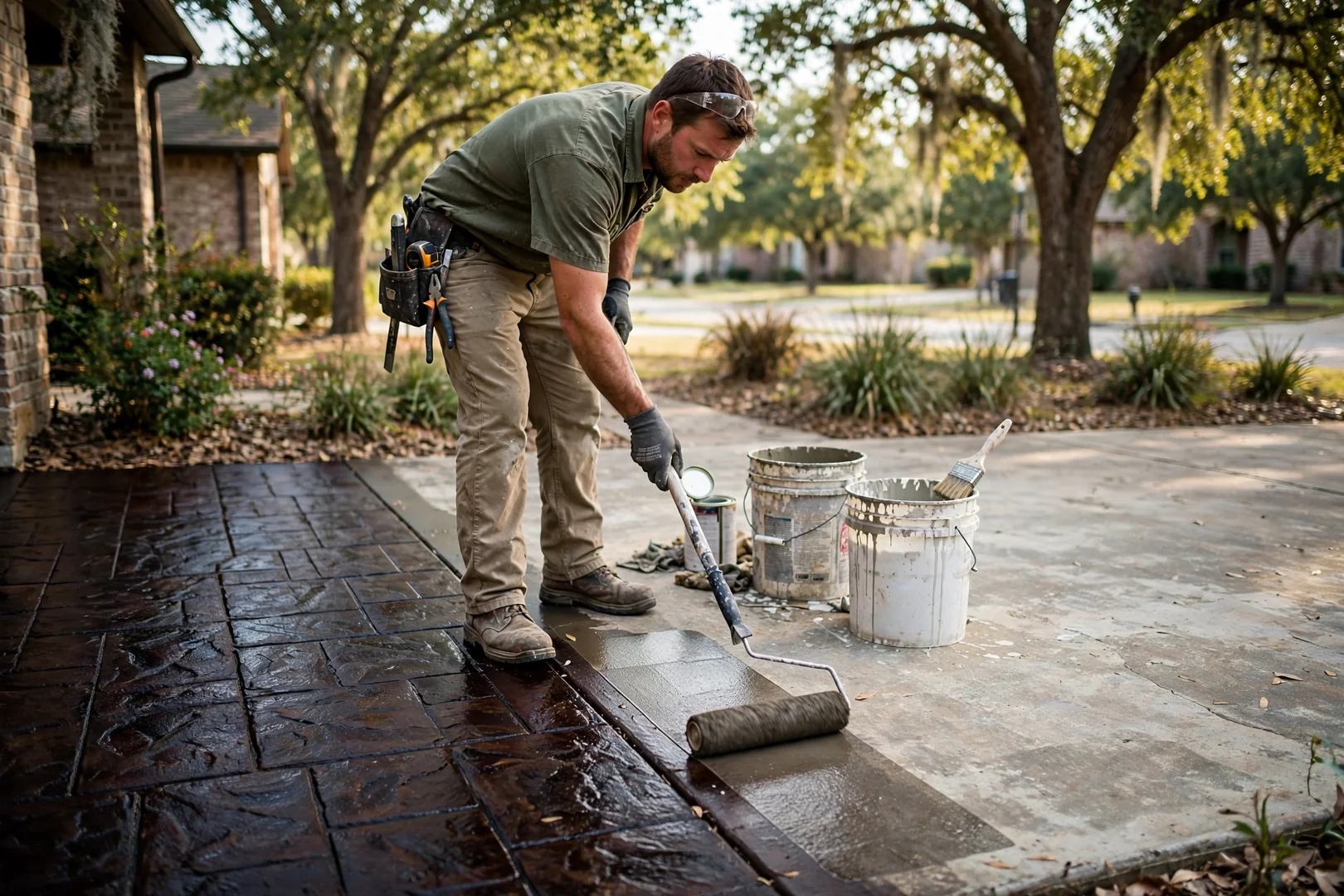
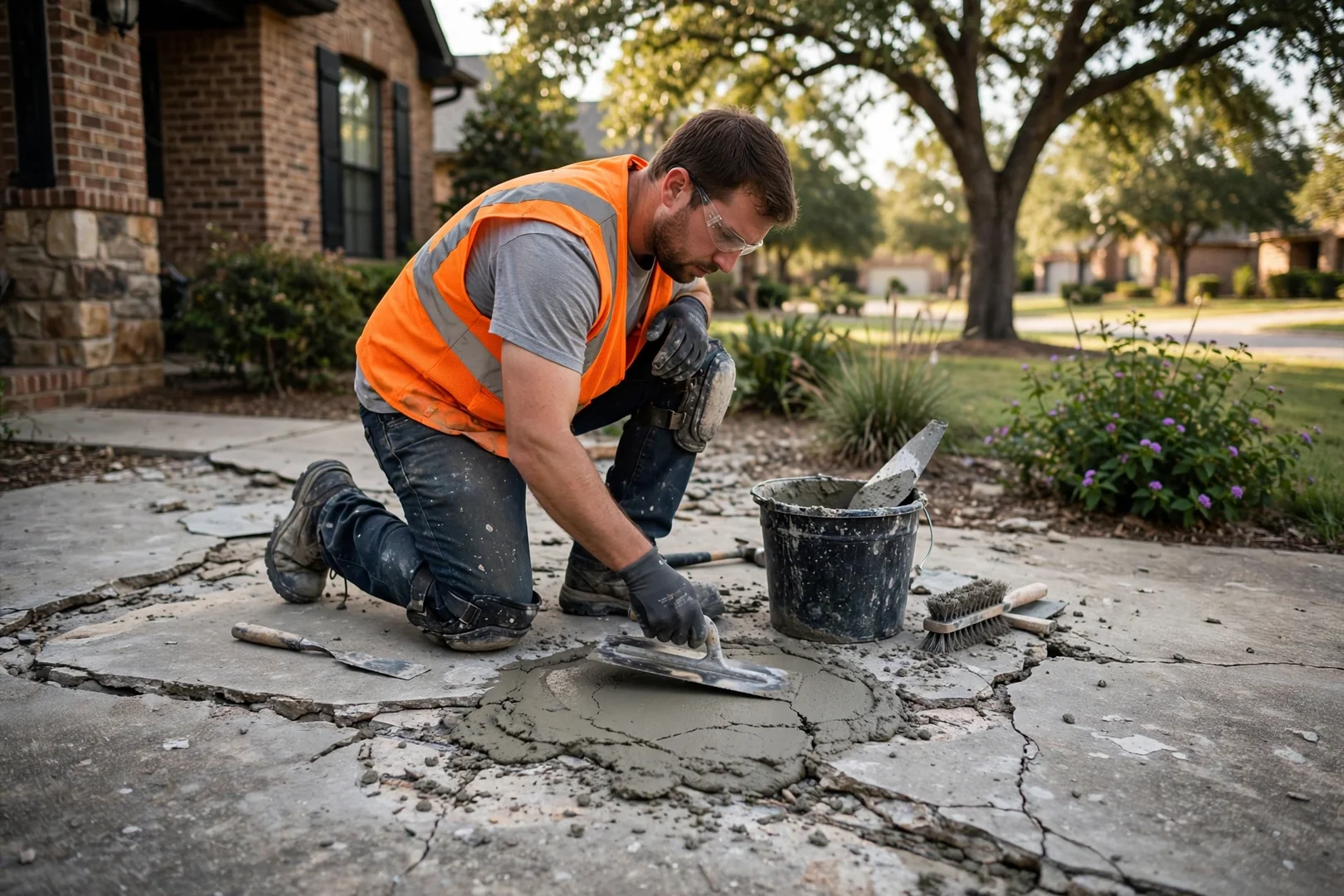
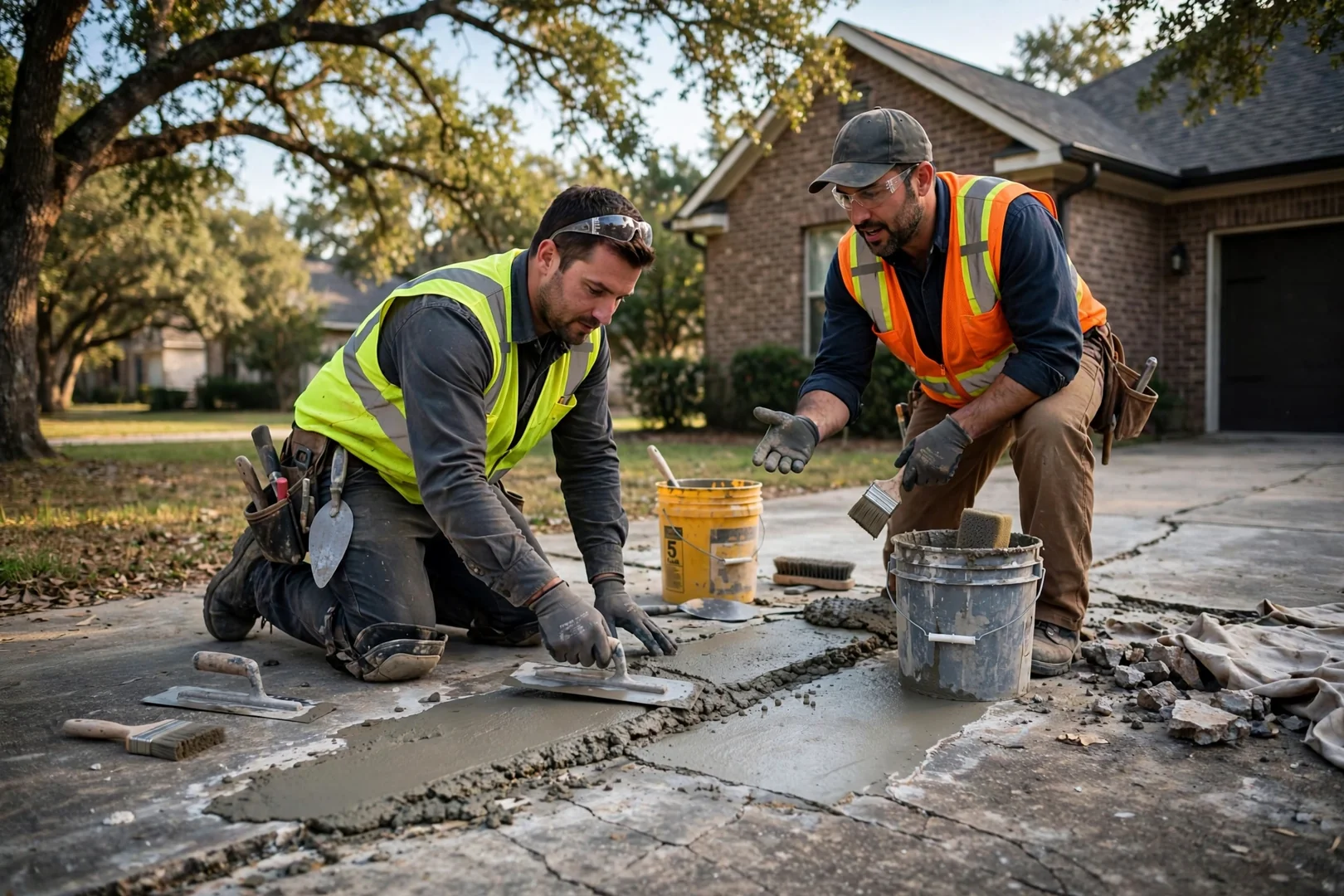
Stamped concrete is textured, colored flatwork that is pressed with mats while the slab is still plastic, giving patios, walkways, and pool decks the look of slate, cobblestone, or weathered wood without the upkeep of individual pavers. Homeowners around Highland Village often ask about it when an older patio has faded, spalled, or settled after years of clay soil movement and hot Texas summers. Our crews handle integral color and release agent application, hand-tooled grout lines, and a breathable sealer that helps the surface recover its depth. Resurfacing an existing slab is often an option too. Highland Village Premier Concrete Contractors is booking stamped concrete pours and overlay restorations through the 2026 season, with written estimates and a walkthrough before anyone picks up a trowel.
Tell us a little about your patio, walkway, or pool deck and we will follow up with pricing, pattern options, and a schedule window.
Stamped Concrete Service Overview
What Our Stamped Concrete Service Includes
Stamped concrete is the process of imprinting freshly placed concrete with
textured mats and skins to replicate stone, brick, or plank patterns, and at
Highland Village Premier Concrete Contractors it includes subgrade preparation,
integral or broadcast color, hand detailing, and sealing across Highland Village
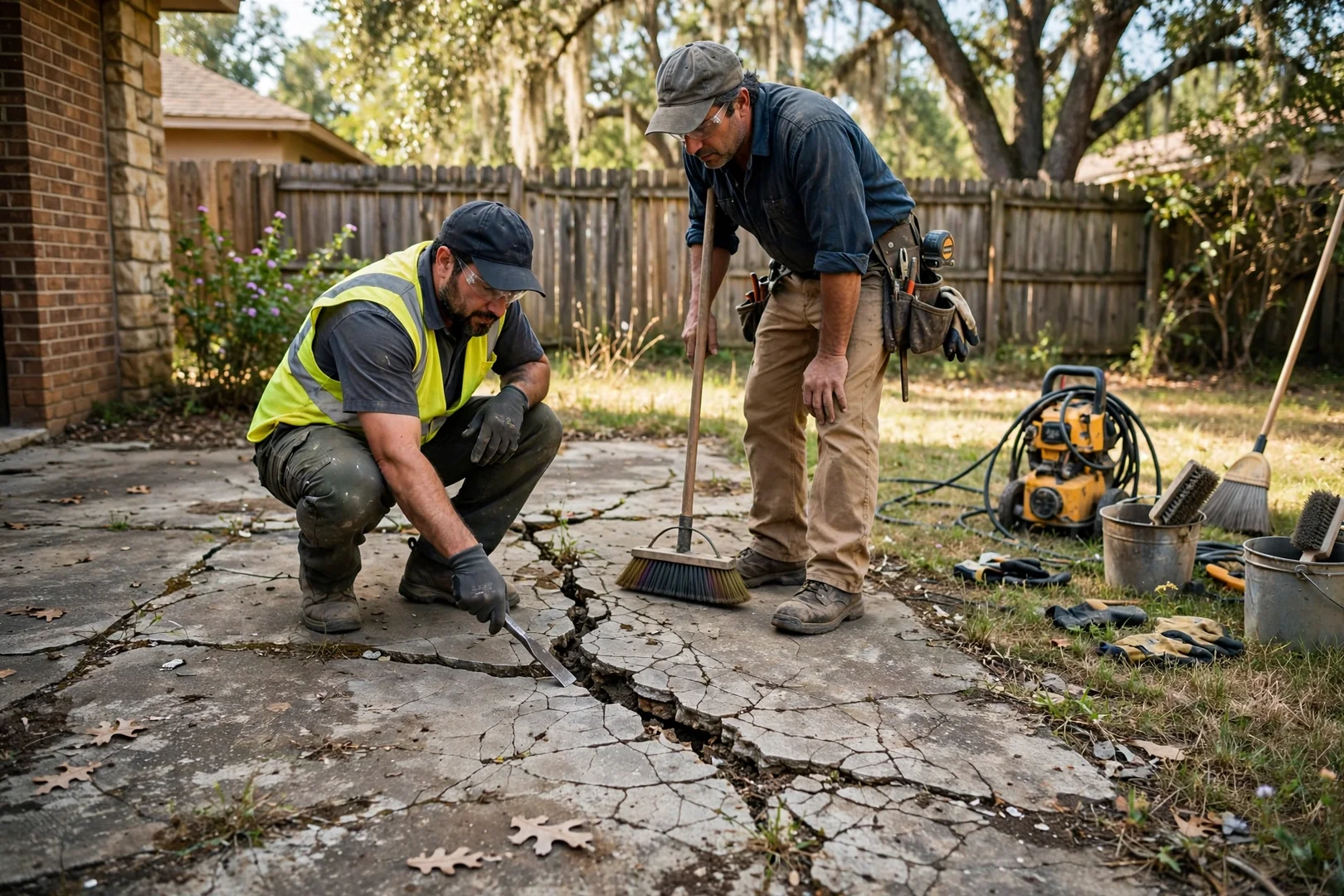
properties. Work starts with an honest look at what is already there: we check
the existing slab for spalling, hairline cracking, and settlement, then decide
between a full tear-out and pour or a bonded overlay over sound concrete. From
there the crew compacts the base, sets forms and control joints, places fiber
or rebar reinforcement as the slab thickness calls for, and times the stamping
window around slump and set. Timing is everything on a stamp. Patios, front
walks, courtyards, pool surrounds, apartment common areas, and small commercial
entries all get the same sequence, scaled to the space.
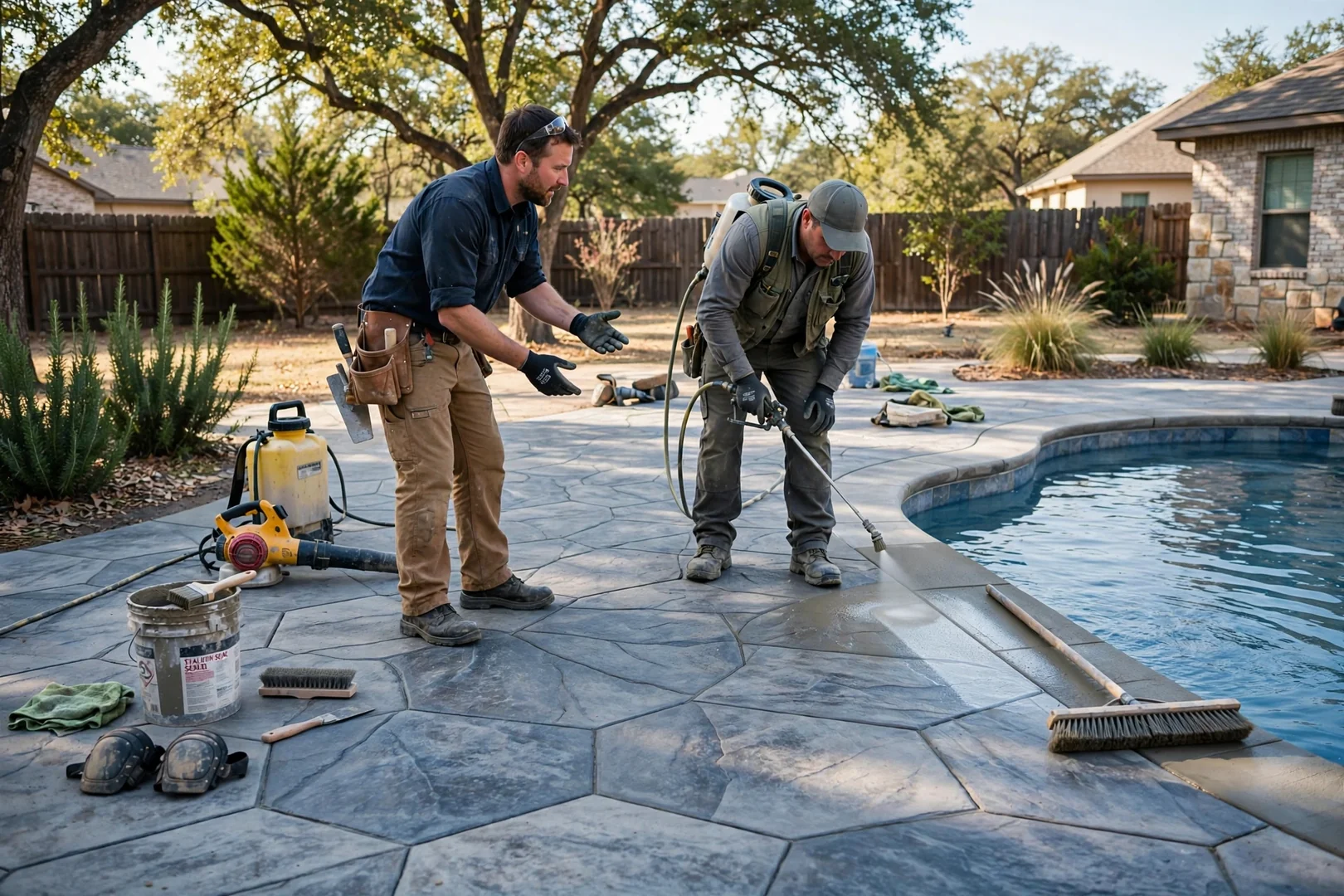
Restoring a tired surface is usually the reason homeowners call, and our 2026 approach leans heavily on corrective work rather than cosmetic cover-ups. A patio that has lost its color to UV exposure, or a walkway that has gone uneven from expansive clay soil under many Highland Village lots, can often be rebuilt into something better than the original with a resurfacing overlay, re-cut joints, and a fresh color hardener and antique release for depth. We finish with a penetrating or film-forming sealer chosen for sun exposure and traffic, then walk the project with you so you know how to care for it. Spring and fall pours cure more evenly here, so scheduling early in the 2026 season helps. Written estimates come before any work begins.
What Signs Mean Your Patio Needs Stamped Concrete?
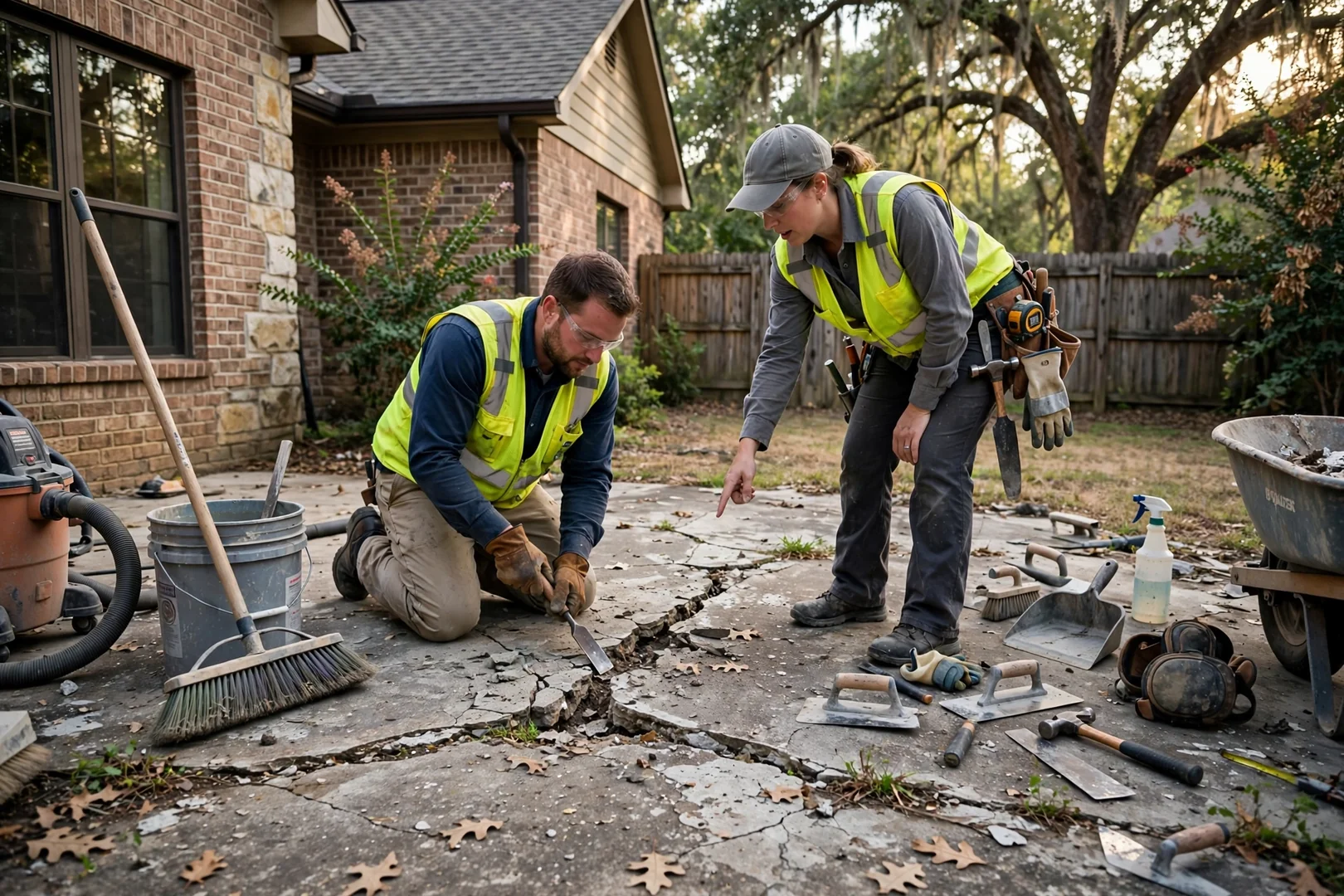
Signs that a property needs stamped concrete include faded or chalky surface color, spalling and flaking on the top layer, hairline map cracking, and uneven slab sections that have settled and started holding water. Many older patios around Highland Village were poured as plain broom-finish slabs, and after years of UV exposure and seasonal clay soil shrink-swell cycles, the surface paste wears thin and the joints open up. You might notice a chalky residue on shoes, dark efflorescence staining near downspouts, or a lip at the control joint where one panel has dropped. Stains from grills, planters, and tree tannins tend to set in once the old sealer has broken down. Those are all correctable conditions.
Early 2026 has already brought the usual swing between warm afternoons and
cold snaps, which is when thermal movement tends to widen existing cracks in
Highland Village flatwork. Rather than patching the same spots every spring,
a stamped overlay or a new reinforced pour addresses the cause: proper base
compaction, correct slab thickness, well-placed control joints, and a sealer
matched to sun and traffic. The texture itself also adds slip resistance underfoot,
which helps on pool decks and shaded north-side walkways that stay damp. We
will show you the problem areas during the estimate and explain which repair
path makes sense, then follow up with a post-job walkthrough once the surface
has cured.
How Does Our Stamped Concrete Process Work in Highland Village?
Our stamped concrete work follows a four-step sequence built around subgrade preparation, controlled pour timing, pattern imprinting, and sealed curing. Every 2026 project in Highland Village starts with a look at the existing slab or soil, since our local clay subgrade shifts with wet winters and dry summers. From there we set forms, place reinforcement, and plan the pour around weather windows so the mix reaches the right plasticity before stamping begins. Texture mats, release agents, and color hardeners are chosen with you ahead of time. Nothing is rushed. Once the imprint sets, we cut control joints and apply a protective sealer to help the surface resist spalling and fading for years.
We walk the area with you, measure the space, and check drainage, slope, and soil conditions. Cracked or sunken existing concrete gets evaluated for removal or overlay. You pick patterns and color tones from samples before any work is scheduled, and the plan goes into a written estimate.
Demolition, Grading, and Form Setup
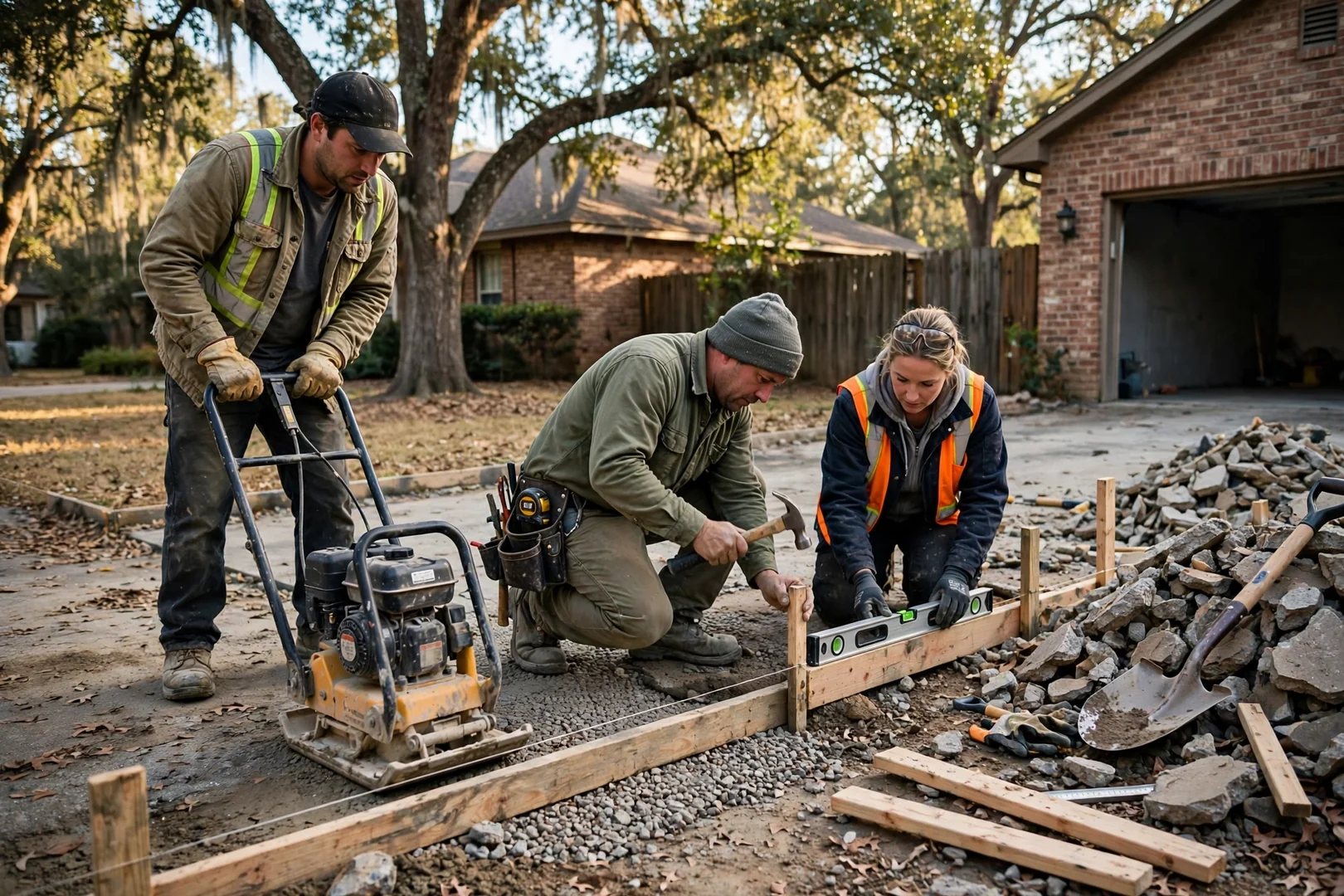
Old deteriorated slabs are broken out and hauled off, then the subgrade is graded and compacted to limit future settlement. Forms are staked to the planned elevations and reinforcement, whether rebar or wire mesh, is positioned so the new slab holds up to Highland Village soil movement.
Pour, Screed, and Color Application
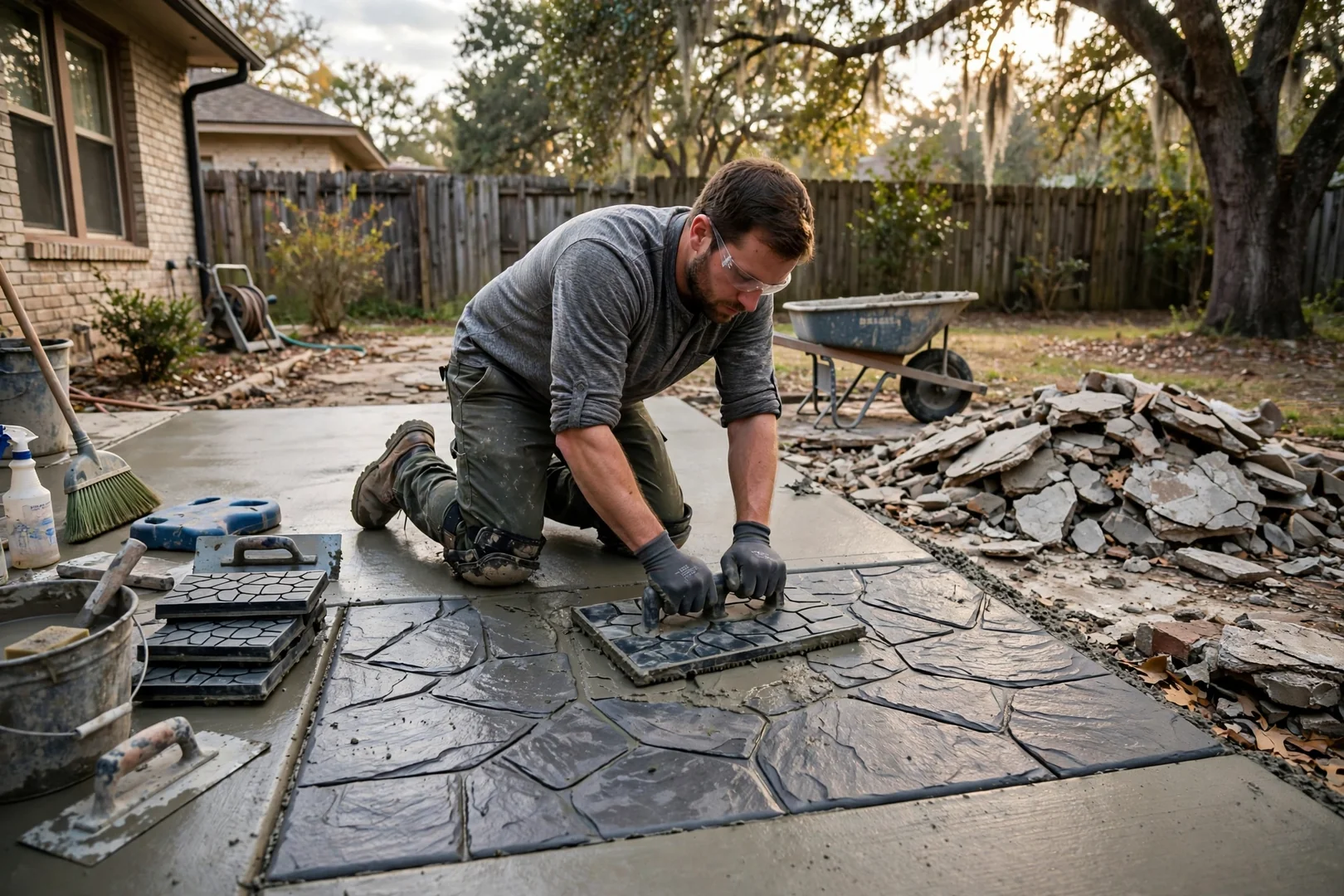
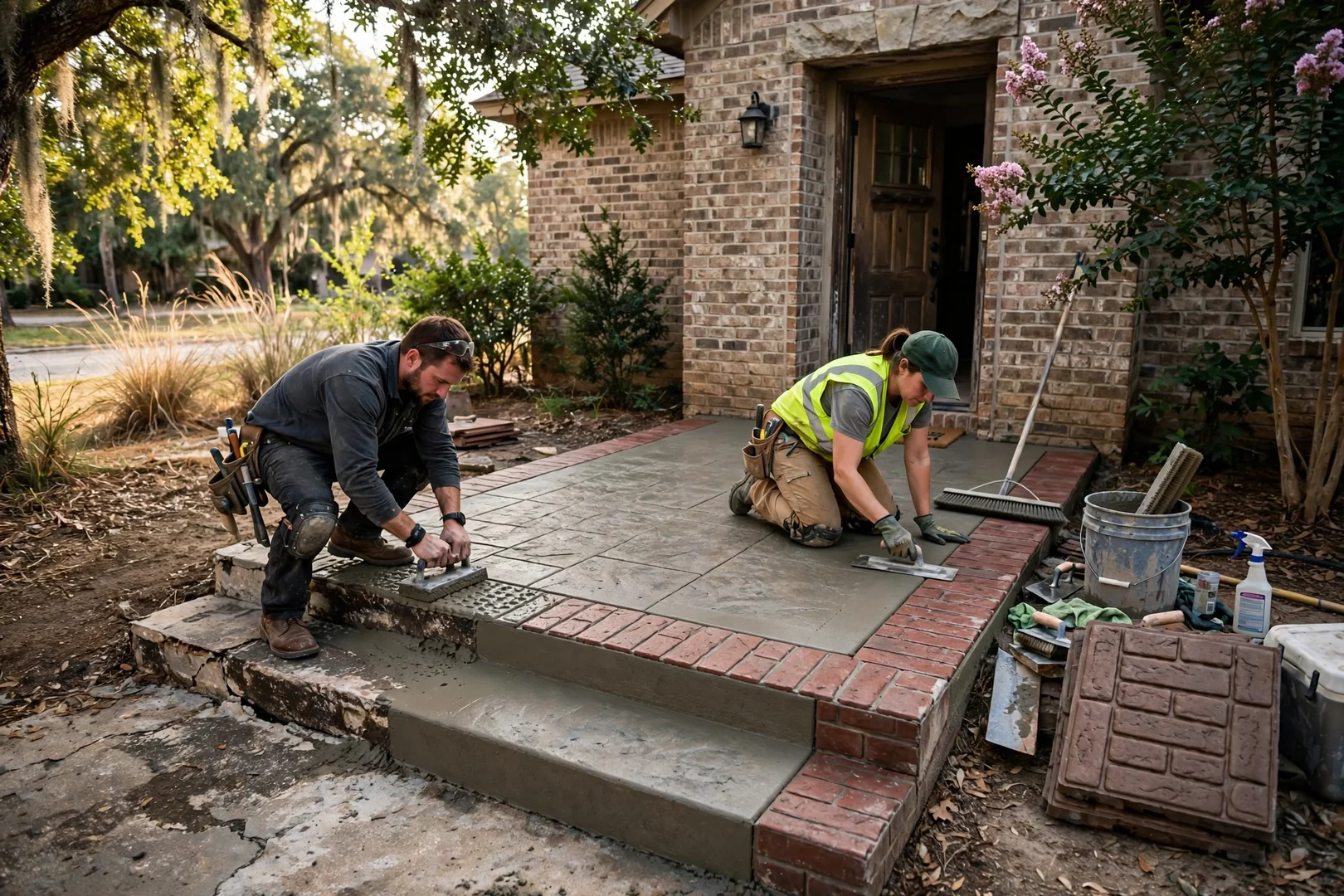
Concrete is placed, screeded, and floated to a flat working surface. Integral color or a broadcast color hardener goes on while the mix is still workable. Timing matters here. We monitor the set so the slab is firm enough to hold an imprint but soft enough to take clean detail.
Stamping, Jointing, and Sealing
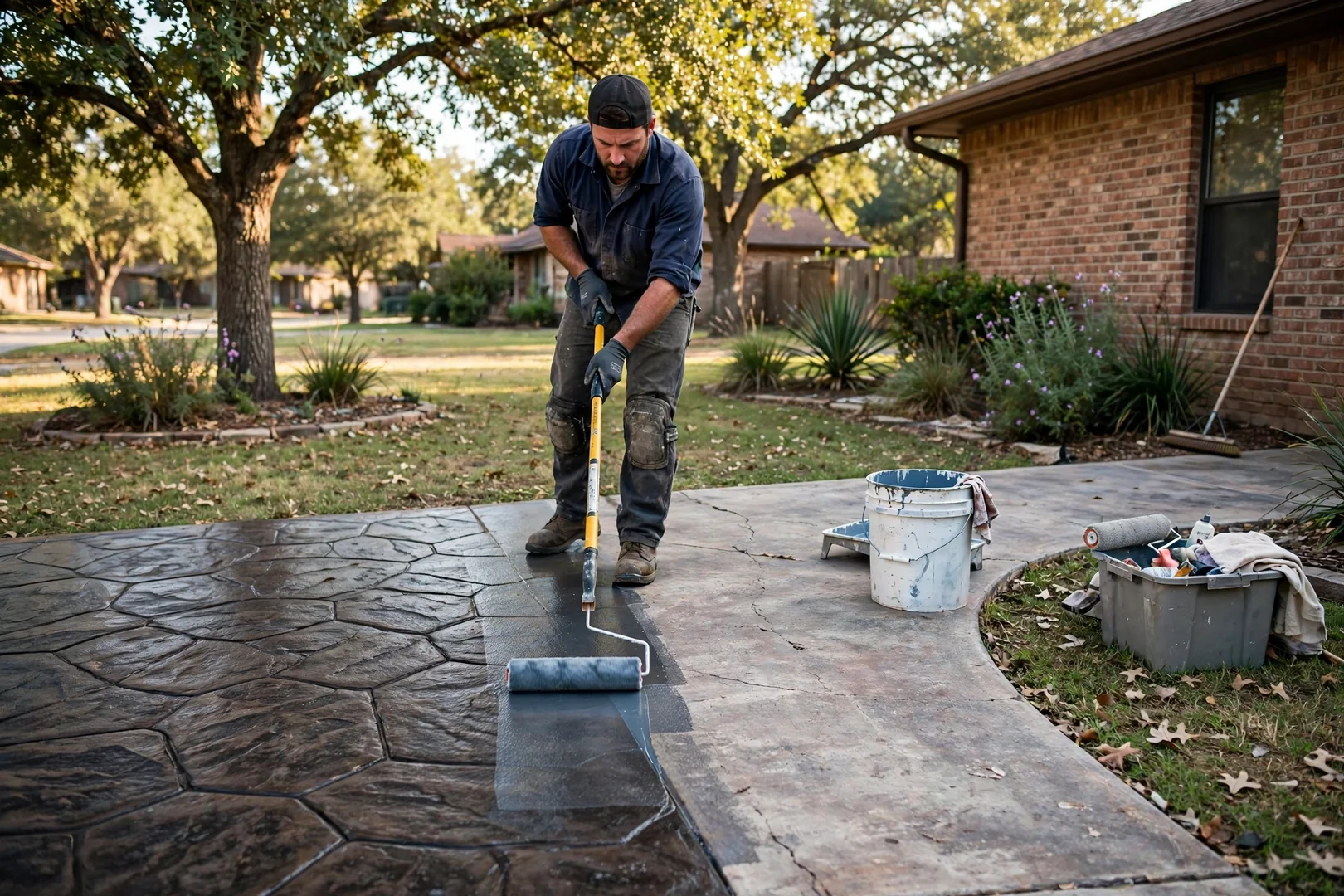
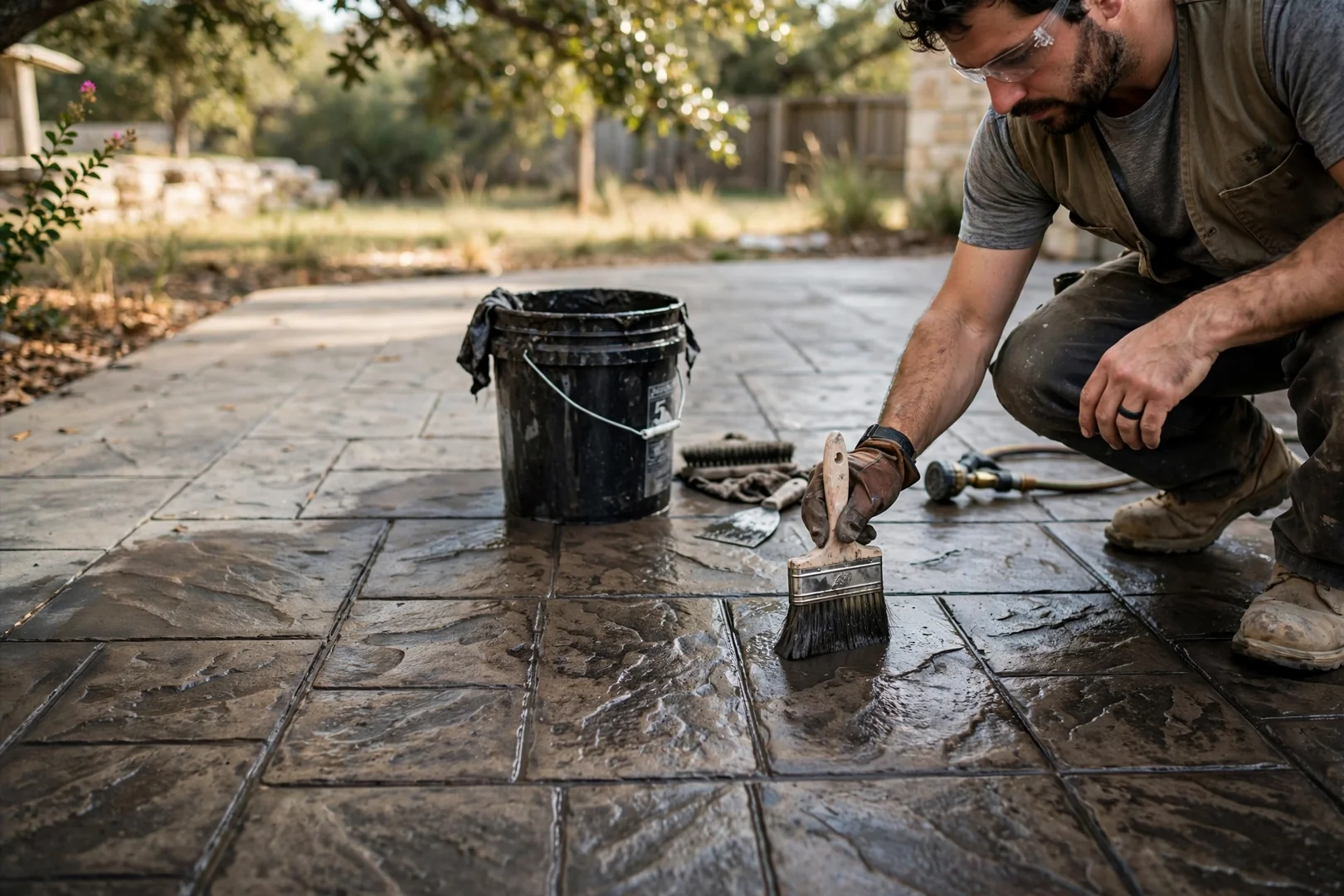
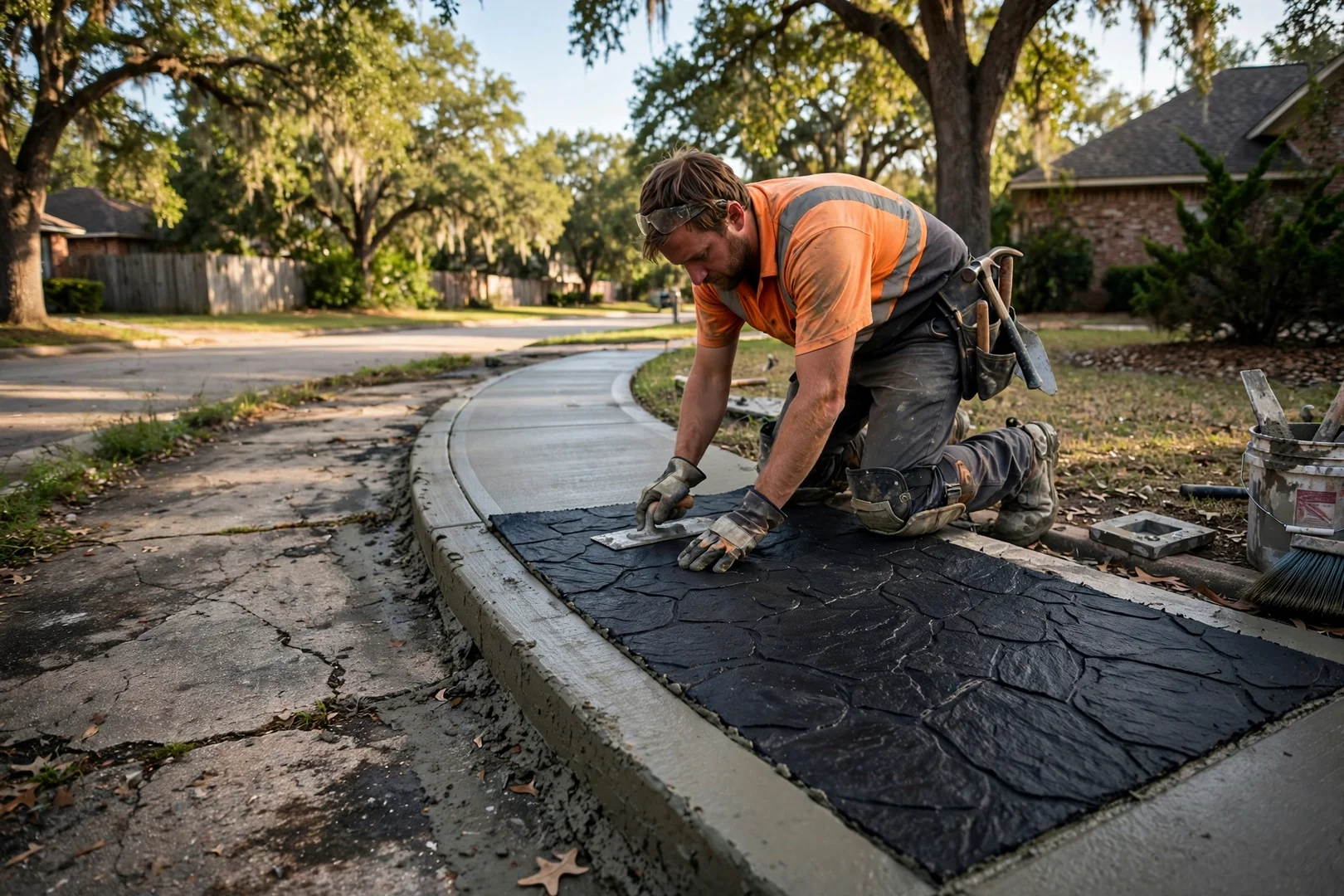
Release agent is applied and texture mats are pressed in sequence to keep the pattern aligned and natural looking. Control joints are cut to guide any future cracking, then the surface is rinsed, cured, and sealed. We finish with a walkthrough so you know how to care for the new patio.
How Much Does Stamped Concrete Cost in Highland Village?
Stamped concrete pricing in Highland Village depends mostly on square footage, pattern complexity, color method, and how much demolition or subgrade correction the area needs, with most 2026 projects landing inside typical ranges for North Texas decorative flatwork. Larger open patios usually cost less per square foot than tight, cut-up spaces with lots of curves and border work. Removing a cracked or settled slab, hauling debris, and recompacting the subgrade adds labor, as does extra reinforcement where clay soil movement is a concern. Multiple texture mats, hand-detailed borders, integral color plus an accent release, and a premium sealer all shift the number upward compared to a single-pattern gray stamp.
Slab thickness, access for the concrete truck, and whether stairs, seat walls, or drainage adjustments are part of the scope also factor in. Honest pricing needs eyes on the site. Once we measure, check slope and drainage, and confirm the pattern you want, you get a free written estimate that itemizes prep, materials, stamping labor, and sealing, so there are no surprises later. Highland Village homeowners are welcome to ask questions about any line before scheduling.
//Why Homeowners Choose Us//
Why Do Highland Village Homeowners Trust Us for Stamped Concrete?
Highland Village homeowners come to us for stamped concrete because we treat it as a restoration project, not just a pour, correcting failing slabs and drainage before any pattern goes down. Every 2026 job includes a written estimate, photo documentation of prep work, and a post-job walkthrough covering sealer care.
Stamped Concrete Work Completed in Highland Village in 2026
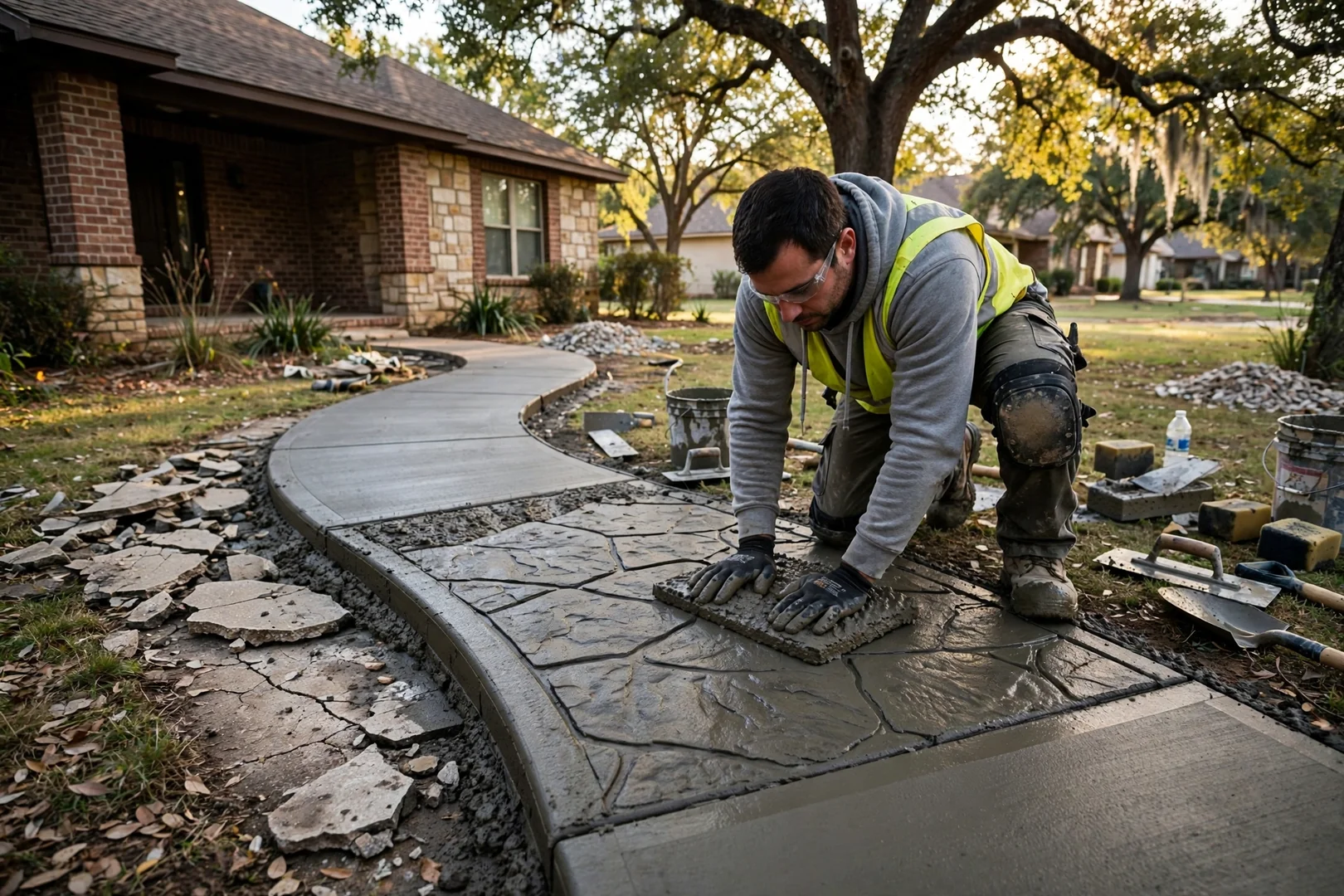
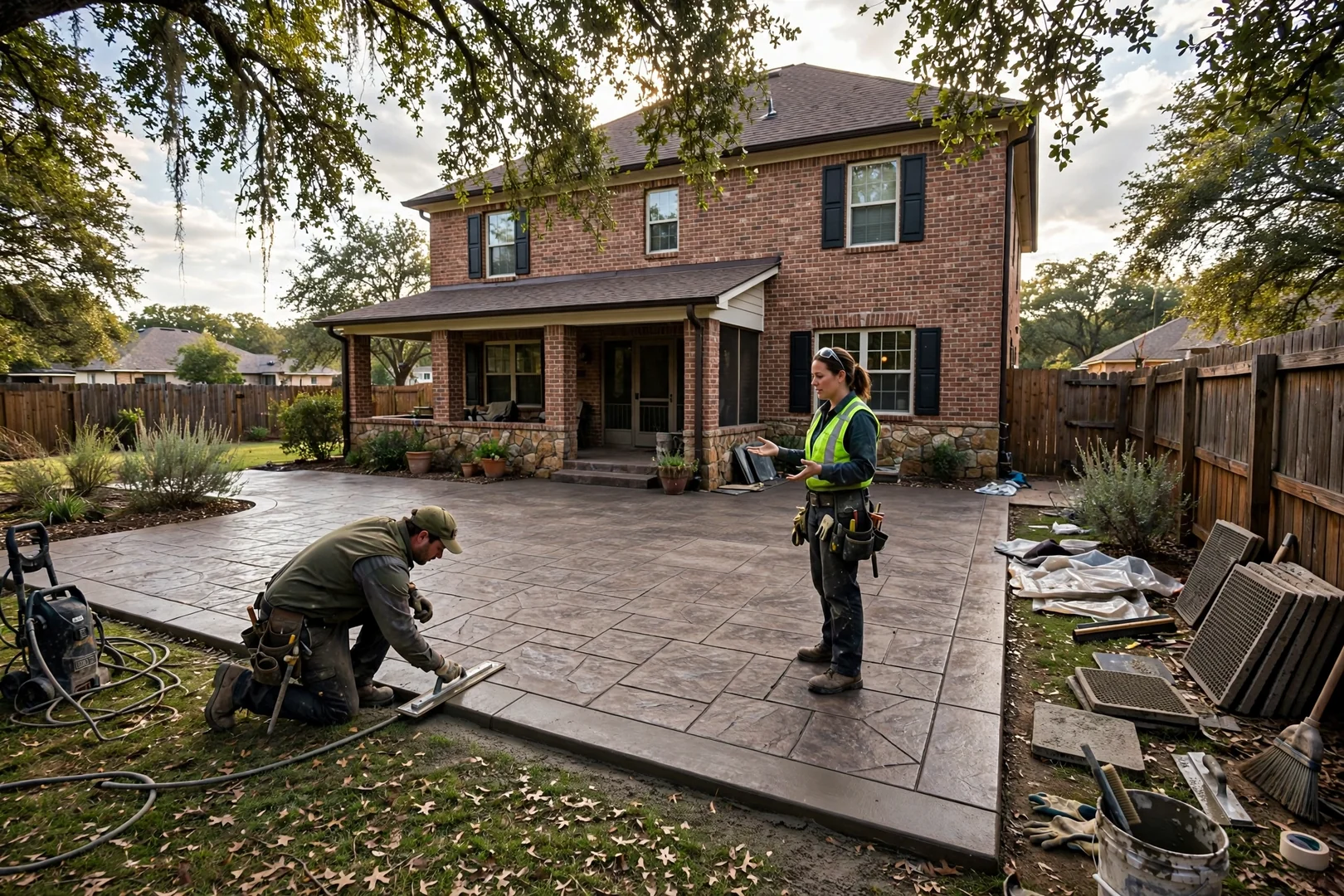
Stamped concrete jobs across Highland Village this 2026 have ranged from small courtyard landings to full backyard patio rebuilds behind older brick homes. Many started as tired, spalled slabs with surface crazing and faded color. We assess the existing substrate first, then decide between a bonded overlay with a skim coat or a full tear-out and new pour with proper subgrade compaction and fiber reinforcement. Textures are pressed with seamless skin mats or ashlar slate stamps while the mix is still at the right set, followed by release agent cleanup, joint cutting, and a breathable sealer.
Commercial walkways, pool decks, and shaded side yards each bring their own challenges, from tree root heave to drainage that pushes water back toward the foundation. Our focus stays on correcting what caused the deterioration, not just covering it. Cracks get routed and filled, grades get corrected, and color is rebuilt with integral pigment plus antiquing release so the finish ages evenly. Every project wraps with a walkthrough so homeowners know how the restored surface should look and behave through North Texas heat and winter swings.
Stamped Concrete FAQs
Stamped Concrete FAQs for Highland Village Homeowners
Here are the questions we hear most often from Highland Village neighbors planning stamped concrete work in 2026. These answers cover scheduling, what the work includes, how to prepare your yard, cost factors, and how local soil and weather affect the finished surface.
Most residential stamped concrete patios take a few working days on site, spread across demolition, forming, pour and stamping, then joint cutting and sealing. The stamping itself happens in a single window while the mix is at the right plastic stage, so that day needs cooperative weather. Curing continues after we leave, and we go over the timeline for foot traffic and furniture during the final walkthrough.
A bonded stamped overlay works well when the existing slab is stable, meaning no major settlement or active movement, and the cracks are limited to surface crazing or hairlines. We route and fill those cracks, grind off failed sealer, apply a bonding agent, then press texture into the overlay mix. If the slab has heaved or broken into shifting sections, a full replacement with corrected subgrade is the better long-term restoration.
Clearing the work area is the main thing: move patio furniture, grills,
planters, and pet items, and unlock gate access for wheelbarrows or a small
mixer truck chute. We also ask that sprinkler heads and irrigation lines near
the pour area be flagged so we can protect or reroute them. Many Highland
Village yards have tight side-gate access, so we confirm clearance during
the written estimate visit.
Pricing moves with square footage, pattern complexity, color method, and how much repair the existing area needs before stamping can begin. A single-color seamless texture costs less than a multi-layer integral pigment with antiquing release and hand-detailed borders. Site conditions in Highland Village matter too, since expansive clay soil sometimes calls for added reinforcement or drainage correction, and every estimate we provide in 2026 is written out line by line.
Ready to bring a tired patio, walkway, or pool deck back to life? Our crew will walk the area with you, talk through stamp patterns and color hardener options, and point out any cracking or settling that should be corrected before the overlay goes down. You get a free written estimate with the prep work, pour schedule, and sealer plan spelled out, and there is no obligation to move forward. Scheduling for the 2026 season is open now, and spring and early fall dates around Highland Village tend to fill first because the weather is kinder to curing concrete. If your existing slab needs leveling or joint repair ahead of stamping, we can fold that into the same visit so the finished surface sits flat and drains the way it should. Small details make a long difference. Call or email whenever it suits you, and we will set a convenient time to look at your property, answer questions in plain language, and finish with a post-job walkthrough once the work is complete. Let’s restore that worn concrete into something you enjoy looking at again.