Retaining Wall Installation & Repair in Highland Village, TX

Retaining wall installation and repair covers building new segmental block or poured concrete walls and rebuilding tired ones that have started leaning, bulging, or washing out. Homeowners along the sloped lots near Lake Lewisville deal with this often, since clay soil swells after heavy rain and pushes hard against older walls with failing drainage. Our crews rebuild the gravel backfill, add perforated drain tile and weep holes, then reset courses on a compacted base so the wall holds grade again. We are booking 2026 spring and summer wall restorations now, which is the ideal window before the next round of Highland Village storm runoff. Call and we will walk the slope with you and put the numbers in writing.

Request Your Free Wall Assessment 972-362-9469

Get a Written Wall Estimate

Share a few details about your sloped yard or leaning wall and a Highland Village crew member will follow up with options and pricing.

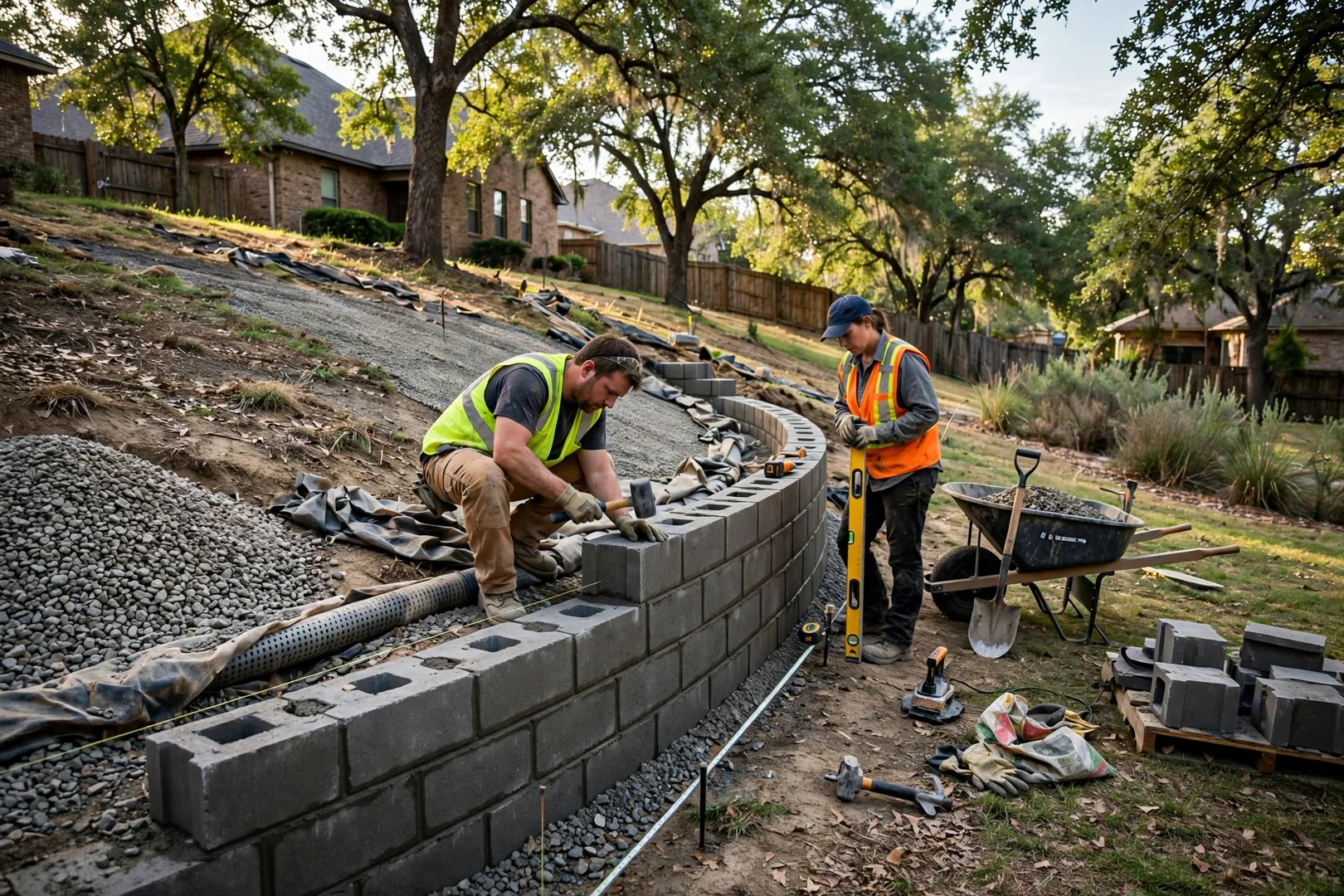
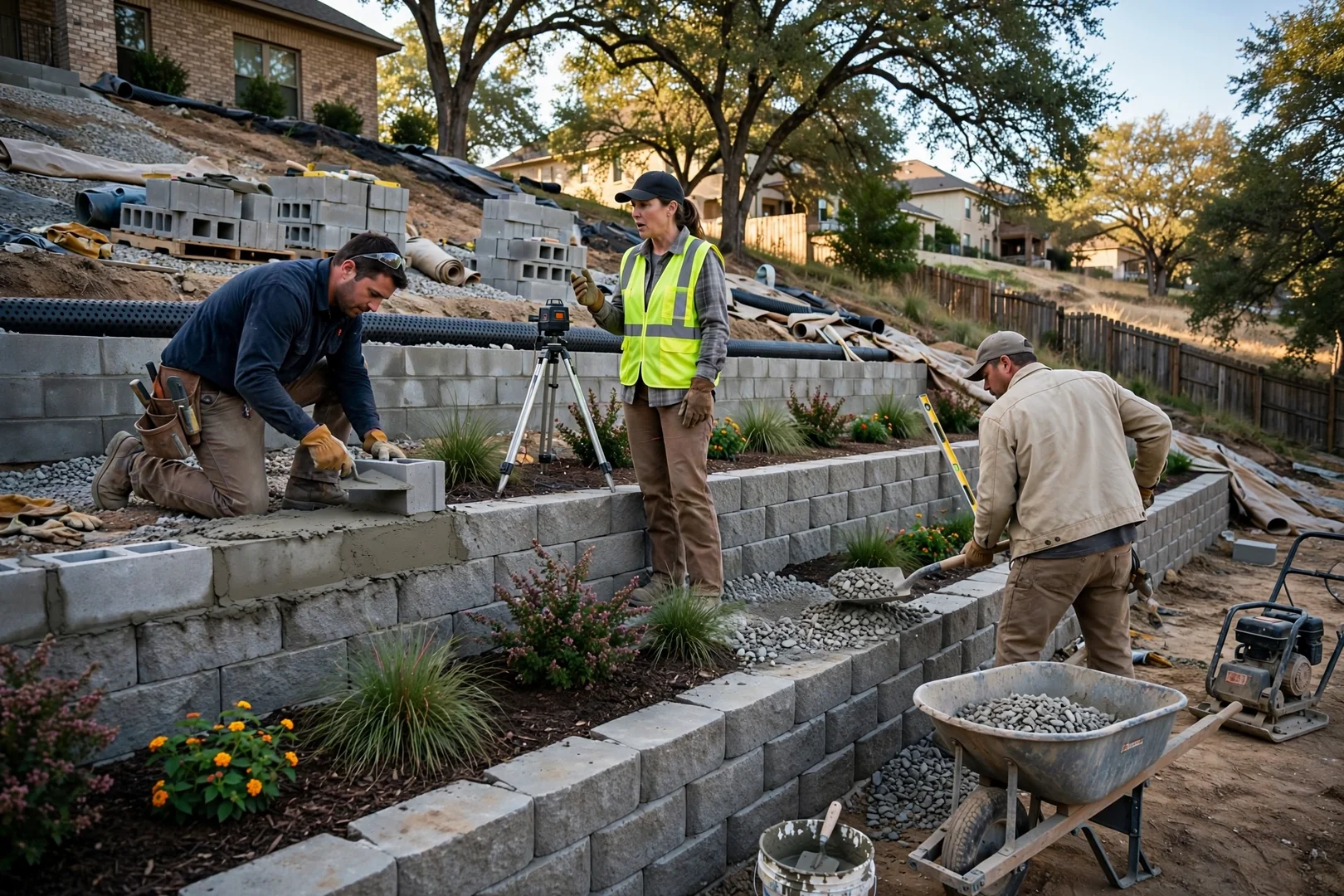
Segmental block retaining wall rebuilt along a sloped Highland Village backyard lot
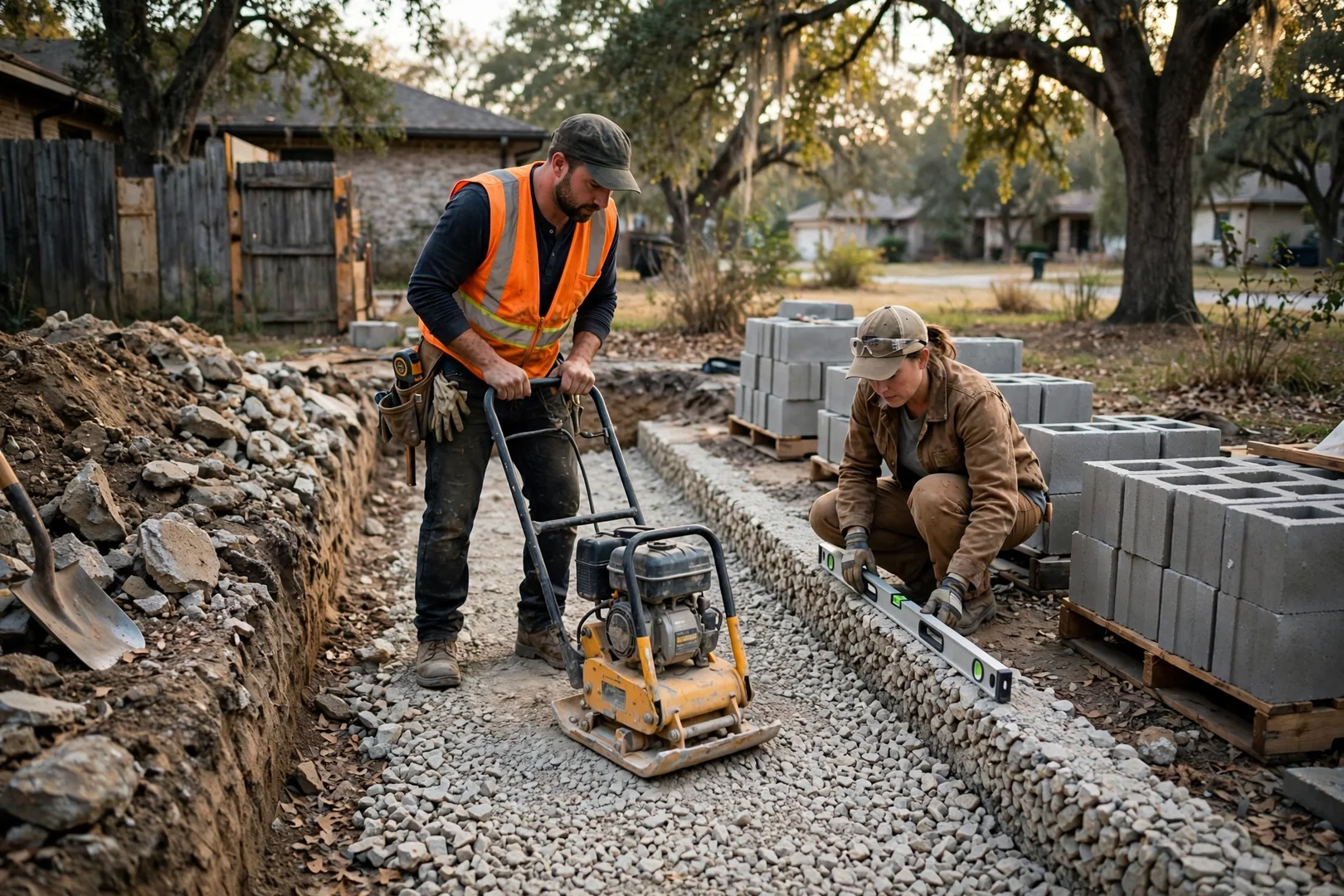
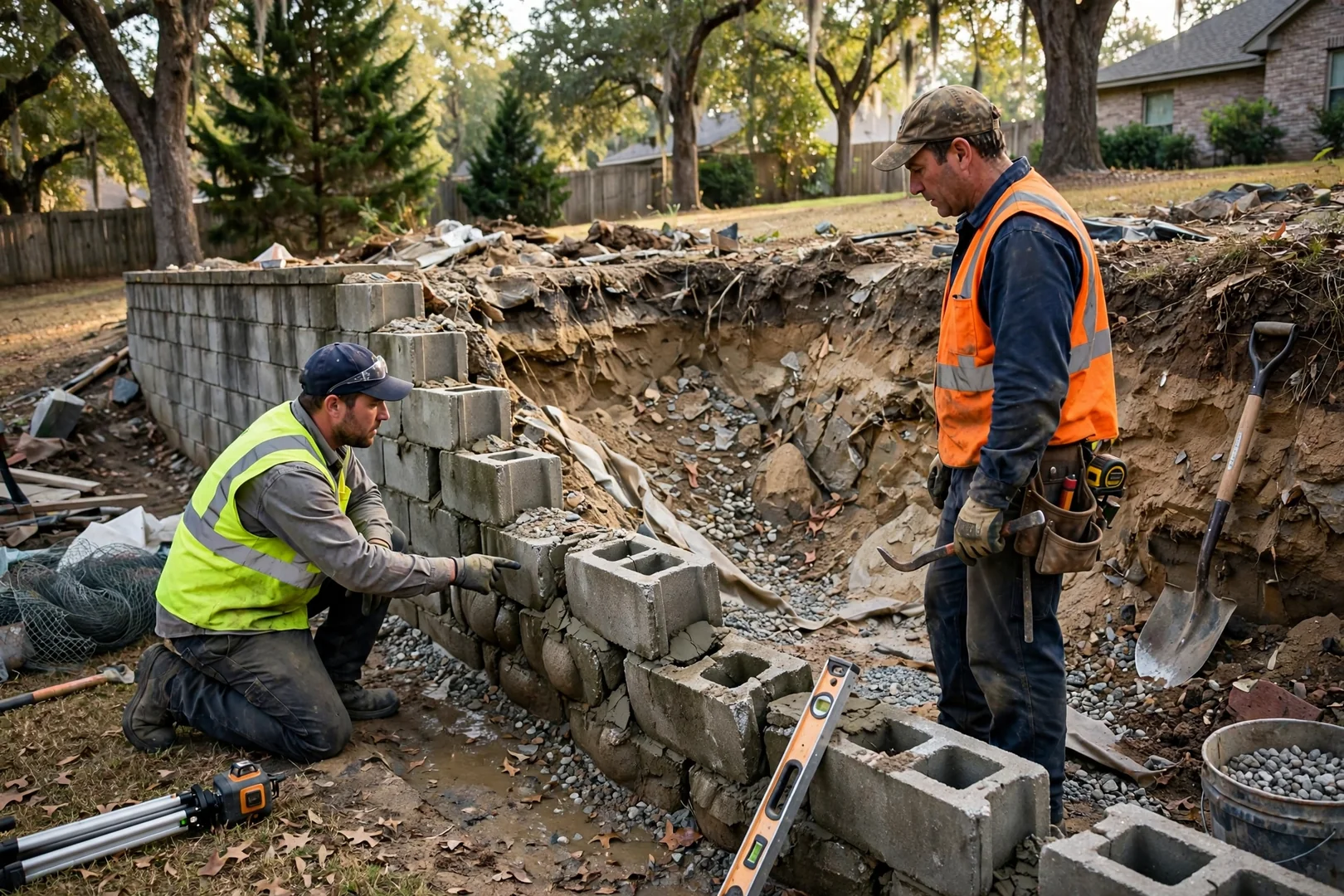
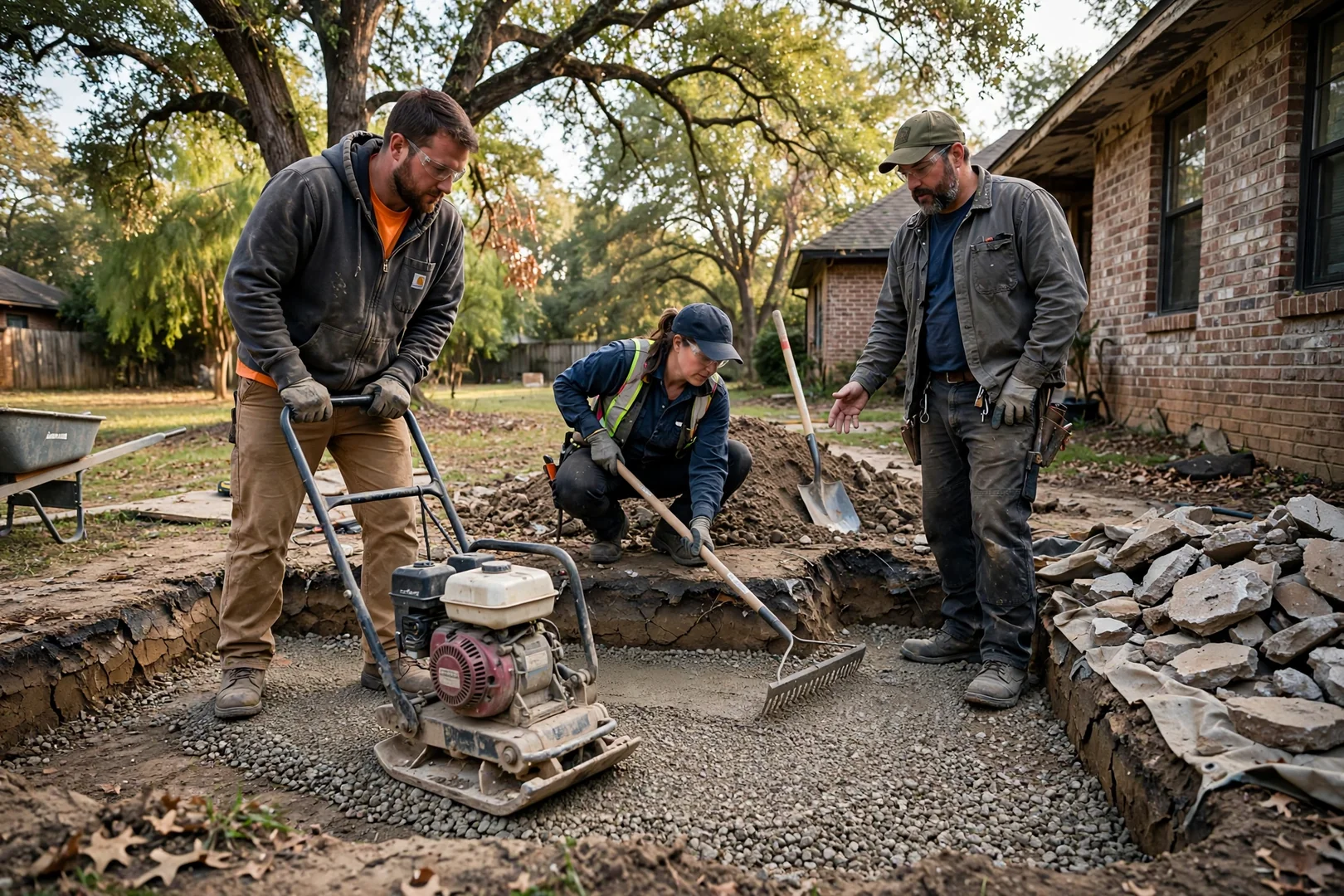
Crew compacting crushed stone base before setting first course of wall block
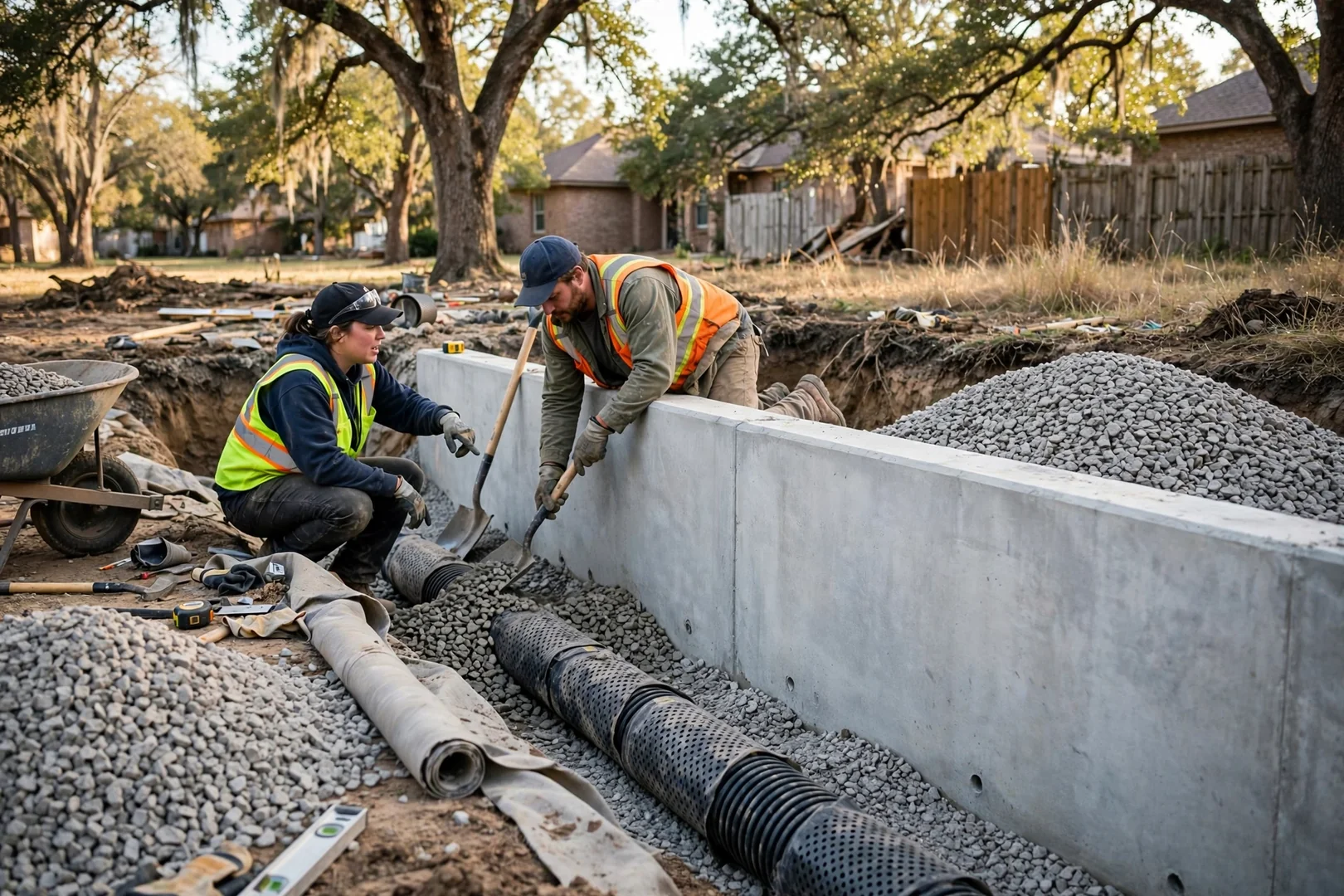
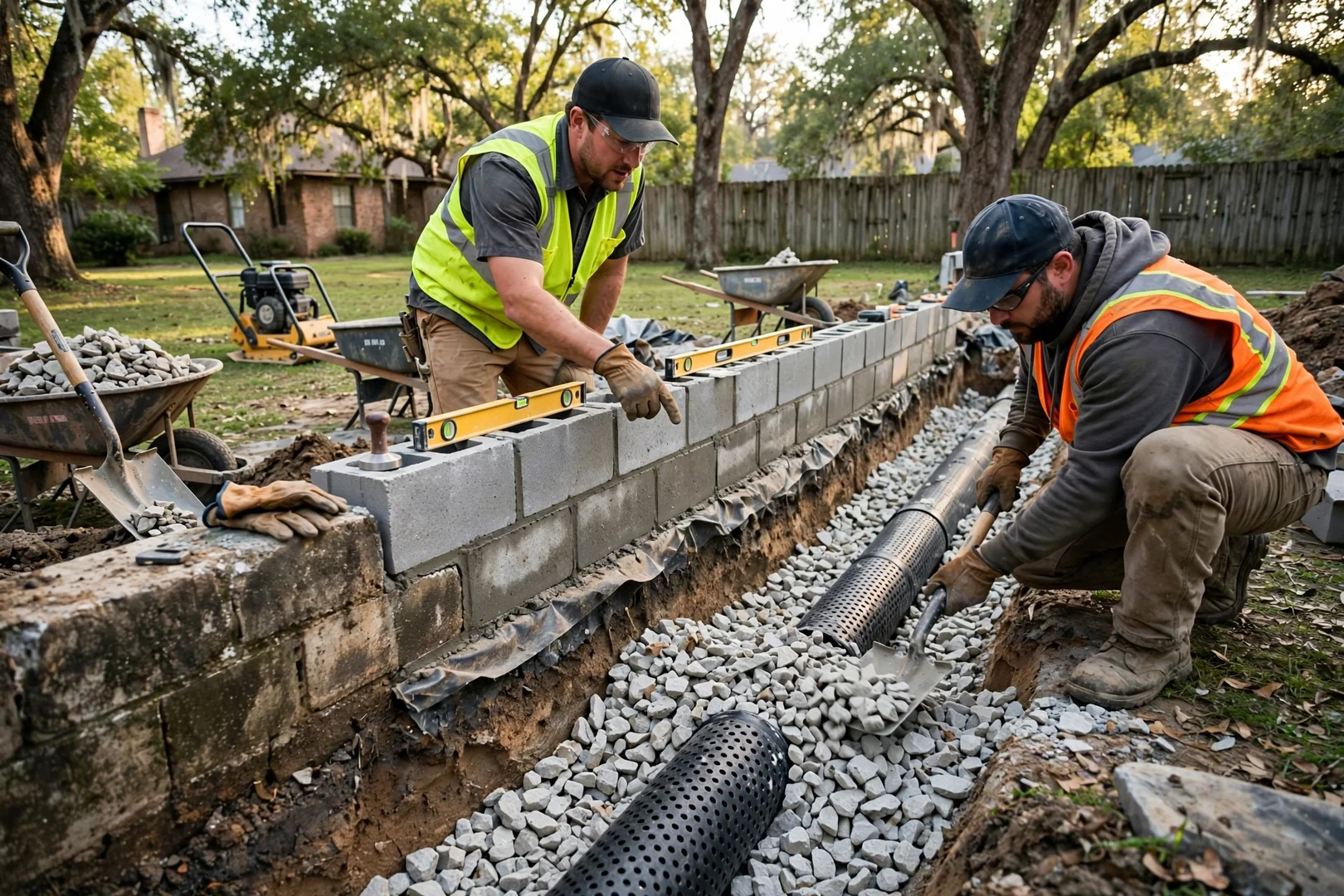
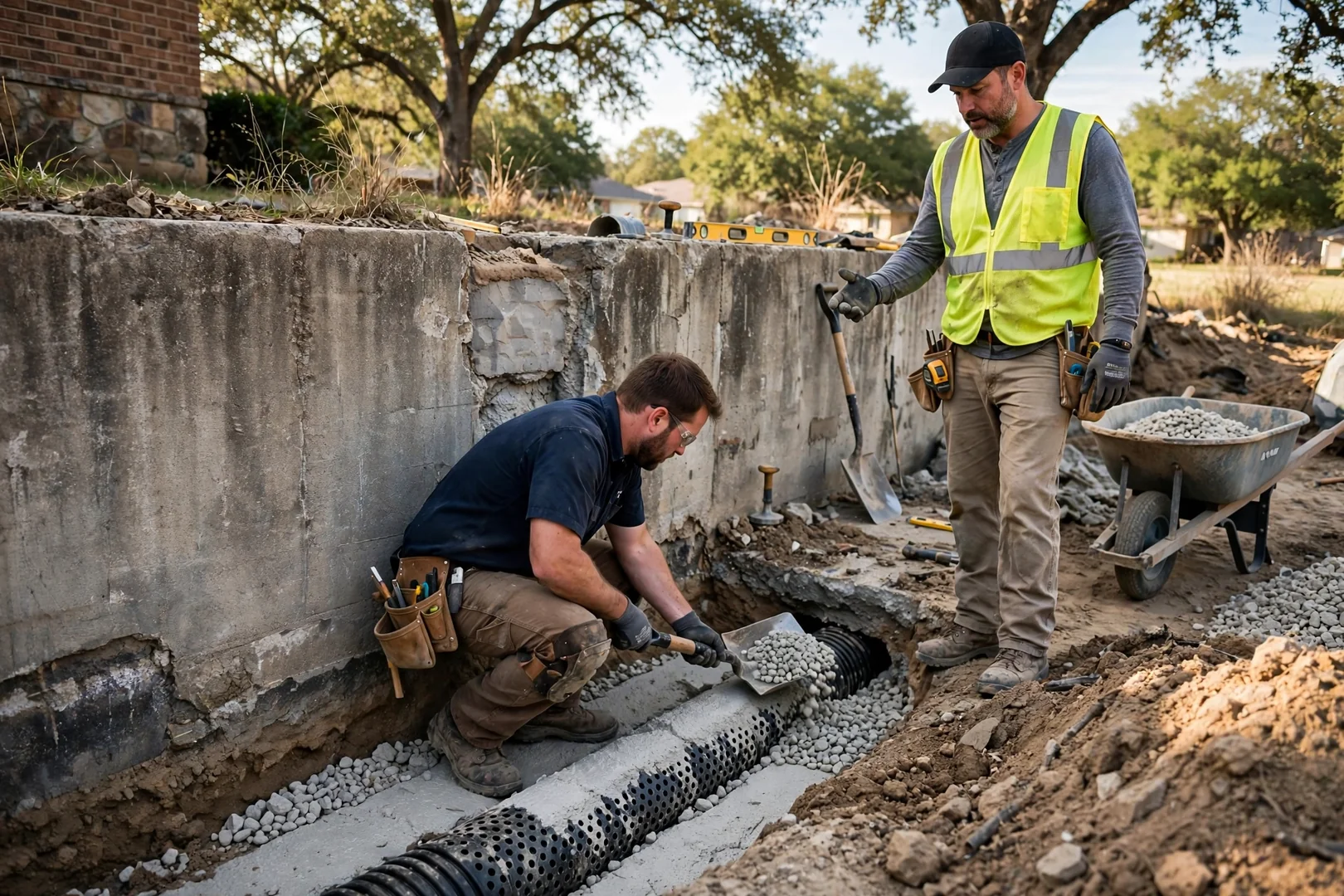
Perforated drain pipe and gravel backfill installed behind a new concrete retaining wall
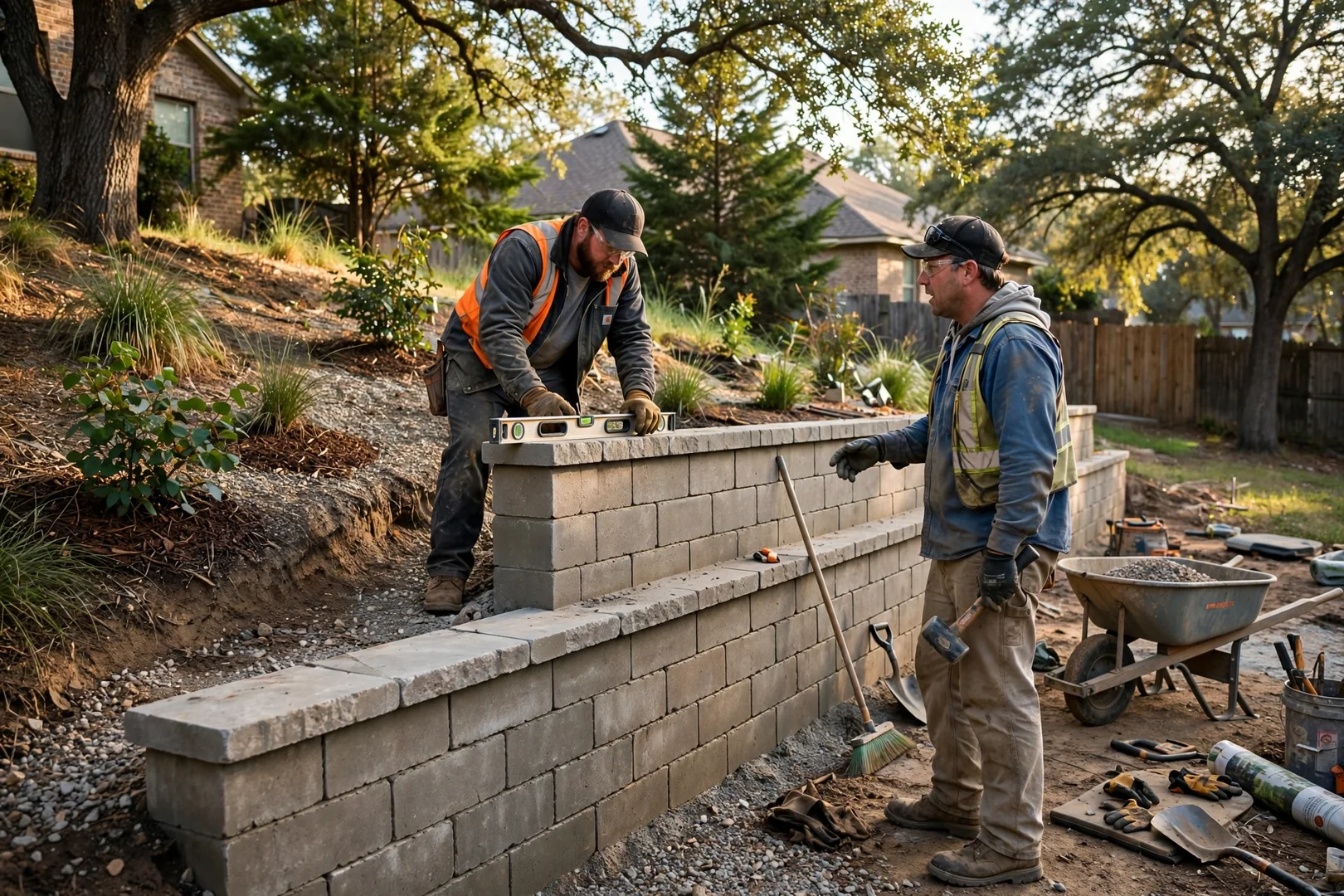
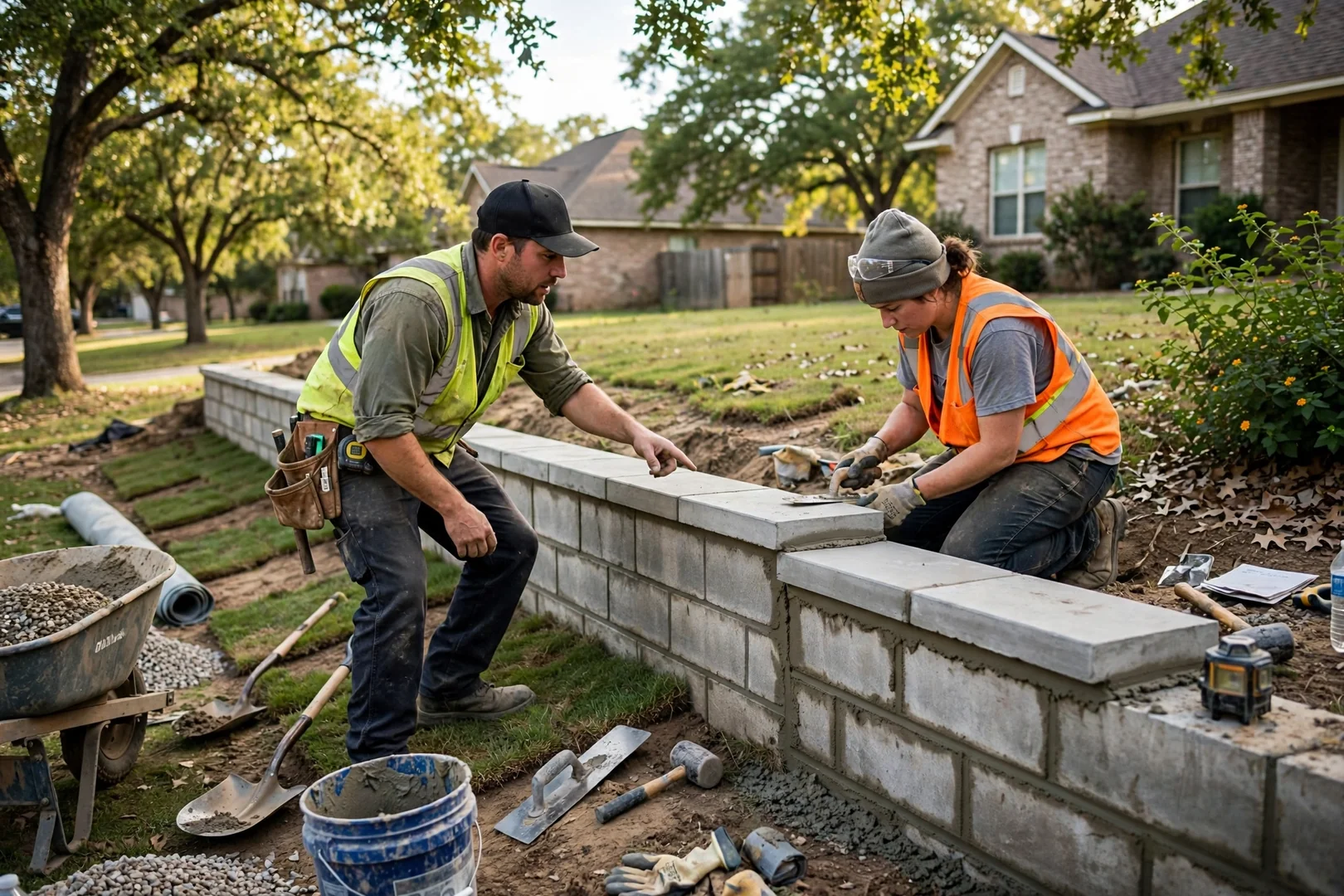
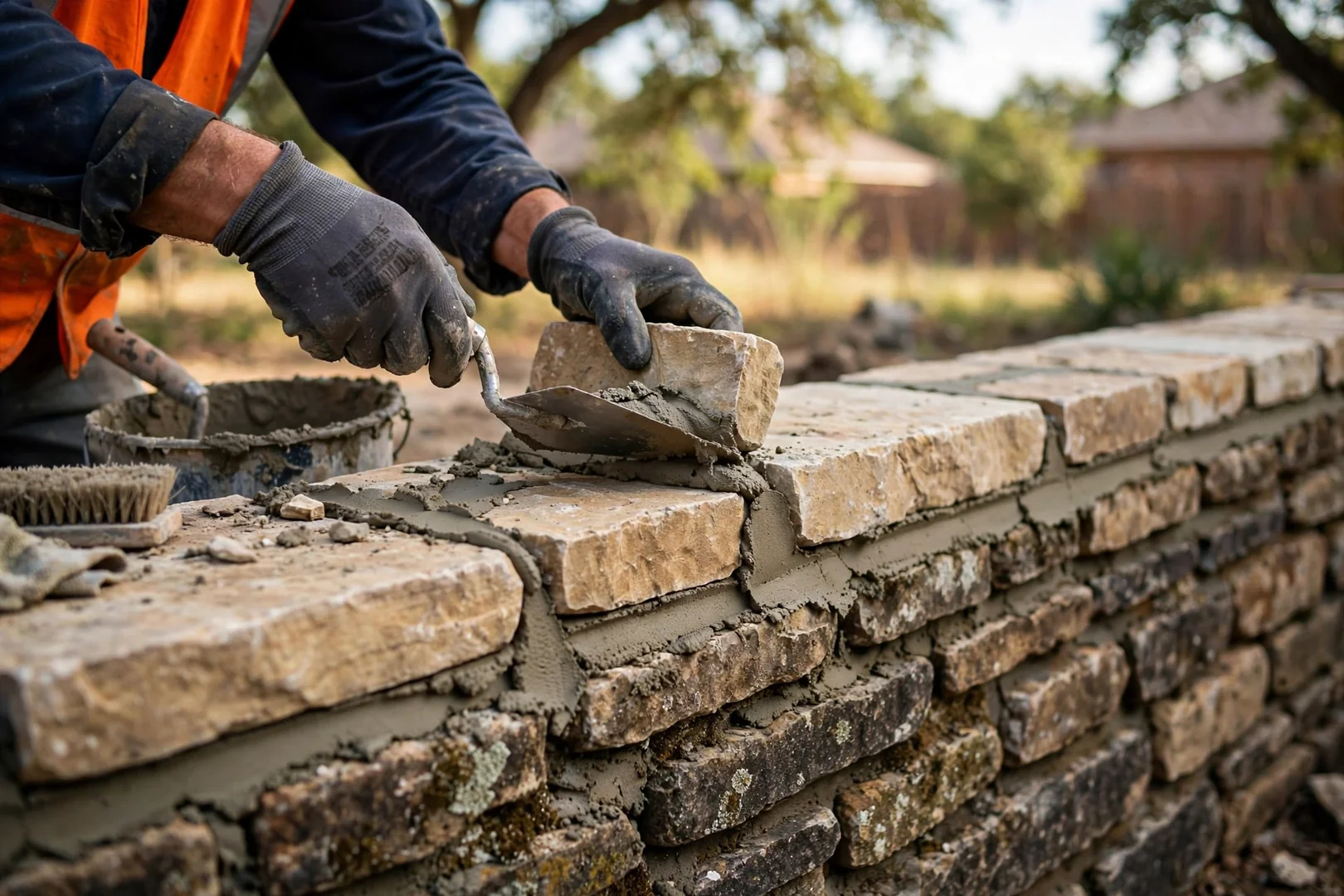
Finished tiered retaining wall with cap stones holding back a landscaped slope

Retaining Wall Service Overview

What Our Retaining Wall Installation & Repair Service Includes

Retaining wall installation and repair is the process of building, reinforcing, or rebuilding a structural wall that holds back sloped soil, and at Highland Village Premier Concrete Contractors it includes new wall construction, drainage correction, and full restoration of leaning or cracked walls across Highland Village properties. Every project starts with a look at the grade, the soil moisture, and how water currently moves behind the wall. From there we excavate to undisturbed subgrade, compact a base of crushed stone, and set the first course dead level, because a wall is only as straight as its footing. Reinforcement choices follow the height and load: geogrid tiebacks for segmental block, rebar and footing keyways for poured concrete walls, plus perforated drain pipe and clean gravel backfill so hydrostatic pressure has somewhere to go.

Work covers residential yards, HOA common areas and multi-unit courtyards, and commercial parking islands where failing walls have been patched over for years. Restoration is often the better path. Instead of hauling off a whole wall, we frequently reset displaced courses, rebuild the drainage chimney, repoint cap stones, and re-grade the slope above so the structure stops moving. For 2026 we are scheduling repairs with the North Texas wet season in mind, since walls that get corrected before heavy spring rain recover far better than ones left to shift another year. Each Highland Village job comes with a written estimate up front and a post-job walkthrough so you can see exactly what changed.

What Signs Mean Your Property Needs Retaining Wall Repair?

Leaning courses, bulging mid-wall sections, stair-step cracking, and soil washing out over the cap are the clearest signs a Highland Village retaining wall needs repair. Most of it traces back to water. When the gravel backfill clogs or the weep holes plug with silt, hydrostatic pressure builds behind the structure and slowly rotates it forward, which shows up as a gap between the wall and the adjoining patio or walkway. Other common symptoms include separated cap stones, efflorescence staining on the face, rutted erosion channels in the slope above, and a sunken strip of lawn where backfill has settled.

Clay soil does the rest of the damage. Expansive soils around Highland Village swell after a wet stretch and shrink during late-summer drought, and that constant movement loosens footings and opens joints a little more each season. Heading into 2026, we are seeing plenty of walls built a decade or two back that never had proper drain tile or geogrid reinforcement behind them. Those walls are not lost causes. Rebuilding the base, restoring drainage, and resetting the courses brings the slope back under control and protects the driveway, foundation, and landscaping sitting behind it.

Schedule a Wall Inspection
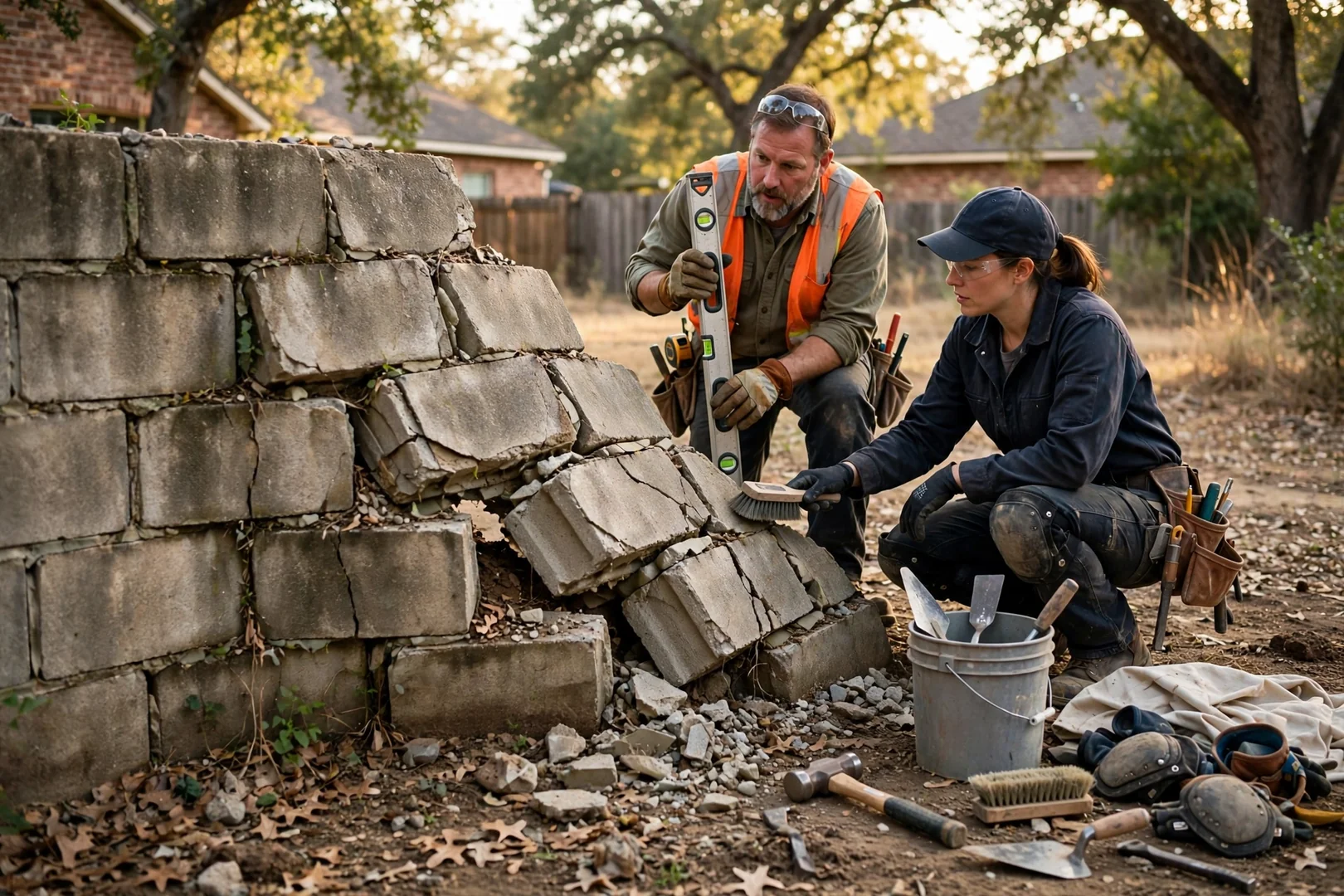
Leaning retaining wall with separated cap stones and eroded soil above the slope

Our Retaining Wall Process

How Does Our Retaining Wall Installation & Repair Process Work?

Our retaining wall installation and repair process follows a four-step sequence built around drainage planning, documentation, and verified results. We begin by reading the slope, the soil movement, and the water path behind the wall, since Highland Village clay swells and shrinks with every wet-dry cycle. Through 2026 we keep the same order: assess, excavate and compact a proper footing, rebuild with correct batter and gravel backfill, then confirm water moves where it should. Every stage gets photographed. You receive a written estimate before anyone starts digging, so nothing about the rebuild feels like a surprise.

Request a Wall Assessment

On-Site Assessment and Written Estimate

We walk the wall with you, check for leaning, bulging courses, cracked caps, and washed-out backfill, then probe the soil behind it. Grade, wall height, and the water path all get noted. You leave the visit with a written estimate and a plain explanation of what is actually failing.

Excavation and Footing Preparation

Failing sections come out carefully, and we dig to stable soil for a compacted base or poured concrete footing. Loose Highland Village clay gets replaced with crushed stone and compacted in lifts. A level, well-drained footing is what keeps the finished wall from creeping forward again.

Wall Rebuild With Drainage Built In

Block, poured concrete, or stone goes back with the correct batter, staggered joints, and geogrid reinforcement where height calls for it. Behind the face we place filter fabric, gravel backfill, and weep holes or a perforated drain line so hydrostatic pressure has an exit instead of a target.

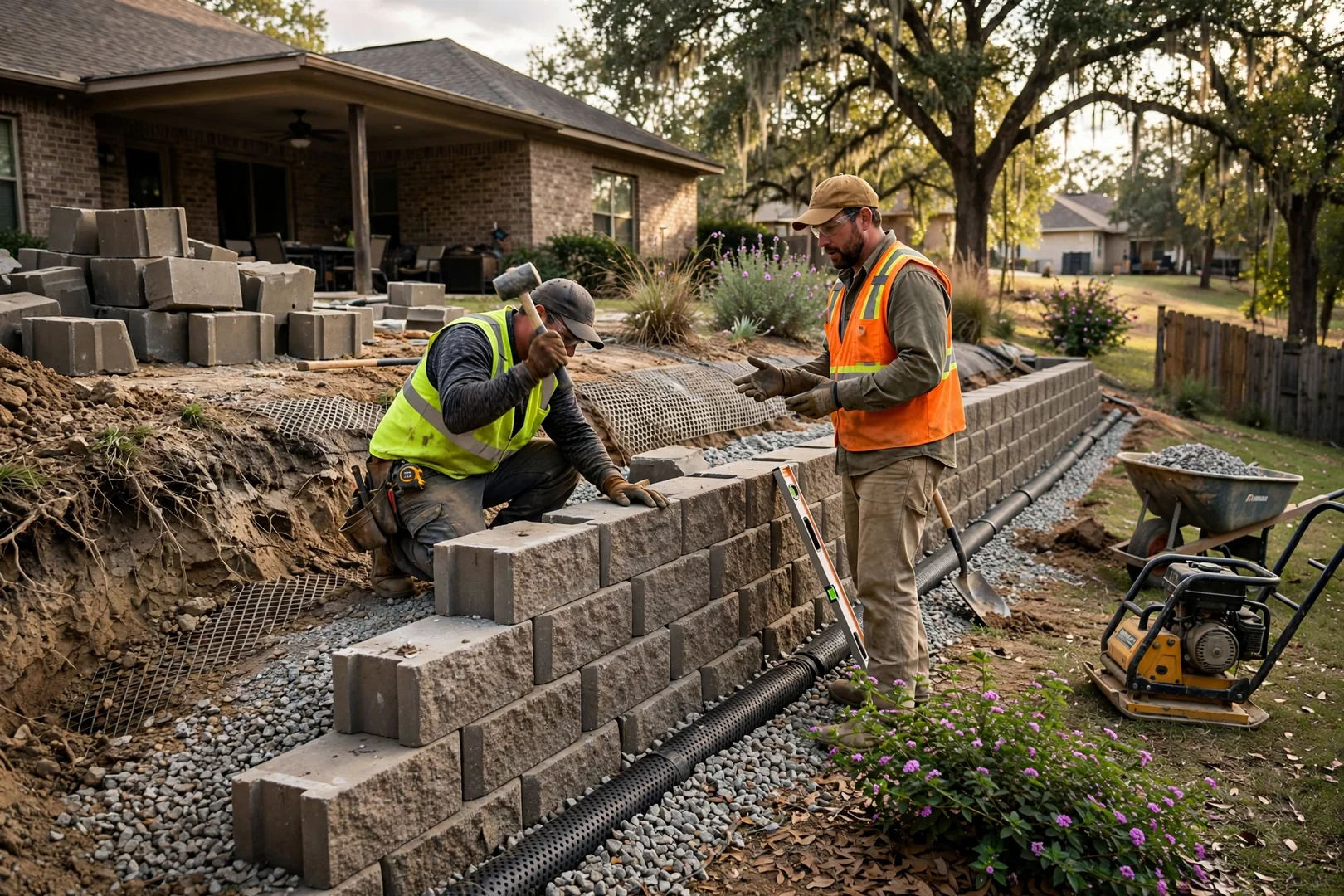
Stone retaining wall rebuilt along a sloped Highland Village backyard with gravel drainage behind it

What Affects Retaining Wall Installation & Repair Pricing in Highland Village?

Retaining wall pricing in Highland Village depends mostly on wall height, the material you choose, how much drainage work is needed behind the face, and how much failing structure has to be removed first. Taller walls call for deeper footings, geogrid layers, and occasionally engineered tiebacks, all of which add labor and material. Access matters too, since a tight backyard means hand digging or smaller equipment. Soil conditions can shift the number as well.

Repair work varies more than new installation: resetting one bulging section with fresh gravel backfill and new weep holes costs far less than a full rebuild on shifting clay. Most 2026 quotes also account for haul-off of broken block, cap replacement, and restoring the grade around the finished wall. Because every slope drains differently, exact pricing takes a short site assessment, and our written estimates are always free.

// Why Homeowners Call Us //

Why Do Highland Village Homeowners Trust Us for Retaining Wall Work?

Highland Village homeowners choose us for retaining wall work because we rebuild failing walls from the drainage up instead of just refacing them. Water is the real culprit. Our crews reset footings, add geogrid reinforcement, and open weep holes so leaning stops. Written estimates, photo documentation, and a post-job walkthrough come standard in 2026.
Call us on: 972-362-9469

Recent Retaining Wall Projects

Retaining Wall Installation and Repair Work Completed in Highland Village in 2026

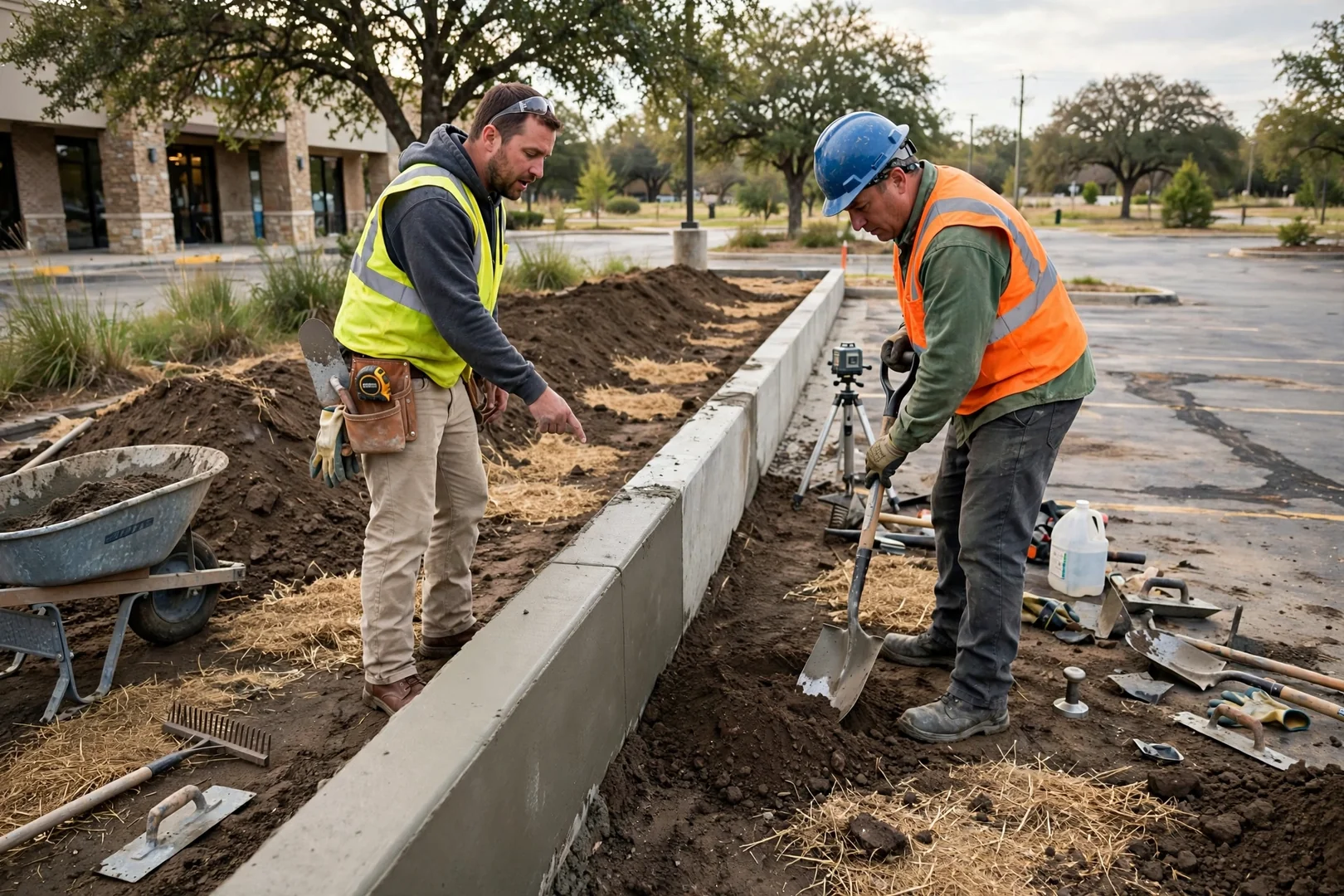
Retaining wall work around Highland Village this 2026 has covered everything from short garden terraces to tall tiered walls holding back sloped backyards near the lake. Some walls were brand new builds on compacted base and gravel backfill, while others were older segmental block walls that had started leaning after years of clay soil movement and poor drainage. We approach each one the same way: dig out the failed section, correct the footing, add proper drain rock and geogrid reinforcement, then rebuild the courses so the wall sits plumb again. Bulging block, washed-out joints, and separated caps are the problems we see most often, and all three usually trace back to water with nowhere to go.

Restoring a wall rather than ignoring it saves homeowners a lot of trouble later. On several Highland Village properties we reset cap stones, installed weep drains and filter fabric, and regraded the soil behind the wall so runoff moves away from the structure instead of pressing against it. Commercial parking islands and residential driveway edges have been part of the mix too, each measured, estimated in writing, and finished with a walkthrough so owners can see the corrected drainage and rebuilt courses for themselves. Aging walls can come back strong. That recovery is the part we enjoy most.

Retaining Wall Questions

Retaining Wall Installation and Repair FAQs for Highland Village Homeowners

Homeowners ask us a lot of good questions before a wall gets built or rebuilt. Below are the ones that come up most often with Highland Village customers in 2026, covering scheduling, what a repair actually includes, how to prepare your yard, and how local soil affects the work.

Rebuilt block retaining wall with new drainage behind a sloped Highland Village yard

A wall can usually be repaired when the footing is still sound and the leaning or bulging is limited to a few courses, while full replacement makes sense once the base has shifted or the block face is crumbling along most of its length. We check for plumb, look at joint separation, and probe the backfill to see whether drain rock has clogged with silt. That inspection comes with a written estimate so you can compare both paths.

Free Retaining Wall Estimates

Schedule Retaining Wall Repair in Highland Village

Call Us: 972-362-9469

Leaning blocks, bulging timbers, and soil washing onto the sidewalk all tend to get worse through a few seasons of Highland Village rain, so the sooner a wall gets looked at, the less rebuilding it usually needs. Our crew walks the full length of the wall with you, checks drainage behind it, looks at footing condition, and explains what restoration would actually involve in plain terms. Every visit ends with a free written estimate that spells out materials, base preparation, drainage gravel, and timeline. There is no obligation attached. If you decide to move forward, we work with you on a start date that fits your 2026 calendar, and we keep openings available for smaller repair work alongside full rebuilds. Call or email us to set up a look at your wall, and we will get your Highland Village property back on solid, well-drained ground.

Contractor reviewing a leaning segmental block retaining wall with a homeowner in a residential backyard