Concrete Slab Installation in Highland Village, TX
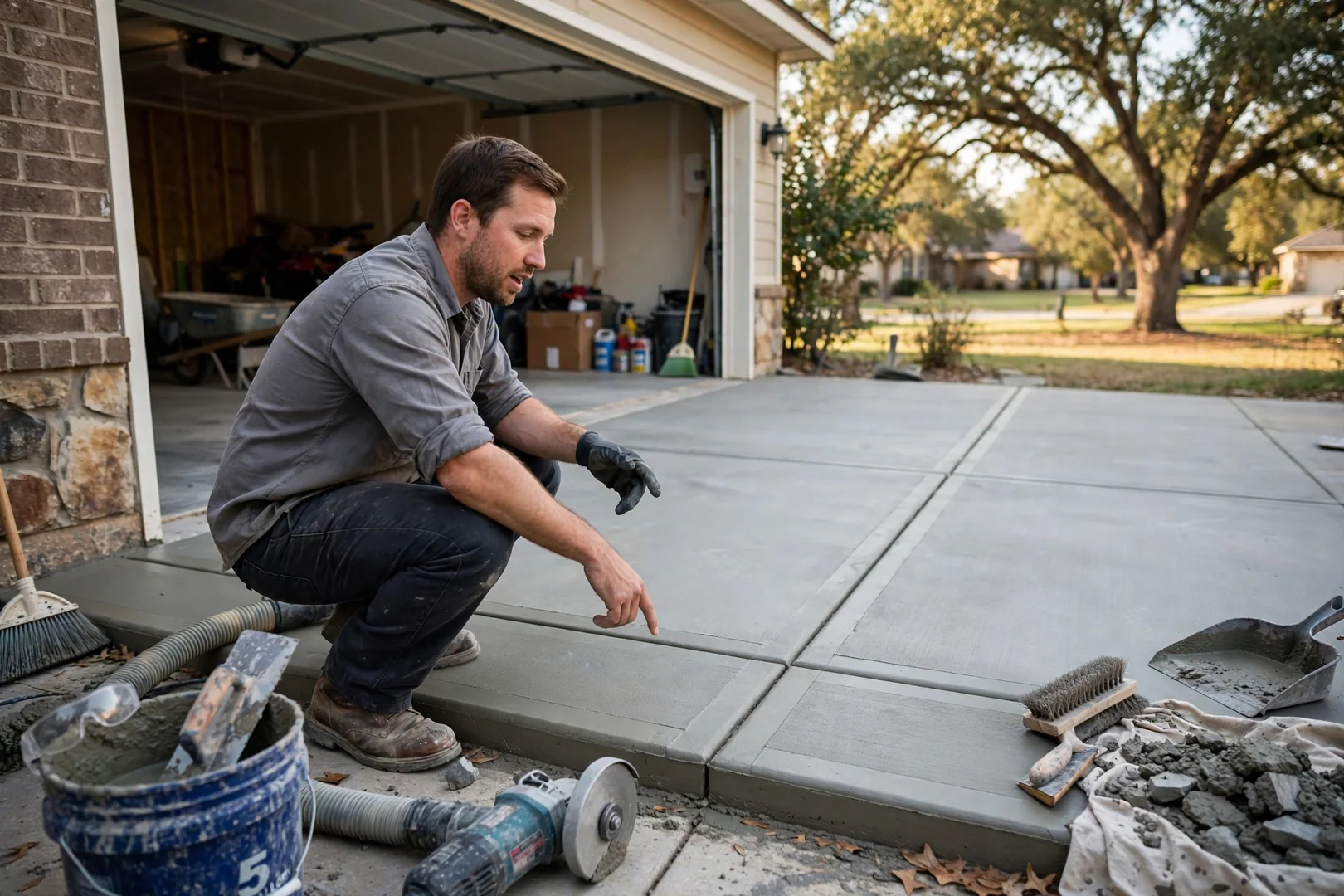
Concrete slab installation is the process of forming, reinforcing, and pouring a new structural pad for a patio, garage, shed, driveway approach, or room addition, and it is often the right answer once an older slab has cracked beyond patching. Plenty of Highland Village properties sit on expansive clay soil that swells after heavy spring rain and shrinks during dry summer stretches, which is exactly what pulls aging pads apart. Our crews rebuild from the ground up with compacted base material, proper rebar or wire mesh placement, and planned control joints so the new slab moves the way it should. We are booking slab replacement and new pour projects through 2026. Highland Village Premier Concrete Contractors handles the layout, forming, pour, and finish, then walks the finished work with you before cleanup is done.
Share a few details about the area you want rebuilt and a member of our Highland Village crew will follow up with pricing and scheduling.
Slab Installation Service Overview
What Our Concrete Slab Installation Service Includes
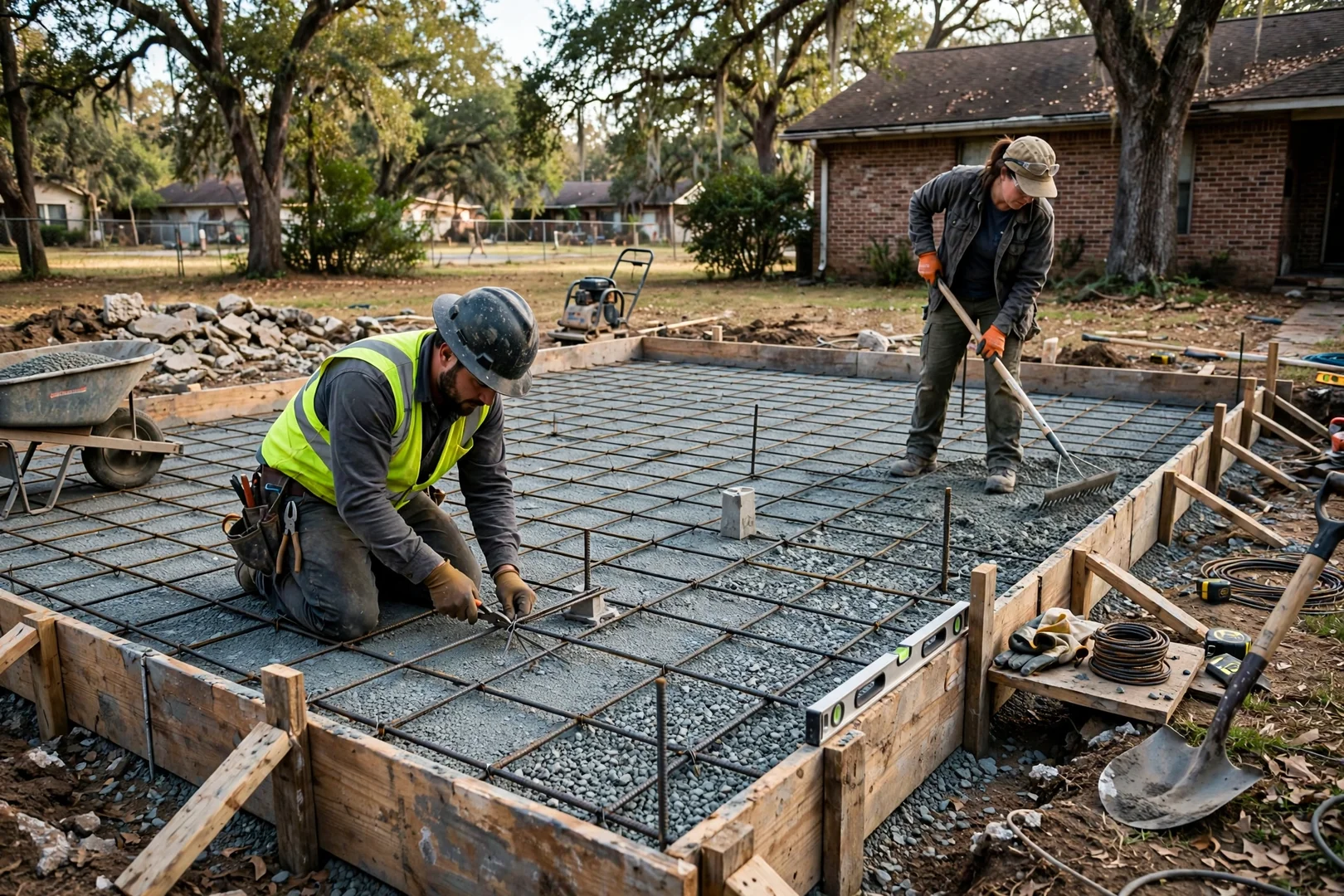
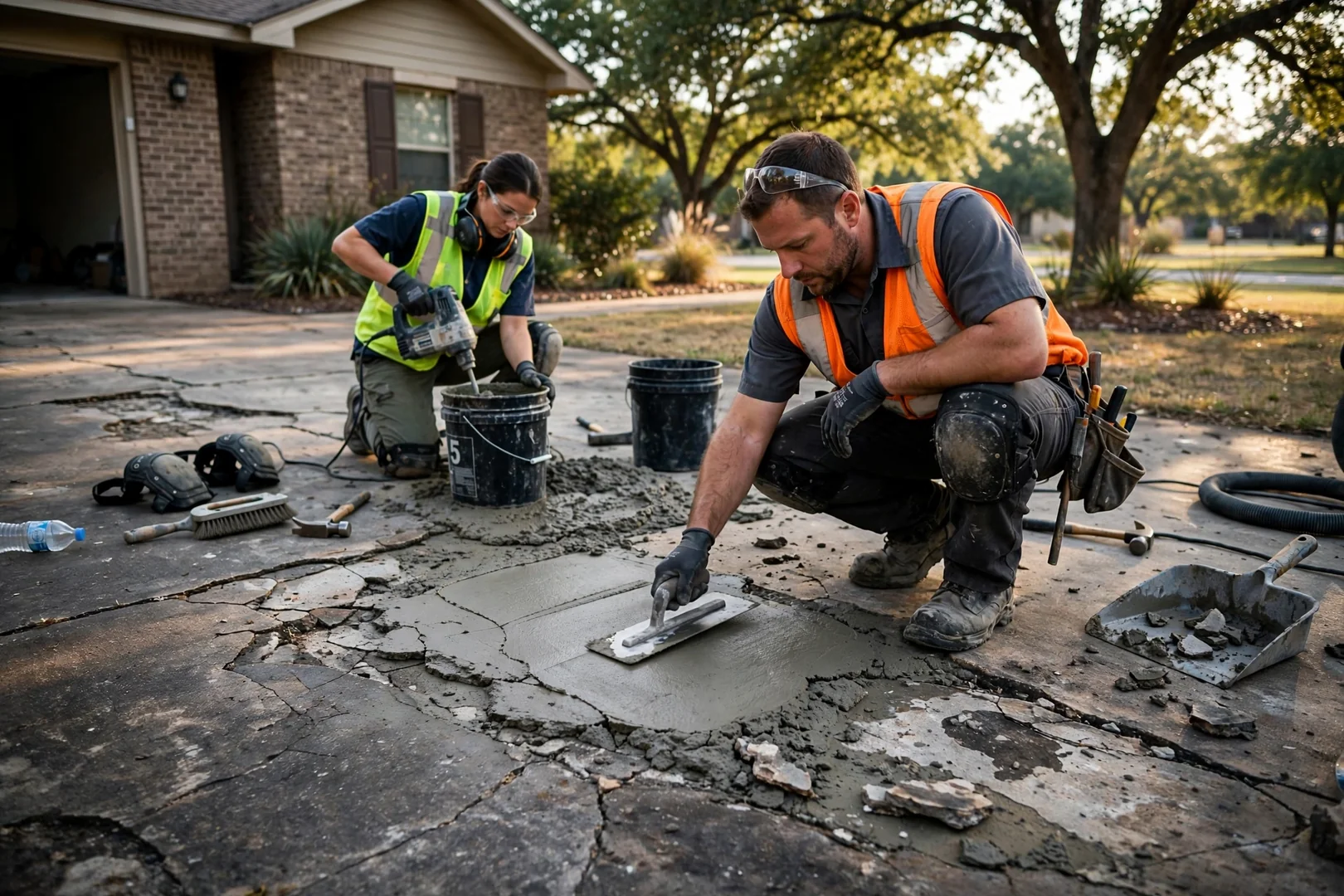
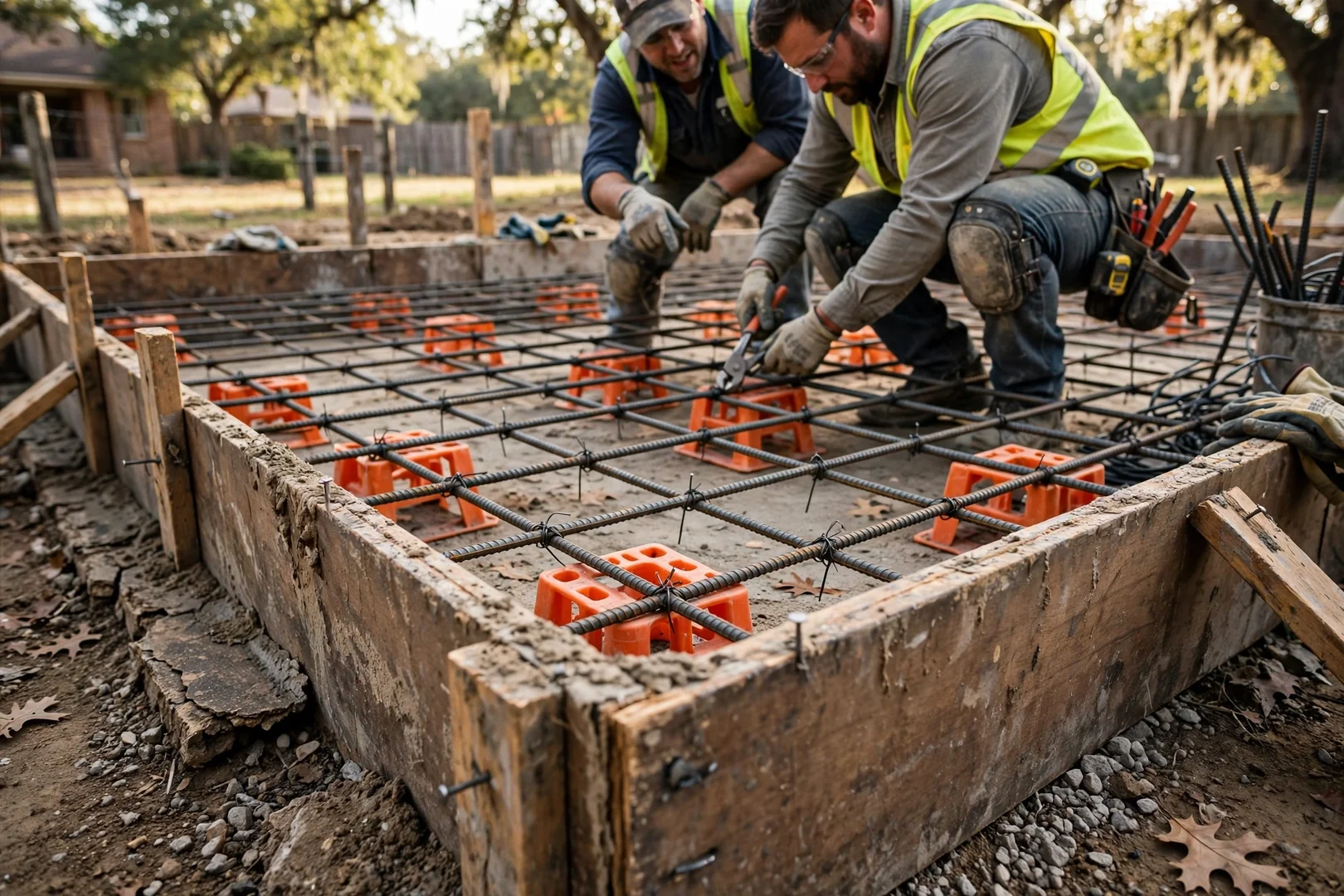
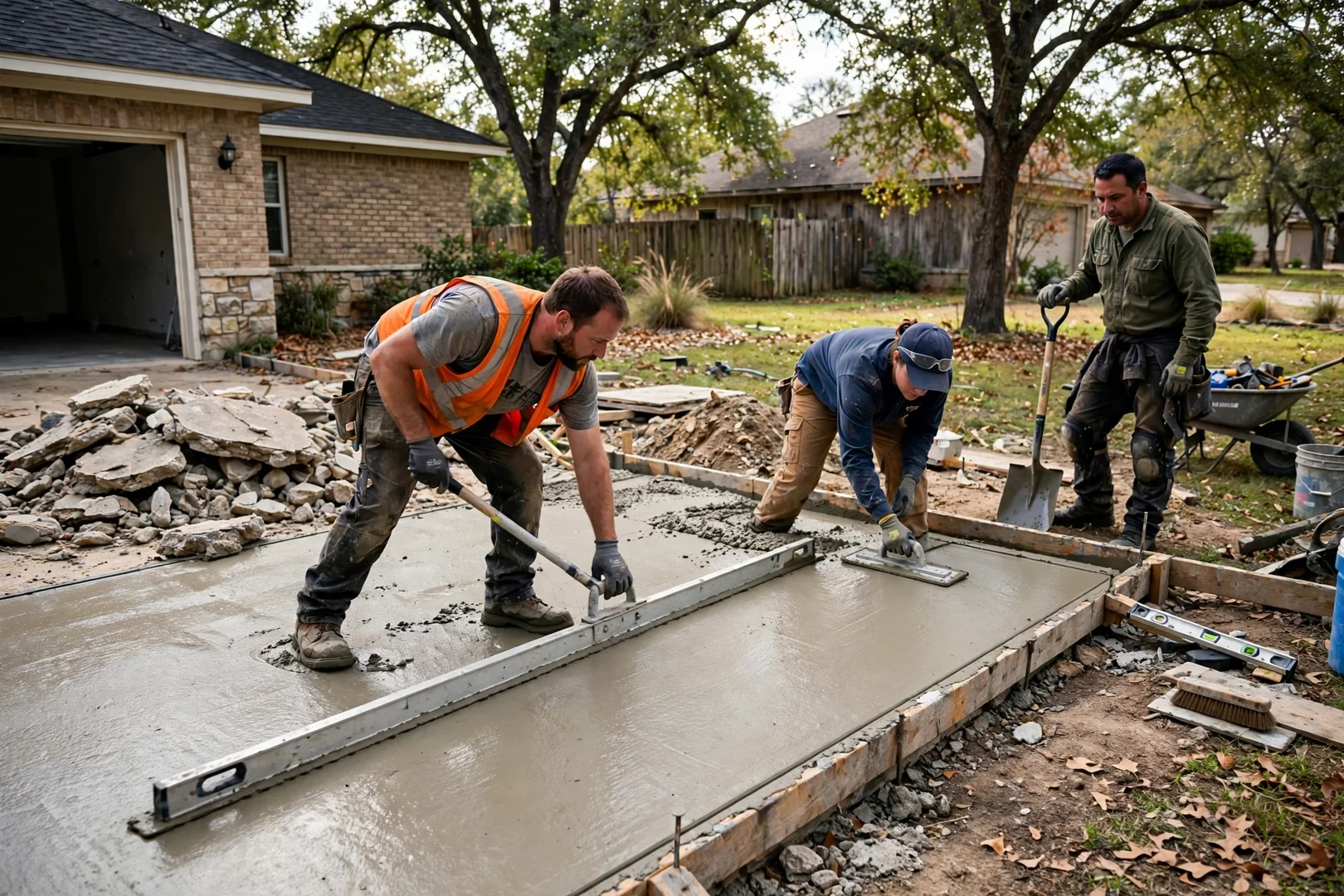
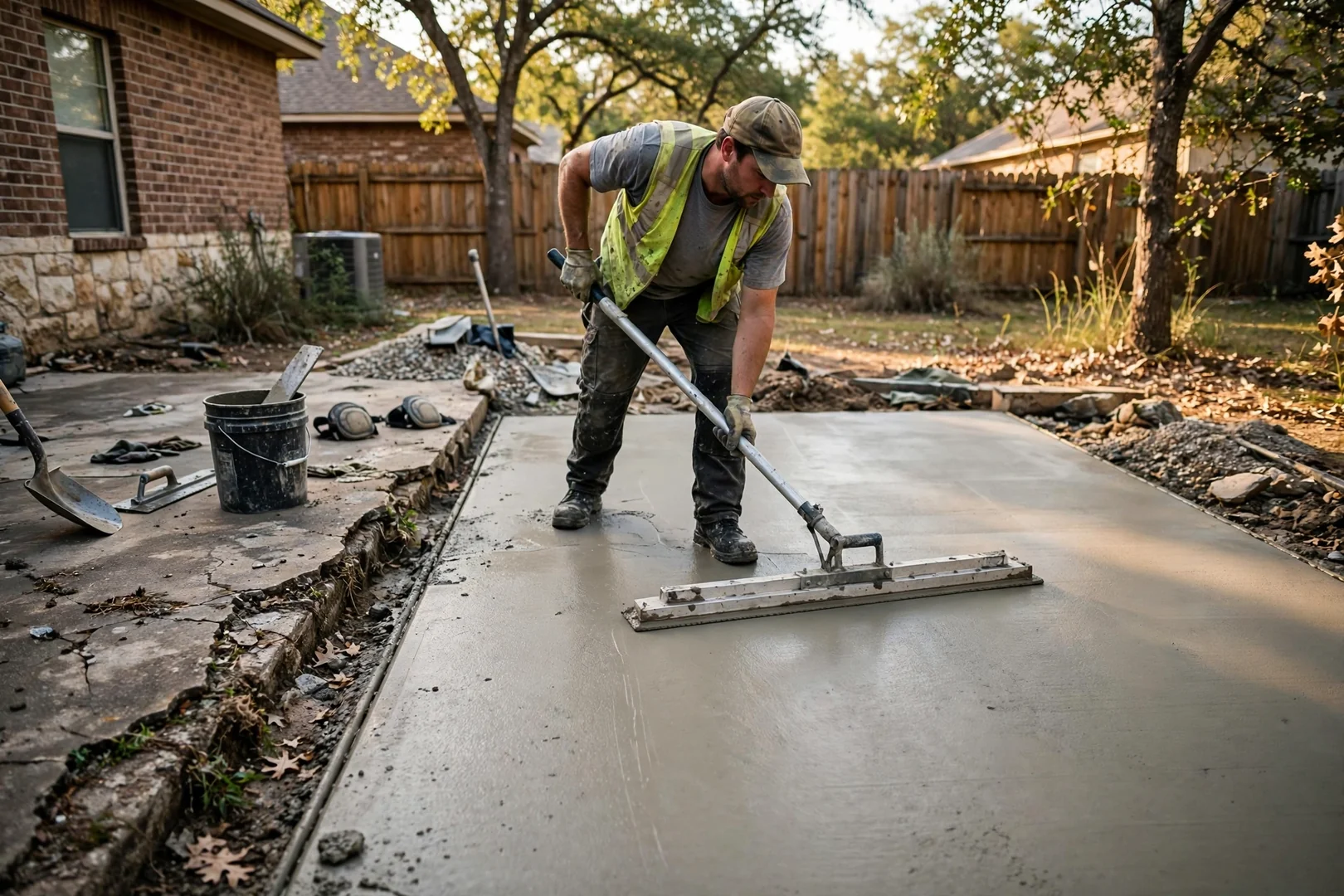
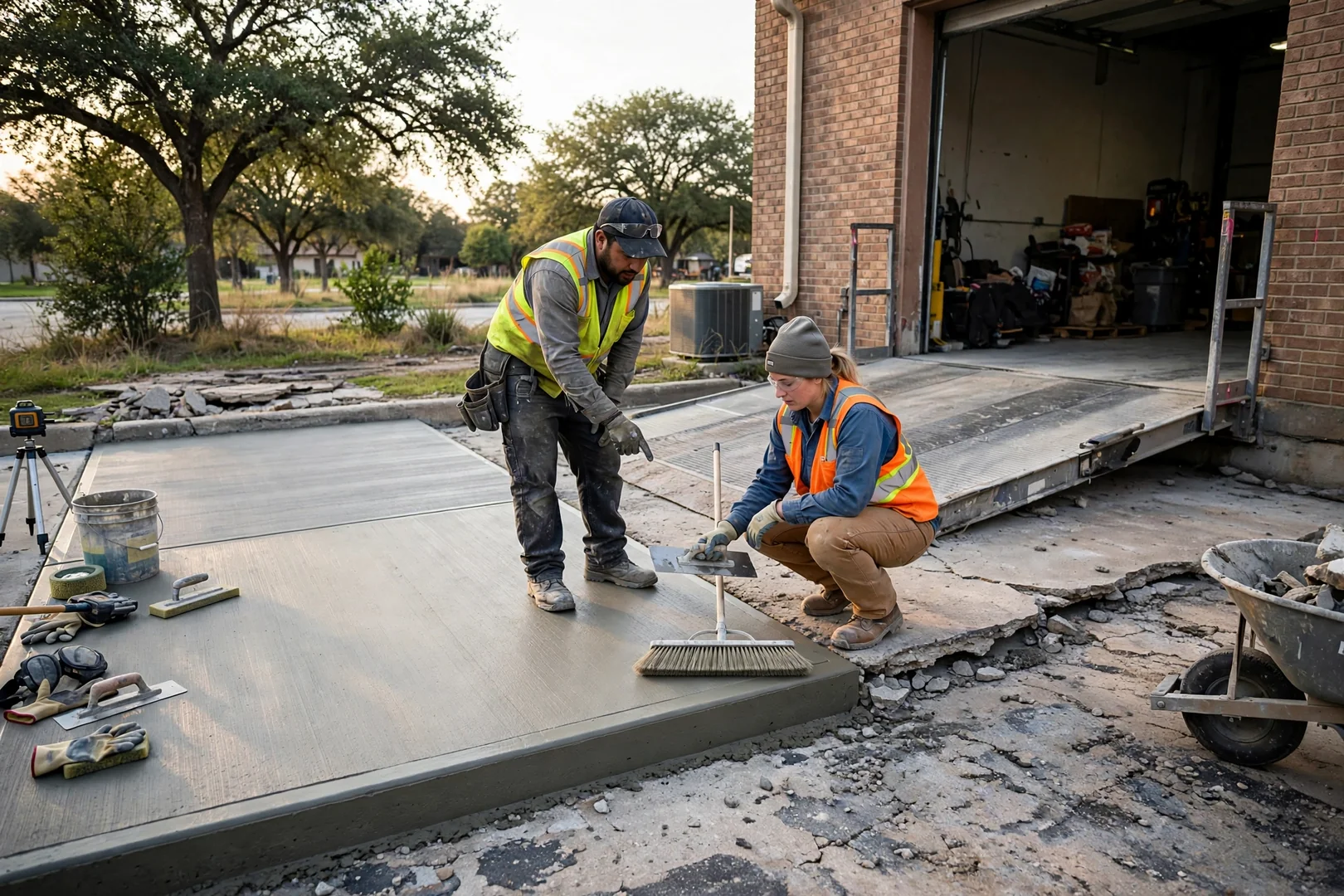
Concrete slab installation is the process of excavating and grading a site, compacting a gravel or select-fill base, setting forms, placing steel reinforcement, then pouring and finishing a level concrete pad, and at Highland Village Premier Concrete Contractors it covers everything from small shed pads to full patio, garage, and commercial floor slabs across Highland Village properties. Our crews start by removing broken or sunken concrete, then correct the soil conditions underneath that caused the failure in the first place. Base material gets compacted in lifts, vapor barrier is added where the slab sits under a conditioned space, and rebar or welded wire mesh is chaired at the correct height rather than laid on the dirt. After the pour, we screed, bull float, and finish to the texture you choose, then cut or tool control joints so future movement shows up in a planned line instead of a random crack.
Work like this is about recovery as much as construction. Many of the slabs we replace in 2026 belong to homes built decades ago, where years of clay movement, poor drainage, and freeze-thaw cycling have left spalled surfaces, separated seams, and trip hazards near doorways. Residential patios, multi-unit walkway landings, and commercial loading pads all get the same sequence of inspection, subgrade correction, reinforcement, and curing care. We talk through slab thickness, mix design, and drainage slope before anything is poured, and we provide written estimates so the scope is clear. Curing is not rushed. The goal is a pad that restores the usable, good-looking surface the property had before the damage set in, and holds that condition for years.
Short, to the point: a rebuilt slab should outlast the one it replaced.
What Signs Mean Your Property Needs Concrete Slab Installation?
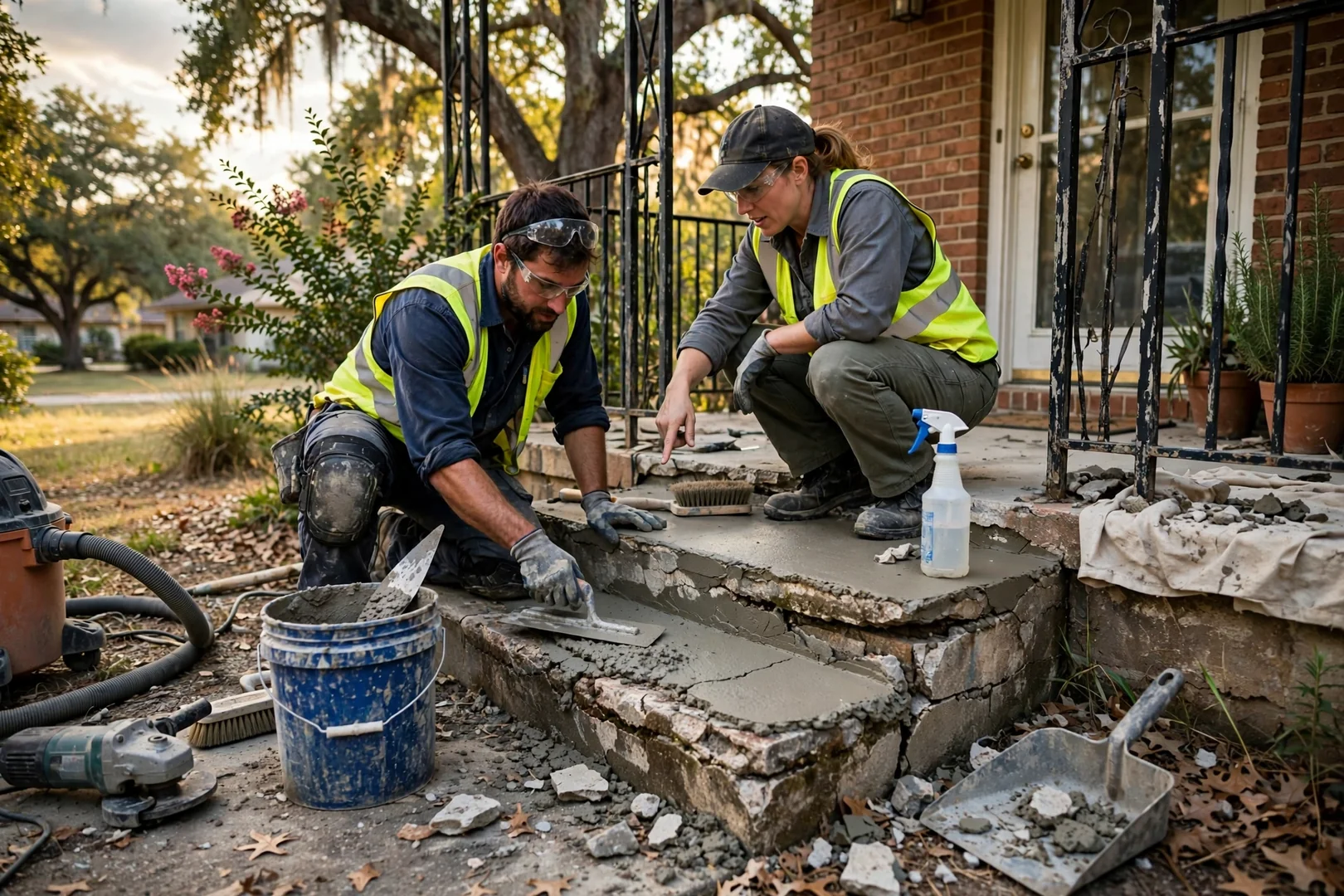
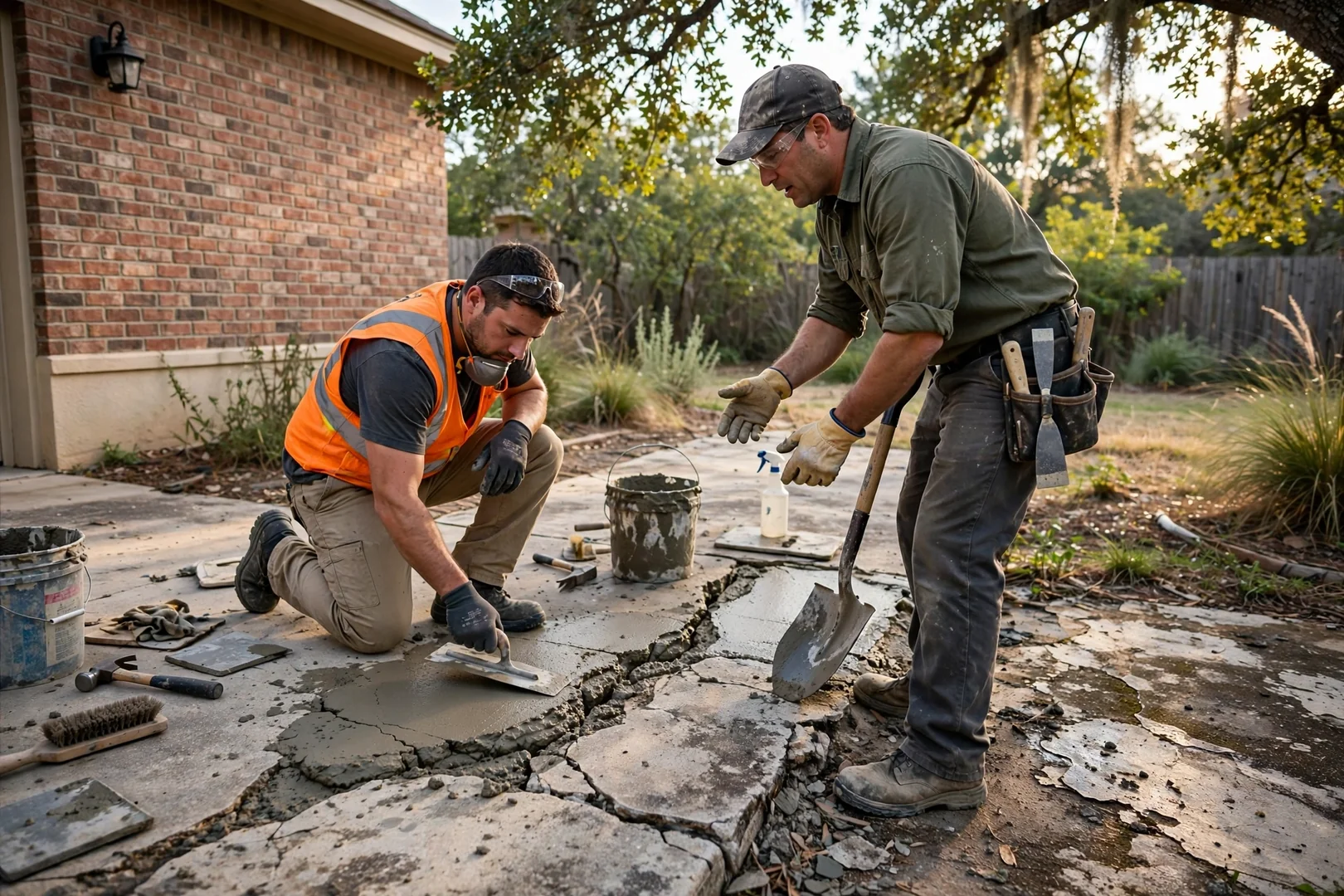
Your property likely needs a new concrete slab when the existing pad shows structural cracking, settlement, or surface loss that patching and leveling can no longer correct. Watch for wide cracks that keep opening season after season, corners that have dropped and now hold standing water, and spalling or flaking where the top layer has worn away from the aggregate. Hollow spots that sound empty underfoot usually mean the subgrade has washed out and left the slab unsupported. Doorways that scrape, patio furniture that will not sit flat, and raised seams at joints are other everyday clues Highland Village homeowners notice first.
Clay soil in Highland Village is the usual culprit. Expansive soil swells during wet spells, dries and shrinks in the heat, and that repeated movement fatigues reinforcement and widens joints until the pad loses its load-bearing strength. Through 2026 we are seeing plenty of slabs that were leveled once already and have continued to fail because the base was never rebuilt. When cracking crosses reinforcement, drops exceed an inch, or rebar is exposed and rusting, a full slab installation is the fix that actually resolves the problem. We inspect the subgrade, explain what we find, provide a written estimate, and finish with a walkthrough so you can see the restored surface for yourself.
How Does Our Concrete Slab Installation Process Work?
Our concrete slab installation process follows a four-step sequence built around site evaluation, proper subgrade preparation, documented pour conditions, and a verified finish. Every 2026 slab we place in Highland Village starts with a look at drainage, soil movement, and whatever is already failing on the property, since our local clay expands and shrinks with the seasons. From there we set forms, compact the base, position rebar or wire mesh, and plan control joints before any concrete arrives. We keep you in the loop. Curing and sealing wrap things up so the new slab stays sound for years.
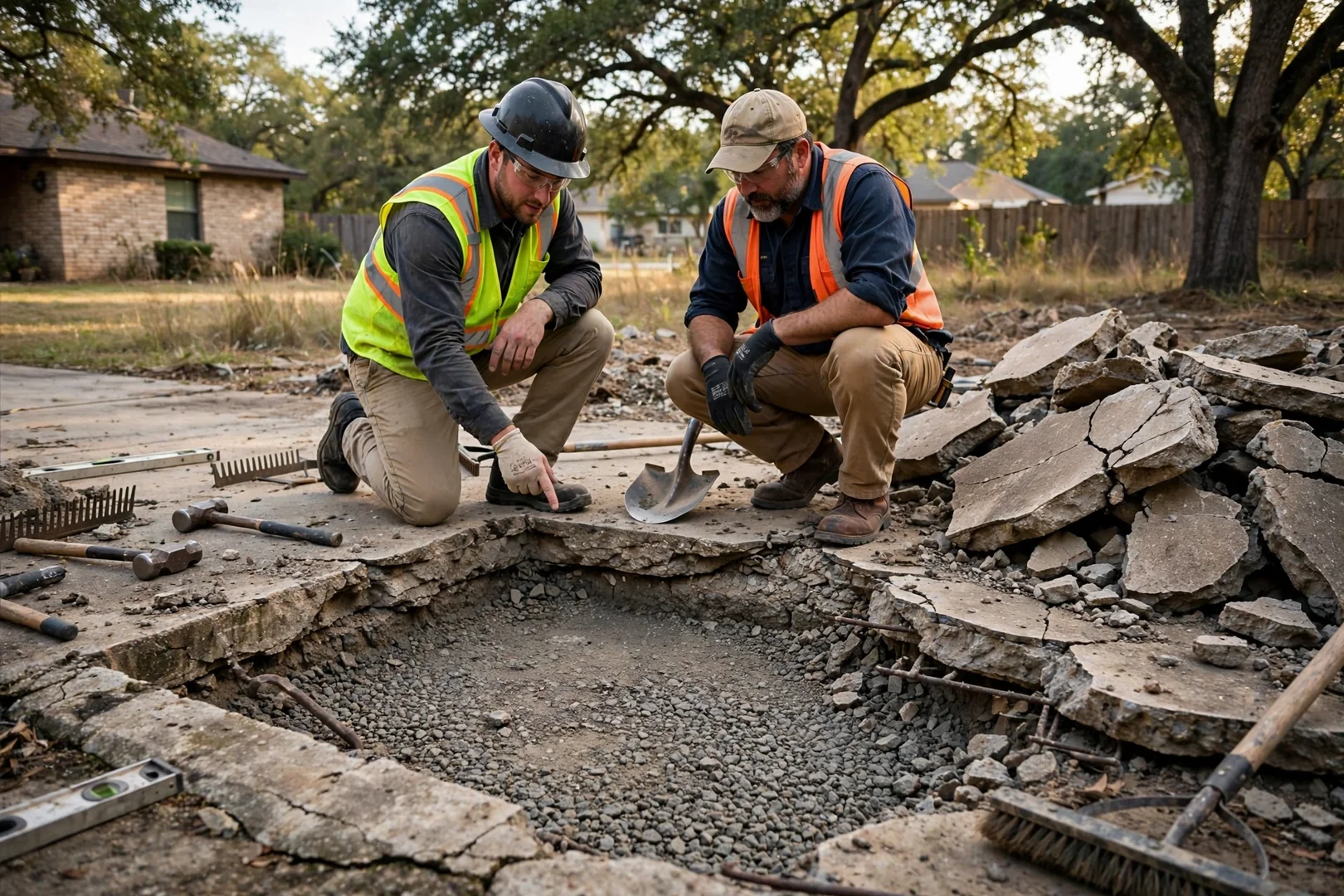
We walk the area with you, check grade and drainage patterns, and note any cracked or sunken concrete that needs removal. Soil conditions, slab thickness, and access for equipment all get measured. You receive a written estimate that spells out scope, materials, and timing before anything begins.
Demolition, Excavation, and Subgrade Prep
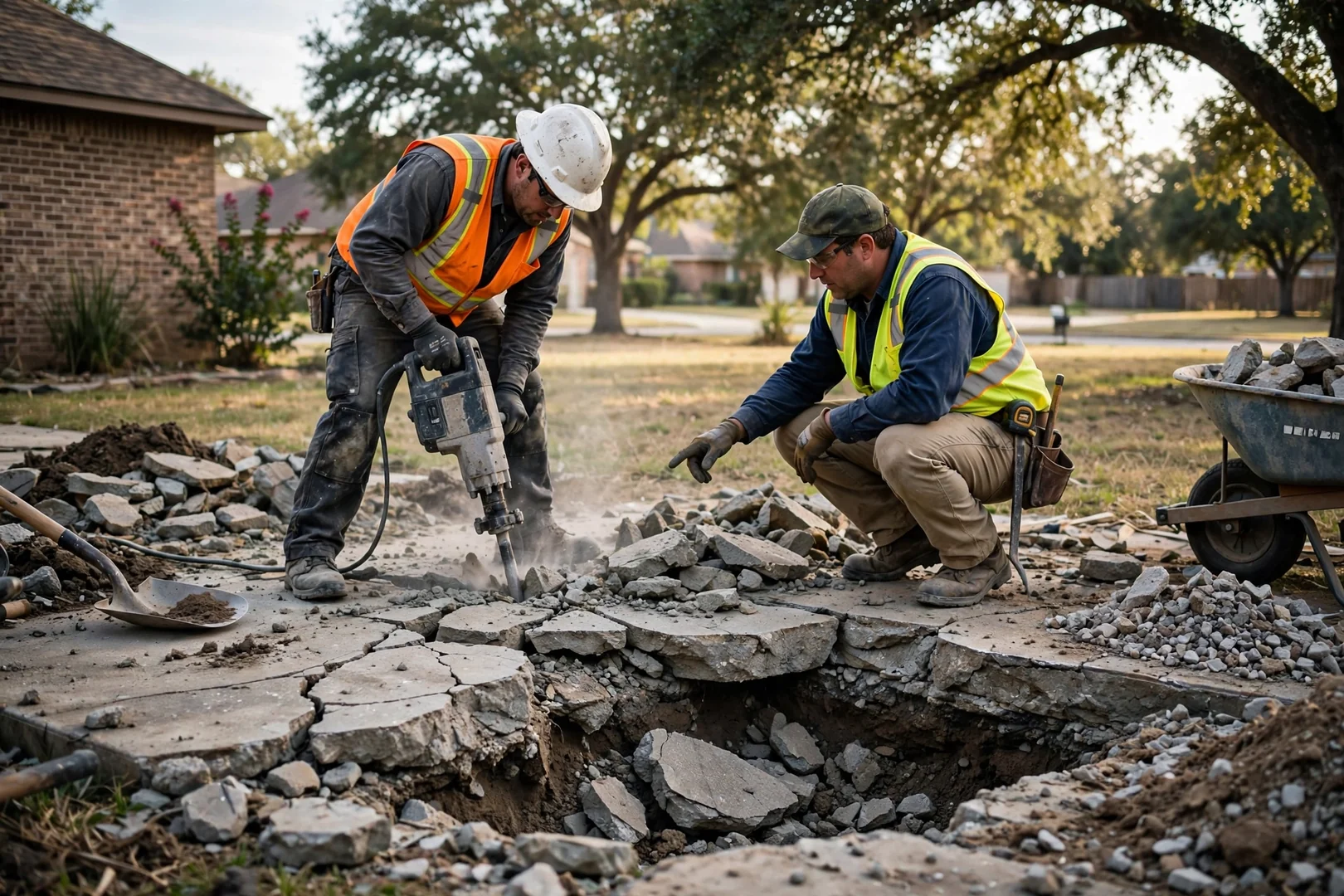
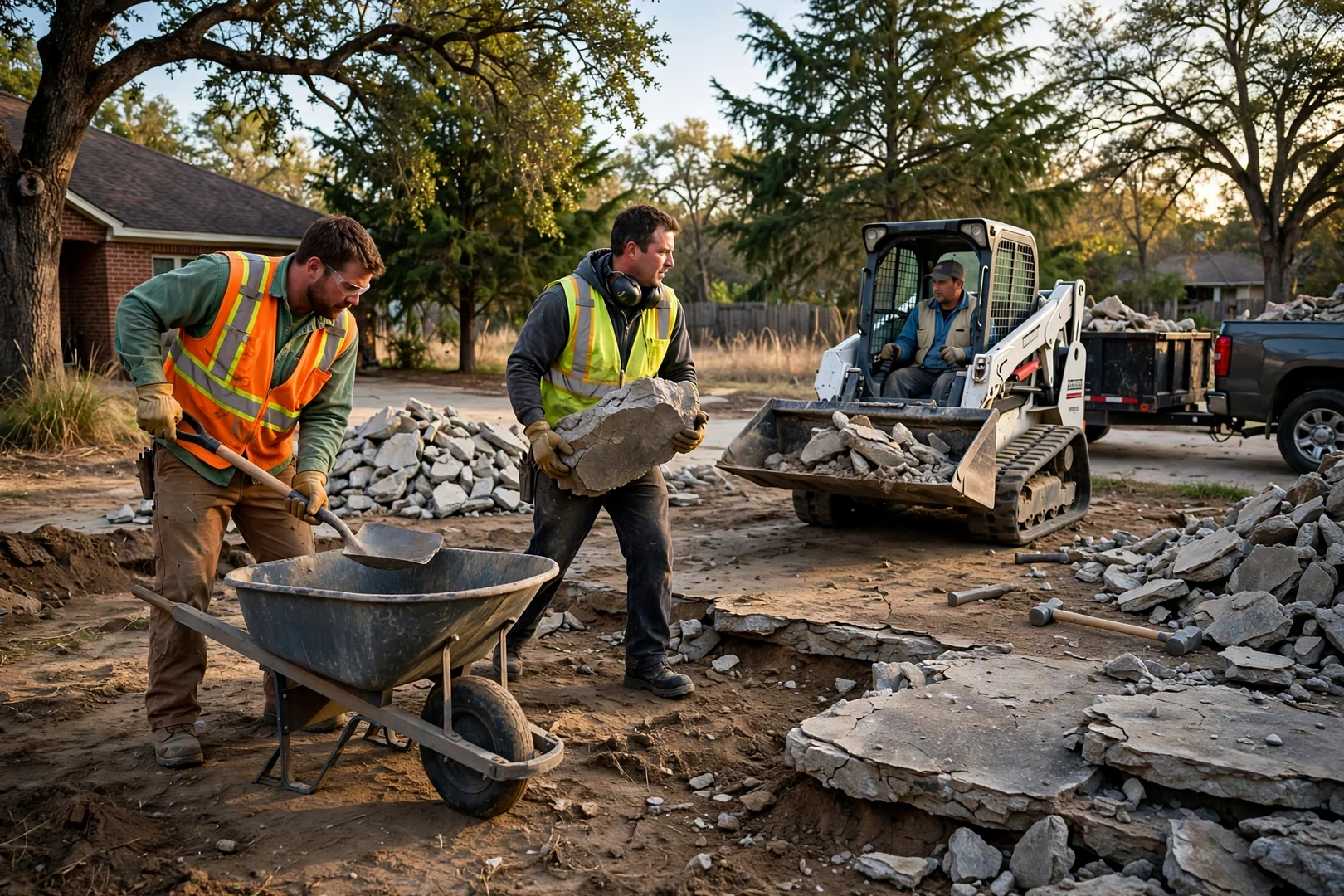
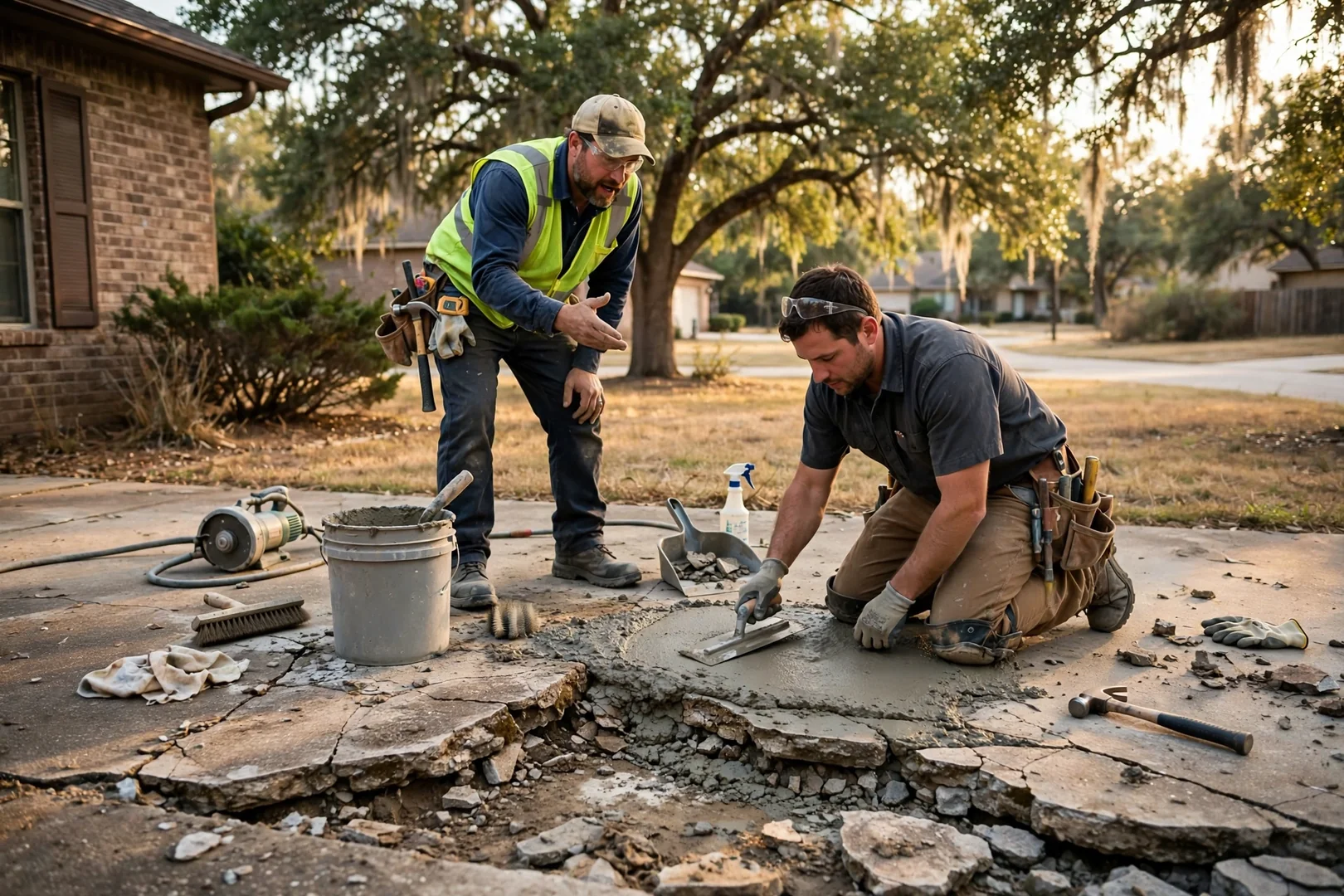
Old deteriorated concrete comes out first, then we excavate to the planned depth and build a compacted base of crushed stone. Plate compactors tighten the subgrade so the finished slab resists settling. Proper base work is where longevity starts, especially with Highland Village clay soils shifting through dry summers.
Forming and Steel Reinforcement
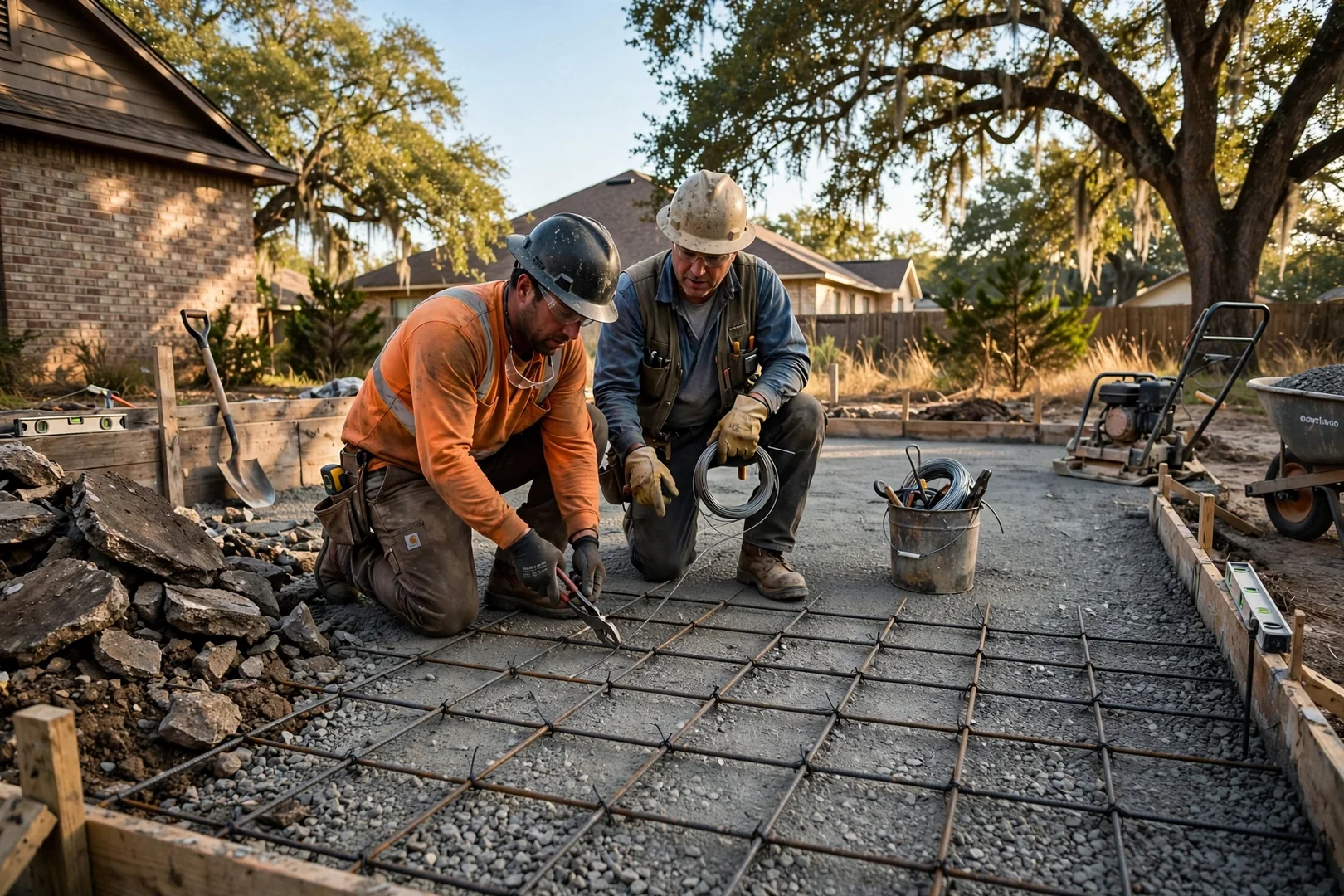
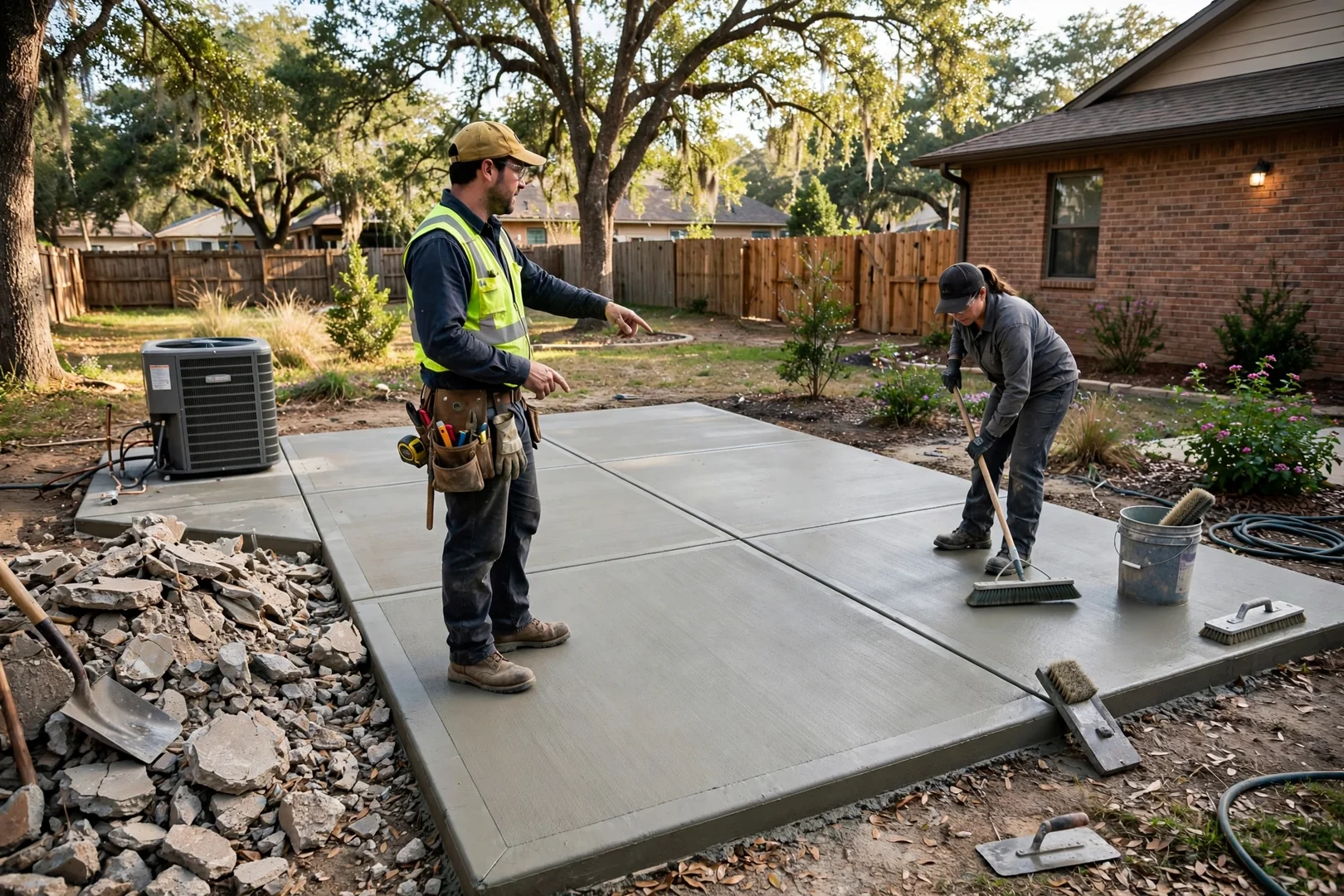
Forms are set to the correct slope so water moves away from your foundation rather than pooling. Rebar or welded wire mesh is tied and supported on chairs at mid-depth for real tensile strength. We also map control joint spacing in advance so cracking follows a planned line instead of a random one.
Pour, Finish, Cure, and Walkthrough
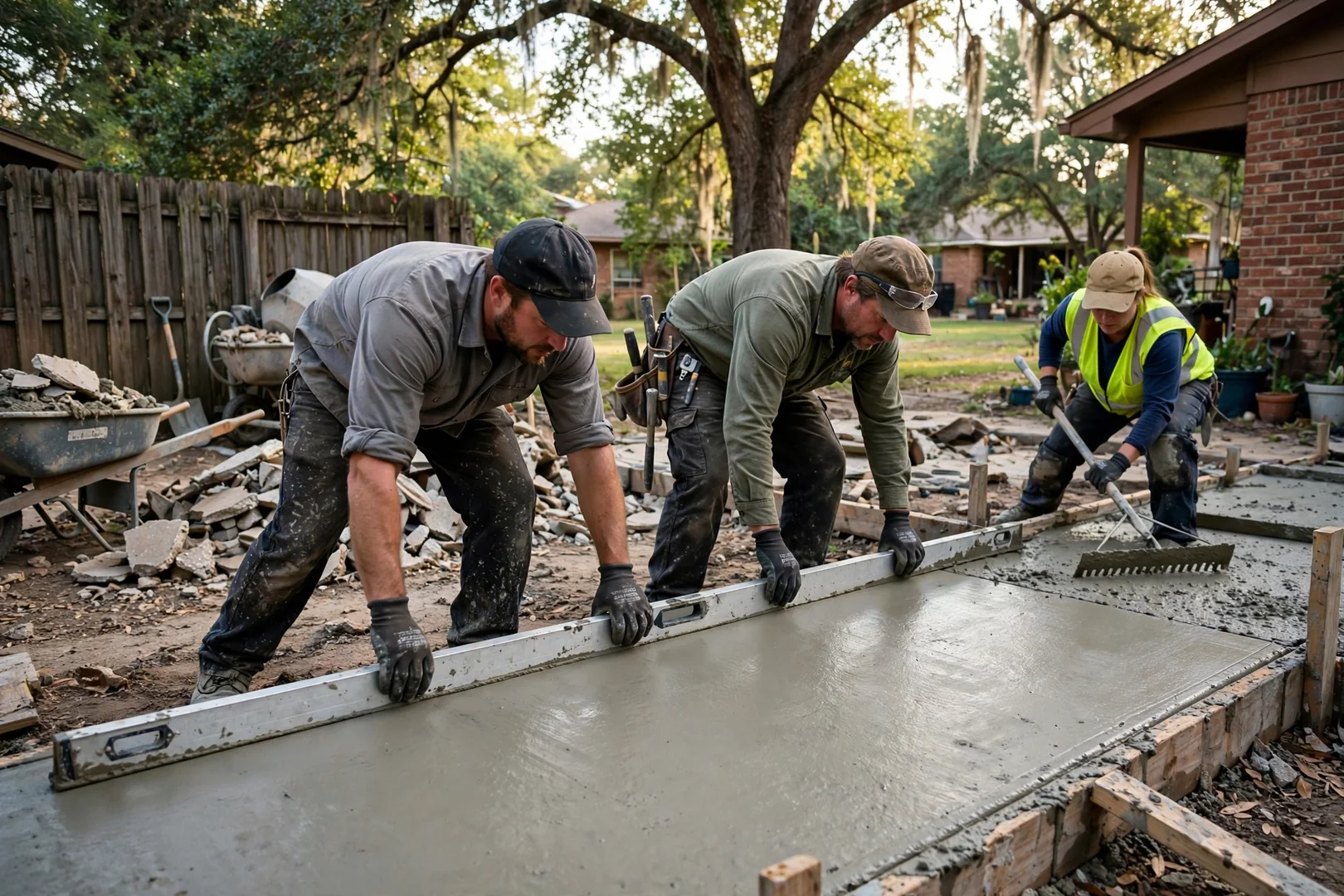
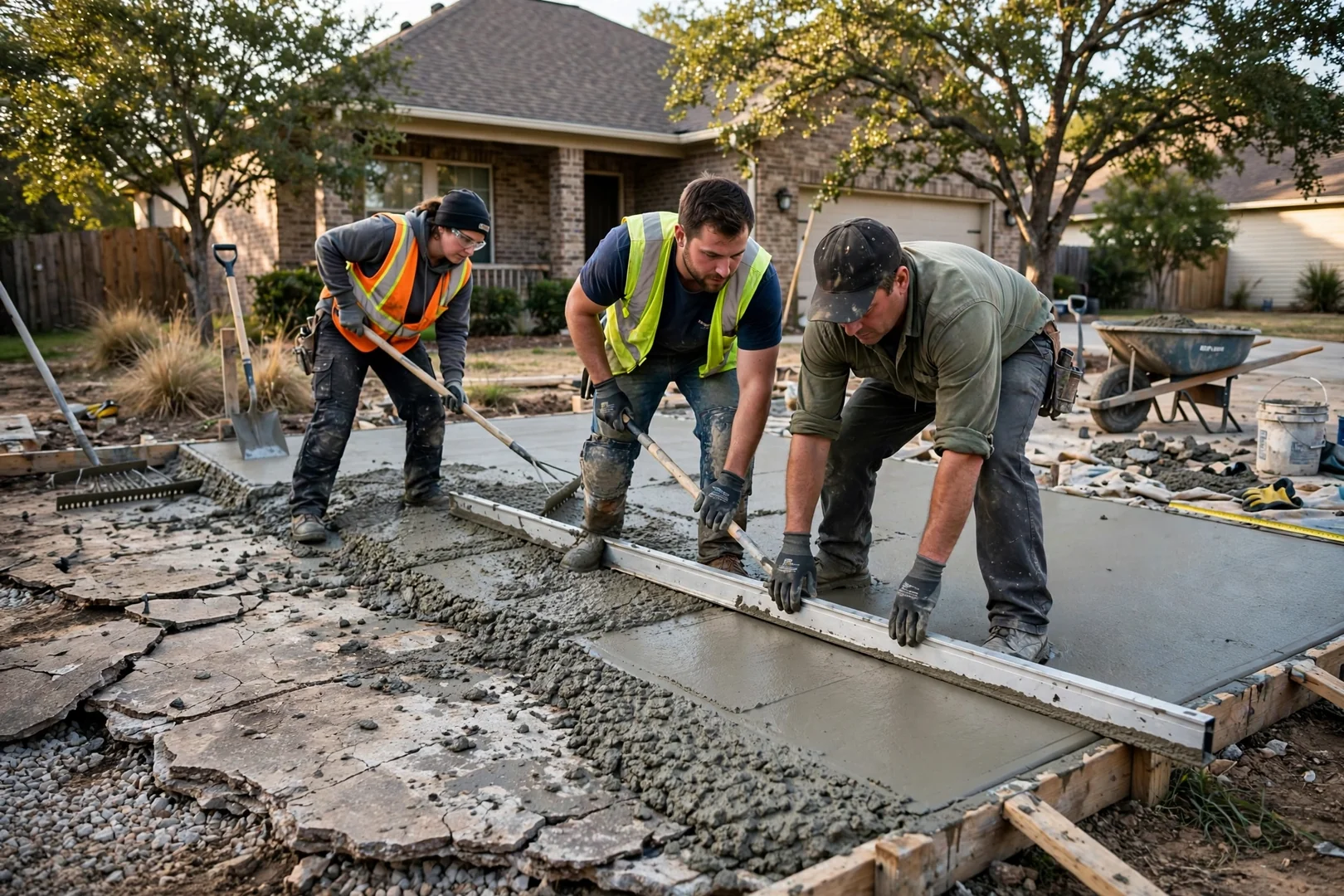
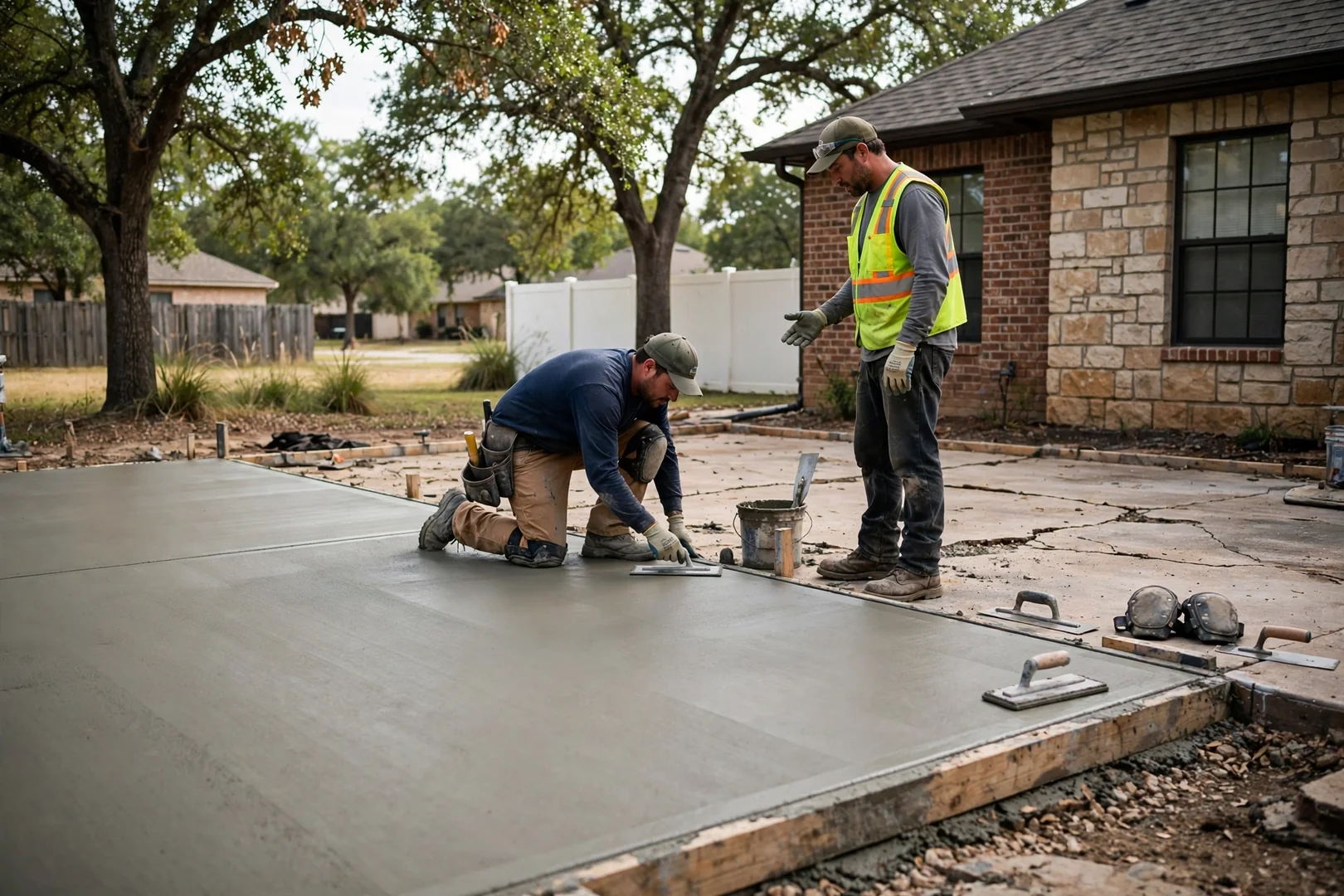
Concrete is placed, screeded, floated, and finished with the texture you chose, whether broom, trowel, or a decorative treatment. Joints are cut, edges tooled, and a curing compound applied to control moisture loss. We finish with a post-job walkthrough and simple care notes for the first month.
How Much Does Concrete Slab Installation Cost in Highland Village?
Concrete slab installation pricing in Highland Village depends mainly on square footage, slab thickness, reinforcement type, and how much demolition or excavation the site needs, with most 2026 projects landing inside typical ranges for North Texas residential work. Thicker pours with rebar grids cost more per square foot than a standard four-inch slab with wire mesh, though they hold up better under vehicles or heavy equipment. Removing and hauling away a failing old slab adds labor and disposal, as does regrading a low spot that has been collecting water for years. Access matters too. If a truck cannot reach the pour area, concrete has to be wheeled or pumped, which changes the labor picture.
Finish choices also move the number, since a broom finish costs less than stamped, stained, or exposed aggregate surfaces that require extra steps and sealer. Subgrade repair, vapor barriers, and thickened edges or footings show up on some Highland Village properties where soil movement has already caused trouble. Honest pricing really does require someone standing on the site with a tape measure and a look at the drainage. We provide free written estimates that itemize prep, materials, reinforcement, and finish work so you can compare line by line without guessing.
//Why Highland Village Trusts Us//
Why Do Highland Village Homeowners Trust Us for Concrete Slab Installation?
Homeowners here choose us because we treat a new slab as a repair to the whole area, correcting the drainage, subgrade, and reinforcement problems that ruined the last one. Written estimates, photo documentation of base prep, and a post-job walkthrough keep every 2026 project clear from start to finish.
Concrete Slab Installation Work Completed in Highland Village in 2026
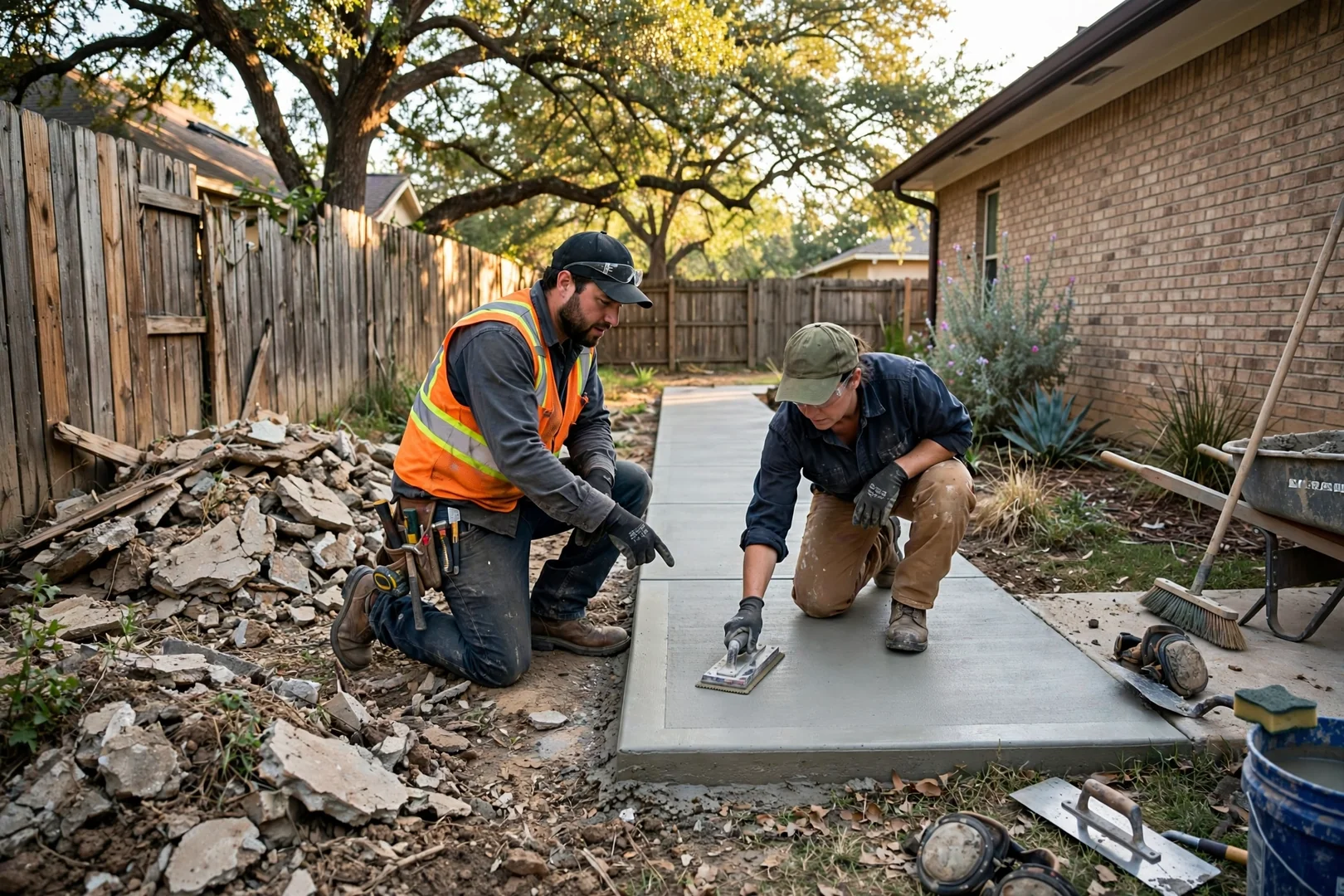
Slab work across Highland Village this year has ranged from small backyard pads to full garage and addition slabs where the original concrete had cracked apart and settled. Many of these jobs started with tired, spalling pours that needed removal, fresh compacted base rock, and a new slab tied together with rebar grids and properly spaced control joints. Our crews handle the demolition, grading, and form setting, then finish with screeding, bull floating, and a broom or trowel finish depending on how the surface will be used. Older properties often need extra attention, so we check drainage and subgrade moisture before a single yard of concrete arrives.
Every project is treated as a chance to correct what went wrong the first time rather than simply pouring over a problem. We have rebuilt sunken shed pads, replaced equipment slabs at local commercial sites, and brought neglected side-yard walkways back into usable shape. Expansive clay soil here moves with wet and dry seasons, so thickness, reinforcement, and joint layout get adjusted for each site. Written estimates come before work begins, and we walk the finished slab with the homeowner once curing is underway.
Concrete Slab Installation FAQs
Concrete Slab Installation FAQs for Highland Village Homeowners
Homeowners usually have a handful of practical questions before a slab pour starts. These answers cover scheduling, what the work includes, how to prepare your property, and the soil conditions we run into around Highland Village during 2026.
Most residential slab installations take a few working days spread across demolition, subgrade preparation, form setting, and the pour itself. Concrete reaches enough strength for light foot traffic fairly quickly, though full curing continues for weeks, so we schedule heavier use later. Weather and site access can shift the calendar, and we keep you updated as dates firm up.
A slab installation includes removing or correcting the old surface, grading and compacting the base, setting forms, placing rebar or wire mesh reinforcement, pouring, finishing, and cutting control joints. We also check drainage so water moves away from the slab instead of pooling against it. You receive a written estimate listing thickness, reinforcement, and finish before anything is torn out.
Clearing the work zone helps most, so we ask that planters, vehicles, hoses, and stored items be moved away from the slab footprint. Concrete trucks need a clear path and room to reach the forms, and we will talk through access points during the estimate visit. If sprinkler lines or utilities run nearby, let us know so the subgrade work avoids them.
Cracking around Highland Village is usually tied to expansive clay soil that swells and shrinks with our wet and dry cycles, which stresses thin or under-reinforced slabs. Correcting that means a deeper compacted base, appropriate slab thickness, and proper joint spacing, and those choices do affect cost along with square footage and site conditions. Pricing in 2026 is quoted per project after we look at the existing slab and soil, and we finish with a walkthrough once the new pour is placed.
Free Concrete Slab Estimates
Schedule Concrete Slab Installation in Highland Village
Ready to replace that cracked, settling slab with a properly formed and reinforced one? Our crew will walk the area with you, check the subgrade and drainage, talk through thickness and rebar options, then hand you a free written estimate with no obligation to move forward. Scheduling in Highland Village stays straightforward, and our 2026 calendar is filling with pour dates for patios, garage pads, shop floors, and full slab replacements. We plan each pour around curing weather and site access so your finished concrete has the best shot at lasting decades. Call or email anytime. We will confirm a visit, measure the space, explain the restoration plan in plain terms, and finish with a post-job walkthrough once the slab has set and the forms come off.