Highland Village Premier Concrete Contractors
How Much Does a Concrete Patio Cost in Highland Village, TX?
Thinking about adding a concrete patio to your Highland Village home? Learn what affects installation costs, compare standard and decorative finishes, and discover how proper site preparation can help your patio last.
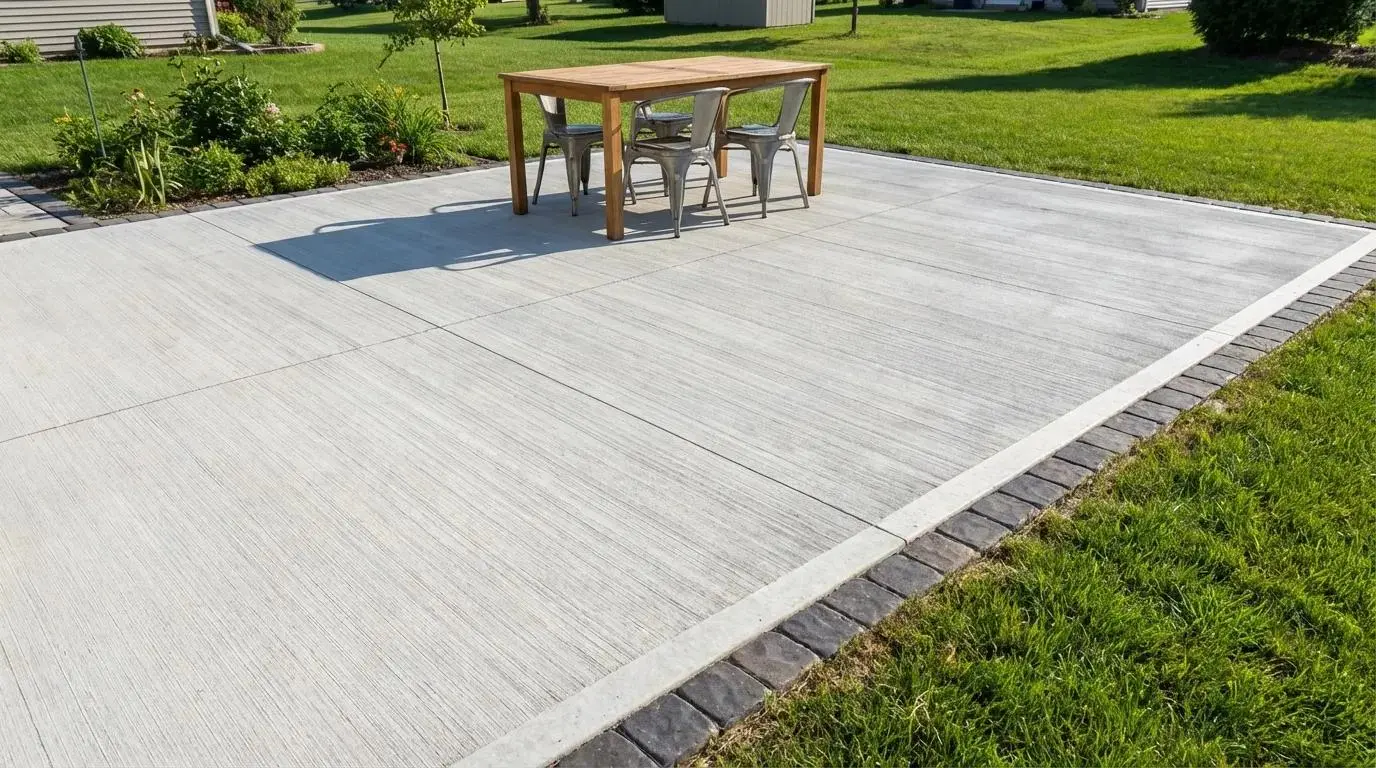
A new concrete patio can transform your backyard into a comfortable space for outdoor dining, family gatherings, grilling, and relaxing during the warmer months. If you’re planning a patio project in Highland Village, Texas, one of the first questions you’ll likely ask is: How much will it cost?
The price of a concrete patio depends on its size, finish, site conditions, and the preparation required before the concrete is poured. Understanding these factors can help you plan your budget and compare contractor estimates with confidence.
In this guide, we’ll explain what affects concrete patio installation costs in Highland Village and what to consider when planning your project.
What Affects the Cost of a Concrete Patio?
There isn’t one price that applies to every backyard. Two patios with the same square footage can have different installation costs depending on their design and the condition of the property.
Here are the main factors that influence your total project cost.
1. Patio Size and Shape
The size of your patio is one of the biggest factors in determining the amount of concrete, labor, and preparation needed.
A small patio for a grill and a couple of chairs will generally cost less than a large outdoor entertainment area. Curved edges, multiple levels, unusual shapes, and decorative borders can also increase labor requirements.
Before requesting an estimate, measure the approximate length and width of your planned patio. This gives your contractor a useful starting point for discussing your project.
2. Concrete Finish and Design
Concrete patios are available in several finishes to suit different budgets and styles.
Broom-finished concrete: A practical, straightforward option with a textured surface. It’s a popular choice for homeowners who want a clean, functional patio.
Stamped concrete: This decorative option can imitate the appearance of stone, brick, slate, or other patterns. It offers more design flexibility but generally costs more because of the additional labor and finishing steps.
Colored or stained concrete: Color can help coordinate your patio with your home’s exterior, landscaping, and outdoor living area.
Exposed aggregate: This finish reveals decorative stones in the concrete surface, creating a distinctive appearance and texture.
The best option depends on your budget, preferred appearance, intended use, and maintenance expectations.
3. Ground Preparation and Drainage
Proper preparation is essential for a successful concrete patio.
Before installation, the contractor should assess the existing ground, remove unsuitable material when needed, and prepare a stable base. Drainage also deserves careful attention, especially where water could collect near your home or flow toward neighboring properties.
North Texas clay soils can expand and shrink as moisture conditions change. Appropriate grading, compaction, base preparation, and concrete design help manage these conditions.
A low estimate may not include the same amount of preparation as a more detailed proposal, so compare the work included rather than looking at price alone.
4. Removing Existing Concrete
If you’re replacing an old patio, the project may require breaking up and hauling away existing concrete before new installation can begin.
Demolition costs depend on the amount of concrete, thickness, site access, disposal requirements, and equipment needed. Ask whether removal and cleanup are included in the written estimate.
5. Access to Your Backyard
The route from the street to the patio area can affect labor and equipment requirements.
Narrow gates, landscaping obstacles, steep slopes, and limited equipment access may make a project more complicated. Let your contractor know about these conditions before receiving a final quote.
How Much Concrete Do You Need for Your Patio?
Estimating your patio’s square footage is a useful first step.
For a rectangular patio, multiply its length by its width.
For example:
- A 10-by-12-foot patio covers 120 square feet.
- A 12-by-20-foot patio covers 240 square feet.
- A 20-by-20-foot patio covers 400 square feet.
These measurements help your contractor estimate material quantities and discuss the appropriate slab thickness, reinforcement, and base preparation for your project.
Remember that square footage alone doesn’t determine the final price. Site conditions, concrete specifications, finish selection, and labor all matter.
Choosing the Right Concrete Patio for Your Home
When planning a new patio in Highland Village, consider how you’ll use the space.
If you want a simple area for outdoor furniture and grilling, a standard broom finish may be a practical choice. If you’re designing a more elaborate entertainment area, stamped or colored concrete may provide the appearance you’re looking for.
You should also consider how the patio connects to existing walkways, the house, landscaping, and any outdoor kitchen or covered patio structure.
A well-planned layout can improve how you use your backyard while helping the finished project complement your home.
How to Compare Concrete Contractor Estimates
Before choosing a concrete contractor, request a written estimate that clearly explains the proposed work.
Here are some questions to ask:
- Is demolition and removal of old concrete included?
- What excavation and base preparation will be performed?
- What slab thickness and concrete specifications are proposed?
- Is reinforcement included where appropriate?
- What finish, color, or stamping options are included?
- How will drainage and slope be addressed?
- Are cleanup, control joints, and curing procedures included?
- What is the expected project schedule and payment arrangement?
Comparing these details can help you understand why estimates differ and avoid unexpected costs.
Why Local Conditions Matter in Highland Village, Texas
Concrete projects in Highland Village must account for North Texas weather and soil conditions.
Hot weather can cause moisture to evaporate quickly during placement and curing, while changing soil moisture can affect the ground supporting a slab. Proper preparation, appropriate concrete placement practices, and suitable curing methods all contribute to the quality of the finished work.
Your contractor should evaluate the actual site and recommend an approach that suits the intended use of your patio.
Frequently Asked Questions
How long does it take to install a concrete patio?
The schedule depends on patio size, demolition, ground preparation, weather, and the selected finish. Many straightforward projects can be poured and finished within a short period, but preparation and curing require additional time. Ask your contractor for a project-specific schedule.
When can I walk on a new concrete patio?
The time before foot traffic is allowed depends on the concrete mix, weather, and curing conditions. Follow your contractor’s instructions rather than assuming the surface is ready as soon as it looks dry.
Is stamped concrete worth the additional cost?
Stamped concrete can provide a decorative appearance that complements your home and landscaping. Whether the upgrade is worthwhile depends on your design preferences, budget, and maintenance expectations.
Can a new concrete patio crack?
Concrete can crack as it cures and responds to changes in temperature and ground conditions. Appropriate mix selection, base preparation, reinforcement where needed, and properly planned control joints can help manage cracking, although no concrete installation can guarantee a completely crack-free surface.
Do I need a permit for a concrete patio in Highland Village?
Requirements depend on the project design and applicable local regulations. Confirm current requirements with the City of Highland Village before construction, particularly if your project includes a covered structure, structural connections, grading changes, or work near property setbacks.
Get an Estimate for Your Concrete Patio in Highland Village
Planning a new concrete patio starts with understanding your space, choosing a finish, and identifying the preparation your property requires.
Whether you’re considering a simple backyard patio or a decorative outdoor entertainment area, a site-specific estimate will help you understand the options available for your home.
Ready to discuss your concrete project? Contact our team to request an estimate for your patio installation in Highland Village, Texas. We’ll help you evaluate your project requirements and determine the next steps toward creating a functional outdoor space.