
Written Estimates, Plain Language
You get the scope in writing before work begins, including prep, reinforcement, finish type, and jointing, so the repair plan is clear and the price does not shift mid-project.
Bringing tired, cracked, and settling concrete back to solid, good-looking shape is what this crew does best. Our focus across Highland Village stays on correcting the underlying problem first, then rebuilding slabs, patios, and driveways that hold up. Heading through 2026, that repair-first habit still guides every job. Read on to see how we work.
Request a Written Estimate 972-362-9469Share a few details about the slab, driveway, or patio you want restored and we will follow up with a written estimate.

Our Background
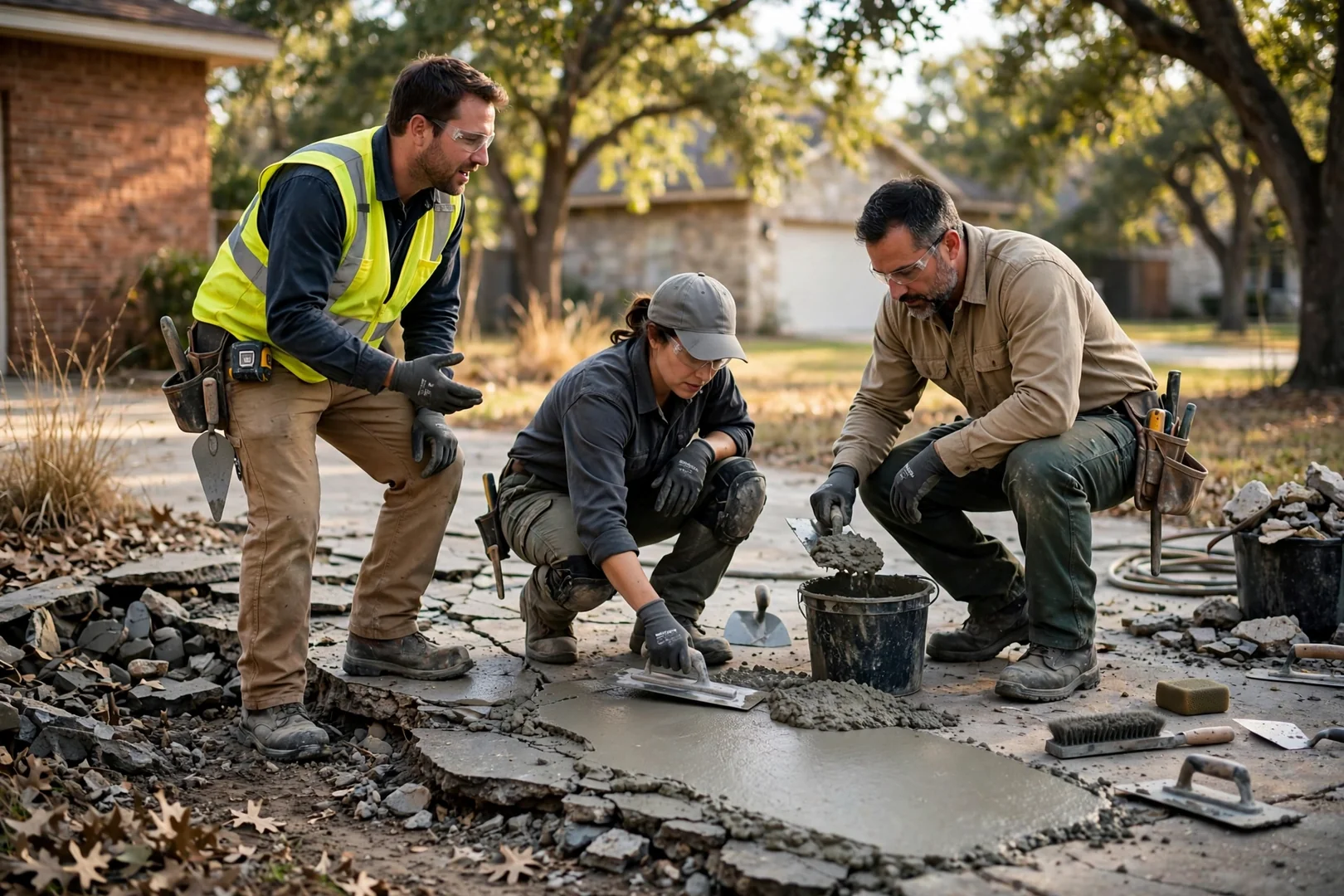
Repair calls shaped this company more than anything else. Homeowners in Highland Village kept asking about sunken walkways, spalling driveway aprons, separating control joints, and patios that had pitched back toward the house, so slab leveling, mudjacking, and foundation correction became the center of the work. From there the services grew outward into stamped and stained finishes, retaining wall rebuilds, flagstone walkways, and epoxy garage coatings, because a restored surface should look good once it is functional again. Clay-heavy North Texas soil moves with every wet season and dry spell, which is why we read elevation changes and subgrade conditions before any concrete gets poured. That restoration mindset came from doing the work, not from a brochure. In 2026 we still handle residential and commercial projects across Highland Village the same way: diagnose the cause, correct it, then finish with a written estimate and a walkthrough once the pour has cured.
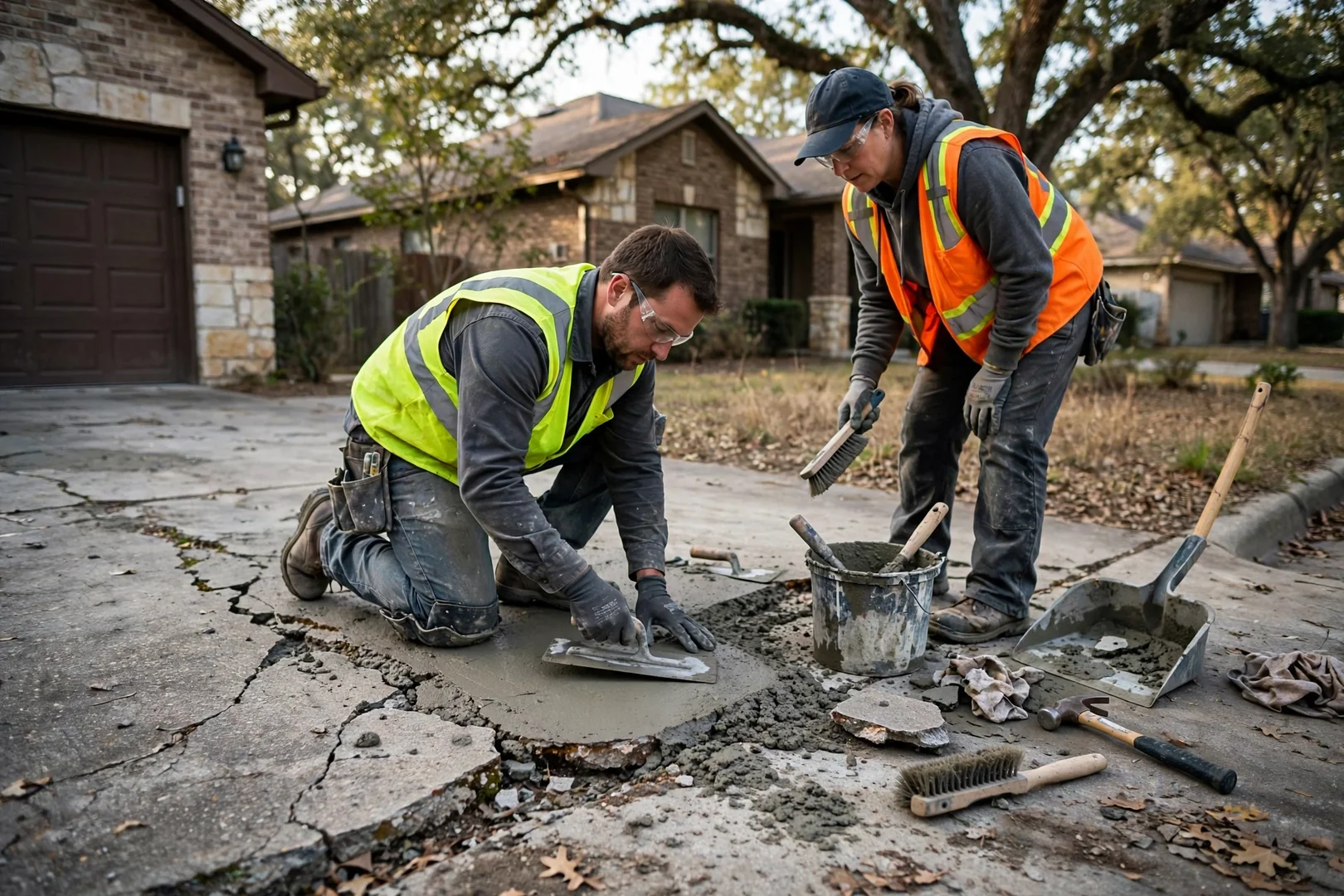
Our experience comes from years of hands-on slab work across Highland Village neighborhoods, from lifting settled walkways with polyurethane and grout injection to rebuilding failed retaining walls and pouring new reinforced driveways. Expansive clay soils here create very specific problems: heaving corners, stair-step cracking in foundations, hollow voids under garage slabs, and surface scaling from freeze cycles and summer heat. We have handled all of it. Each condition calls for a different fix, whether that means mudjacking, pier and beam adjustment, saw-cut joint repair, or full slab replacement with proper rebar placement and subgrade compaction.
Older homes, newer builds, and commercial lots around Highland Village all behave differently, so technique keeps evolving with them. Mix design, vapor barriers, curing times, and finish selection all get decided on-site rather than assumed. Through 2026 we are still refining how we prep subgrade and seal stamped and stained surfaces so restored concrete resists moisture and wear longer. Every project wraps with a post-job walkthrough, so you know exactly what was corrected and how to care for it going forward.
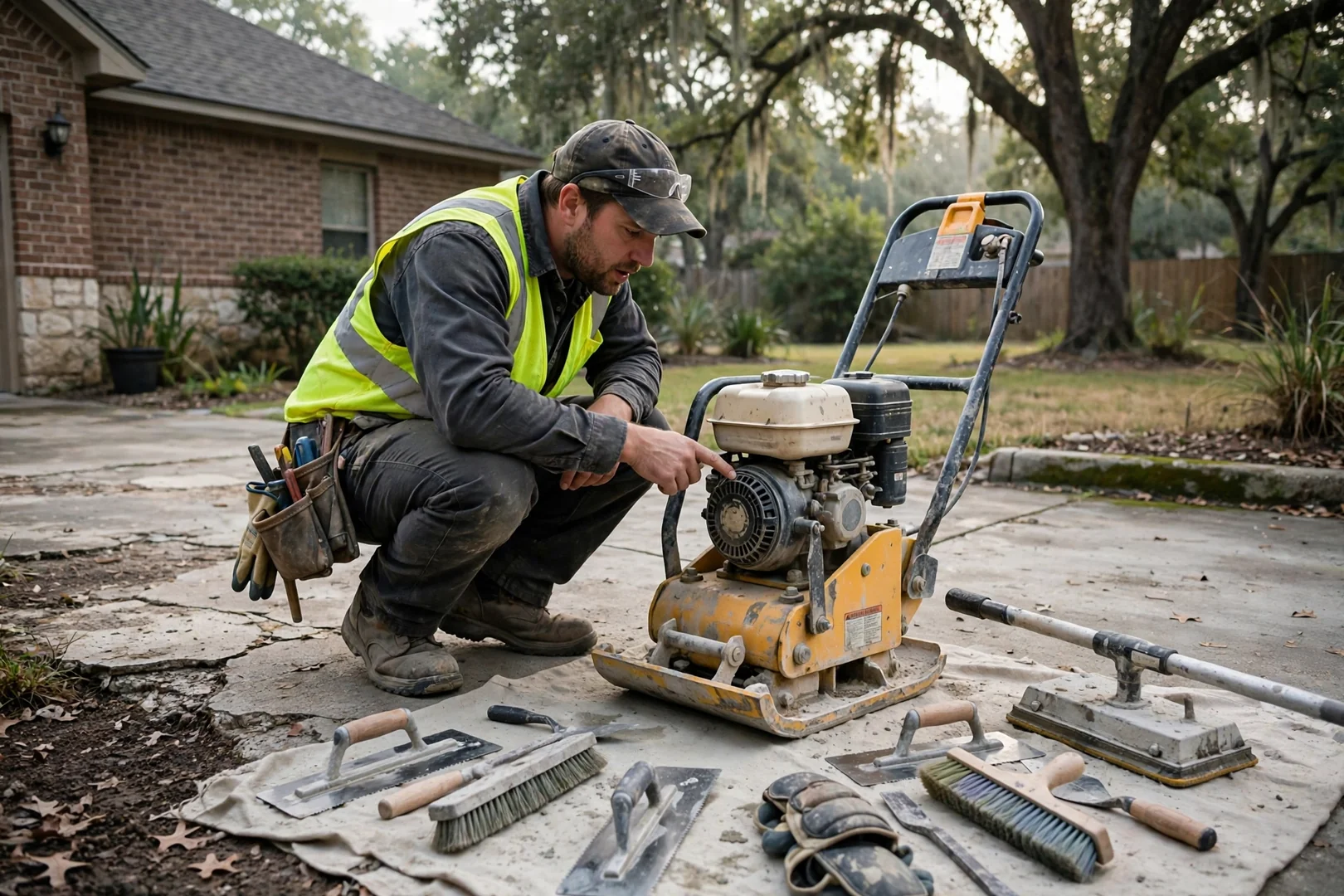
Every crew that pulls up to a Highland Village driveway or patio follows the same written checklist, starting with hard hats, eye protection, and cut-resistant gloves before the first saw cut is made. Mixers, vibratory plate compactors, and slab-jacking pumps get inspected at the start of each day, and anything that fails the check stays on the trailer until it is serviced. We confirm subgrade compaction, rebar placement, and expansion joint spacing against current 2026 local building code requirements before any pour begins, and we pull permits when a project calls for one. Washout water and slurry are contained and hauled off rather than rinsed into storm drains. Homeowners receive a written estimate up front and a walkthrough once forms come off, so cure times and sealing recommendations are clear. Nothing gets skipped because it is out of sight.
Local Experience and Tools
Much of Highland Village sits on expansive clay soil that swells after heavy spring rain and shrinks during long summer dry spells, and that movement shows up in cracked slabs, tilted sidewalk sections, and separating patio edges. Lots that slope toward the lake side of town add drainage pressure that older retaining walls were never built to handle. We factor both conditions into how we plan a repair.
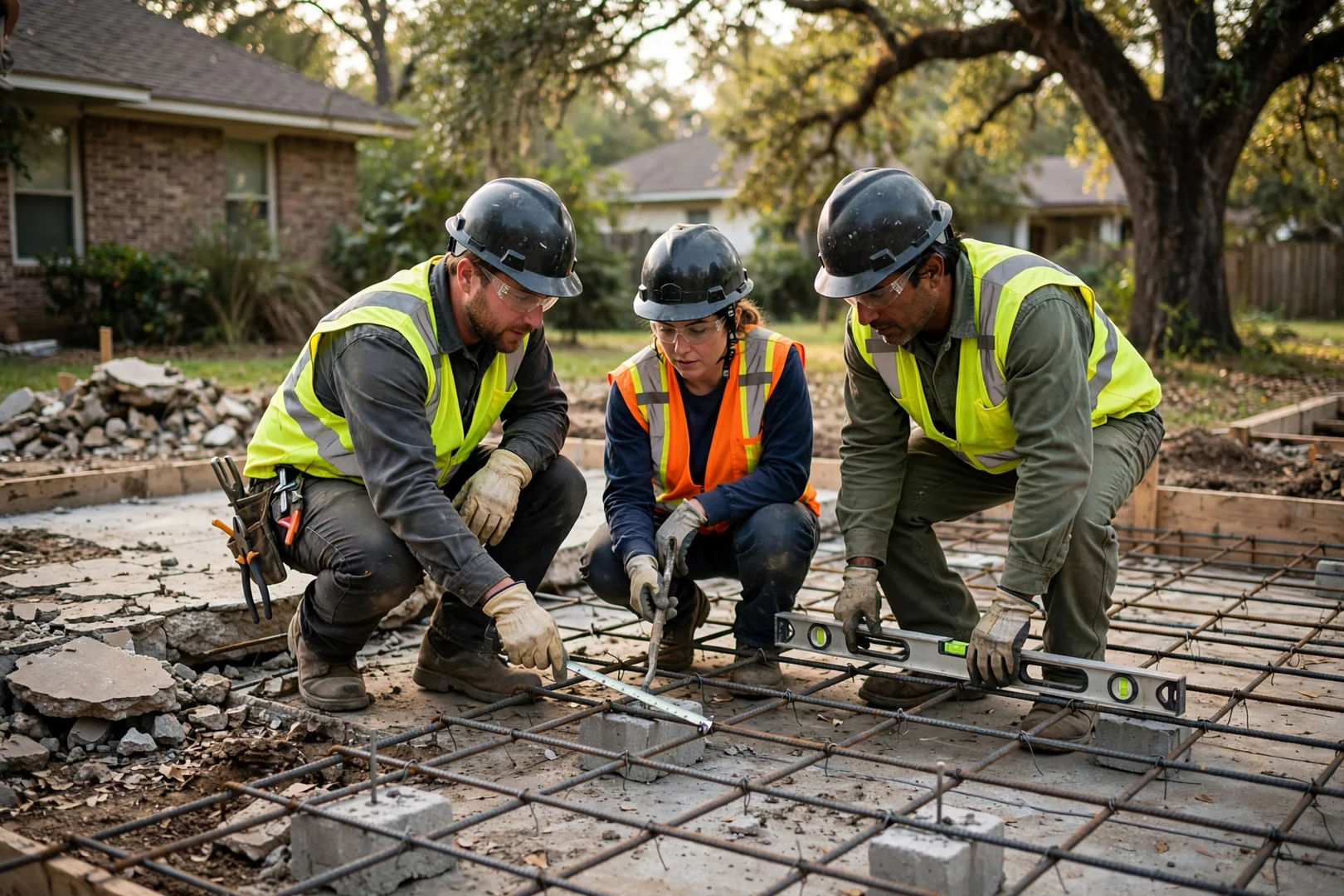
Our inspection kit reflects that reality. Crews carry laser levels and moisture meters to map slab settlement, probe rods to check subgrade voids before mudjacking, and core samples when a foundation repair needs honest numbers behind it. For heavier restoration work we bring compaction equipment, concrete saws with dust control, and polyurethane or grout injection gear matched to the void size rather than whatever happens to be on the truck.
Tools only help if they are handled correctly, so the same crew members who run the mixers and screeds also perform the routine pre-use checks: blade condition, hose fittings, pump pressure, fuel and fluid levels. Through 2026 we continue scheduling pours in Highland Village around seasonal heat and humidity, adjusting water-cement ratios and curing blankets so new concrete gains strength evenly instead of surface-crazing in August sun.
How We Work
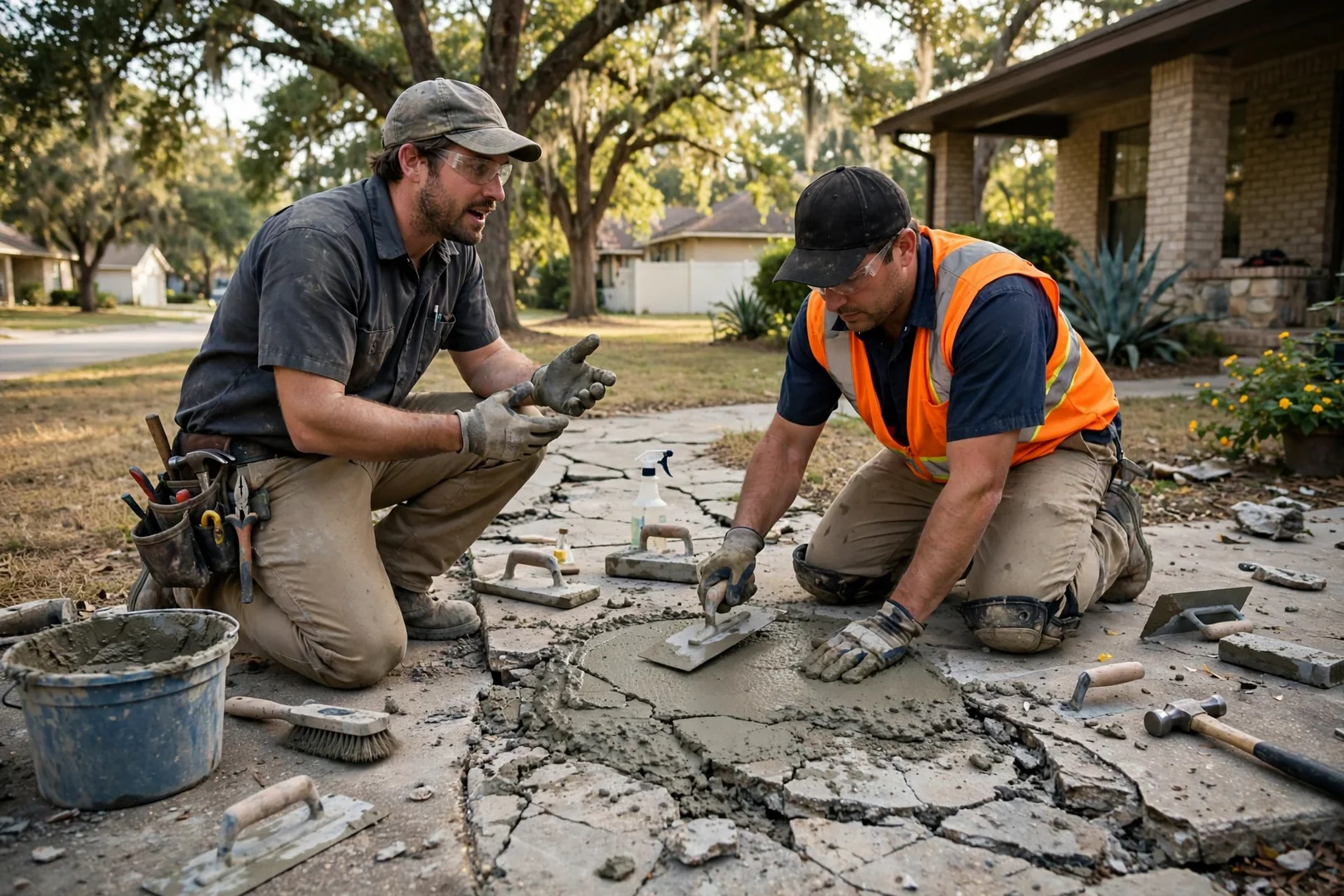
We start by diagnosing why the concrete failed, then build a repair plan around that cause instead of simply covering the damage. That usually means walking the property with you, checking slope and drainage, tapping suspect areas to find hollow spots, and looking at joint condition and rebar exposure before anyone talks about scope or price. If a sunken walkway can be corrected with mudjacking rather than demolition, we say so, and if a slab is too far gone to level honestly, we explain what replacement involves and why. Scope decisions get written down, so a Highland Village homeowner knows exactly which sections are being lifted, resurfaced, sealed, or rebuilt. Crews protect landscaping and siding with coverings, keep saw-cut slurry contained, and sweep and rinse the work area before loading out. After the pour cures, we come back for a walkthrough to review control joints, sealer coverage, and simple care steps that slow future deterioration. Through 2026 we are seeing more requests to restore aging patios and driveways rather than replace them outright, and that suits how we prefer to work: bring tired surfaces back to solid, attractive condition, correct the drainage or soil issue behind the damage, and leave the property better supported than it was. Restoration is the goal, not just a finished pour.
Talk With Our Team- Committed to Highland Village Homes -
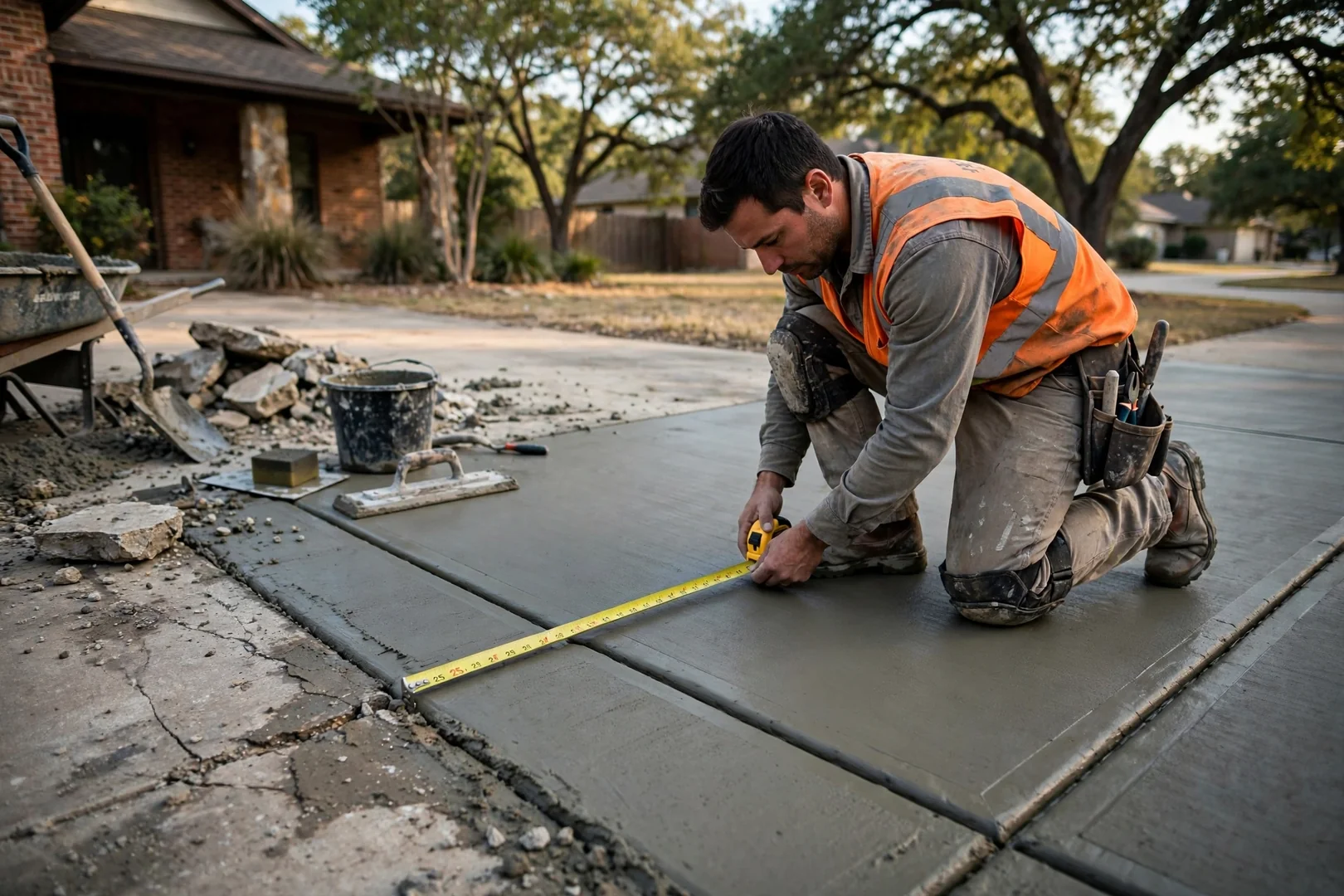
Every project starts with a written estimate that spells out surface prep, slab thickness, rebar or mesh placement, and the finish you picked, so there are no gray areas later. Our crews show up when we say we will, keep driveways and landscaping protected during demolition and pour days, and clean up forms and spoil piles before we leave. We photograph conditions before the first cut, during subgrade compaction, and after the final cure, then hand those photos over so you can see how a cracked or settling area was brought back to solid, usable shape. Pricing stays the same as quoted unless you approve a change in writing. Through 2026 we are still walking each finished patio, driveway, or repaired foundation with the homeowner, pointing out control joints, drainage direction, and simple care steps that help the restoration hold up. That walkthrough is the part we never skip. If something needs attention after cure, a call to our Highland Village office gets a real answer, not a runaround.
You get the scope in writing before work begins, including prep, reinforcement, finish type, and jointing, so the repair plan is clear and the price does not shift mid-project.
We record the damaged condition, the subgrade and reinforcement work, and the finished surface, giving you a visual record of how the area was corrected and rebuilt.
Before we pack up, we review joints, slope, and curing expectations with you, then stay reachable afterward if any part of the restored concrete needs another look.
Neighborhoods We Serve
Our crews work throughout Highland Village, from the lakeside streets near Lewisville Lake to the newer additions in North Highland Village, along with neighboring communities like Lewisville, Flower Mound, Copper Canyon, and Double Oak. We handle homes and commercial properties alike, whether that means mudjacking a settled walkway, replacing a spalled driveway approach, or pouring a new slab for a small business lot. Knowing the local ground helps. Much of the area sits on expansive clay soils that swell and shrink with our wet springs and dry summers, which is why we check drainage patterns, soil moisture, and existing joint spacing before recommending leveling, pier work, or a full tear-out. That local familiarity is what keeps a repair from becoming a repeat problem a few seasons later.
Call Us On: 972-362-9469